Before you dive into this month’s articles, please take a few minutes to complete our reader survey. Your input helps guide our work and future coverage. Take the survey Problems with Existing Massachusetts E-Bike Laws and a Possible Fix By David Chase E-bikes are transforming how people commute, run errands, and travel around Greater Boston. But as faster and more powerful electric vehicles enter the market, questions about safety and regulation are becoming harder to ignore. Read more. Controlling Invasives Along the Future Community Path By Vincent Stanton, Jr. Hundreds of new trees and shrubs are coming to the Belmont [READ MORE]

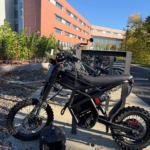
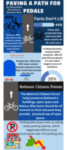
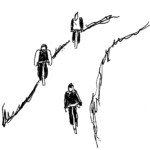
Problems with Existing Massachusetts E-Bike Laws and a Possible Fix

By David Chase Decades of improvements in batteries and motors have made e-bike assists practical and affordable, putting far more of them on the road today. People use them to commute, transport children, shop, make deliveries, and just for fun. These same advances have spurred a variety of other motor-assisted “micromobility” devices—e-scooters, e-skateboards, hoverboards, and monowheels—increasingly popular for commutes and short trips. Unfortunately, cheaper motors and batteries have also enabled what are effectively electric mopeds and motorcycles, marketed and sold as “e-bikes.” Because they carry pedals and are called “bikes,” people ride them in bike lanes and on multiuse paths, [READ MORE]
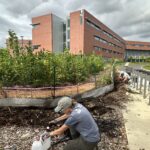
Controlling Invasives Along the Future Community Path

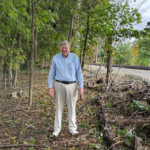
By Vincent Stanton, Jr. Construction of the Belmont Community Path (Phase I) will encompass significant landscaping work, including planting 354 trees and 478 shrubs along the path. For example, 32 new trees and 11 shrubs will be planted along a 425-foot section of path behind the old BMLD building, the Belmont Police Station and the house at 710 Pleasant Street. Tree and shrub varieties were selected from Belmont’s Preferred Trees List developed by the Shade Tree Committee (see “Belmont Has a New List of Preferred Trees” in the May/June 2024 Newsletter). Tree type (e.g., deciduous vs. coniferous) and placement along [READ MORE]
At One Year Old, Belmont’s Miniforest Rewards a Closer Look

By Nicole Estvanik Taylor An intergenerational group of locals gathered on Saturday, October 3, to sing happy birthday to the pocket-sized forest in front of Belmont High School. The party, organized by Miyawaki Forest Action Belmont (MFAB), marked the first anniversary of the lively October 2025 planting day that drew hundreds of participants. The Miyawaki method aims to give a head start to the formation of a mature forest ecosystem through dense planting, on a prepared site, of a careful selection of native trees and shrubs. Though botanist Akira Miyawaki began developing his approach in the 1970s in Japan, most [READ MORE]
Restoration of Jerry’s Pond: A Master Class in Restoring Urban Wilds or a Missed Opportunity?

By Jeffrey North and Eric Grunebaum The abbreviated answer is both. Jerry’s Pond sits behind a chain-link fence on Rindge Avenue in North Cambridge, a short walk from the Alewife MBTA station, across the street from Cambridge’s largest environmental justice community, and near the Belmont line. Since 1962, the pond and surrounding land have been visible but off-limits: a nine-acre remnant of The Great Swamp, and later a site of clay extraction, industry, and outdoor recreation. The site’s inaccessibility is now changing due to the advocacy of Friends of Jerry’s Pond (FOJP) beginning in 2015, which encouraged the property owner, [READ MORE]
Homer Building Gets a Facelift

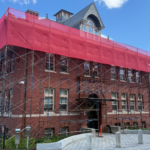
The Homer Municipal Building at 19 Moore Street, known to many as the Town Hall Annex, is midway through its first major exterior restoration since 2005. The 1899 building, originally constructed as a high school, has served as town office space since 1937 and holds a prominent place in Belmont’s civic architecture. A 2023 facilities assessment by Spencer Preservation Group identified urgent maintenance needs: a discolored, mildewed eave line; loosening wood brackets that were never properly fastened; water infiltration; and a failing east-side gutter. The Historic District Commission approved the restoration plan (case HDC-26-01) in January 2026, with Facilities Project [READ MORE]
The Municipal Light Building: Belmont’s Beautiful, Expensive Mess

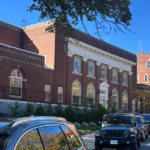
By John Beaty Anyone who has walked past Belmont Center’s Town Hall complex has seen it: a stately 1934 brick building on Concord Avenue, its Colonial Revival/Georgian Revival lines echoing the Police Station next door. Fewer people have been inside—and for good reason. Behind its handsome facade, the old Municipal Light Building is, by every recent account, a mess. The building sits on a quarter-acre municipal campus next to the Police Station at 450 Concord Avenue and across the street from Town Hall, the Town Hall Annex and the School Department Building. Some of the land behind the BMLD building [READ MORE]
Citizens Forum Donates Land to Belmont for Community Path

By Vincent Stanton, Jr. On August 10, 2026, the Belmont Select Board approved the land transfers and easements necessary to secure the right of way for the Belmont Community Path. Right-of-way acquisition, together with path design, constitute the town’s obligations with respect to financing the community path. It now becomes a MassDOT construction project, 80% funded by the federal government, 20% by the state. The final “Right of Way” plans, representing the 11th revision since December 2022, were posted to the Belmont Community Path website (www.belmontcommunitypath.com) on February 20, 2026. They show that 25 temporary easements affecting 80,652 sq [READ MORE]
Our Environmental Stewards: Casey Bowers, Environmental League of Massachusetts

This article is part of the Belmont Citizens Forum’s series on environmental leadership in Massachusetts. The Environmental League of Massachusetts (ELM), founded in 1898 as the Massachusetts Forestry Association, is the Commonwealth’s oldest environmental advocacy organization. Working at the state level on Beacon Hill, ELM advocates for policy that meets the scale and urgency of today’s environmental challenges, from decarbonizing the electric grid and transportation to protecting land, water, and public health. Over its long history, ELM has helped establish the state park system, town conservation commissions, and the Massachusetts Toxic Use Reduction Act. Today it focuses on advancing an [READ MORE]
Nutty Nuthatches Are Cozy Little Creepers

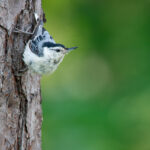
by Fred Bouchard For unfailing cheeriness, perky curiosity, and its amiably purring “henk-henk,” White-breasted Nuthatches get my vote for favorite yard bird. With no flashy looks, melodious songs, nor commanding calls to vouch for them, ‘nuts’ are your year-round, work-a-day, dependably peppy garden gremlins: twist this-that-a-way to grab a bug, glean a gnat, slam a seed, tipple sap. The Sittidae f amily worldwide i ncludes 24 nuthatches, mainly Eurasian; Concord nature author and bird-trip guru Peter Alden (sparkbirding.com) reports they have recently been merged with gnatcatchers and wrens. Its catchy English handle, Merriam & Webster tell us, “refers to the [READ MORE]
Read the September/October 2026 BCF Newsletter
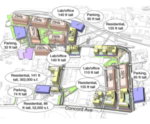
Cambridge Real Estate Developments: Context for Hill’s Crossing Overlay District By Vincent Stanton, Jr. At Town Meeting this fall (or possibly next spring), the Belmont Planning Board, in collaboration with the Office of Planning and Building, will sponsor an article proposing a new zoning overlay for the Brighton Street General Business district, the Hill’s Crossing Overlay District (HCOD). Vincent Stanton Jr. explains what to expect. Read more. 87-101 Blanchard Road to be Redeveloped as Housing By Vincent Stanton, Jr. Although Cambridge Point is the most substantial of the Cambridge developments that could influence Belmont’s plans for Brighton Street, the neighboring [READ MORE]
A Call for Authors
Belmont Citizens Forum invites writers, researchers, photographers, and engaged neighbors from across Belmont to help shape the next generation of stories about our town. For more than two decades, our bimonthly newsletter has offered in‑depth, independent coverage of issues ranging from the Community Path and rail‑trail planning to Rock Meadow and Lone Tree Hill conservation, historic preservation, and the health of the Mystic Watershed. Now we are looking for new voices to explore what comes next. Do you care about how Town Meeting decisions affect neighborhoods, climate resilience, transportation, or housing? Are you curious about the people who keep Belmont [READ MORE]
Letters to the Editor
Over the past two months, Belmont Citizens Forum received several letters from readers. These letters appeared in the September/October 2026 issue and are reproduced here for those who may have missed them. A letter from Larry Link In his article in the July / August Newsletter, Traffic Jam! TAC Raises Transportation Issues, Chip Gaysunas presented a good description of the Transportation Advisory Committee’s (TAC) work. I appreciate the many efforts of volunteers serving on boards and committees, and TAC is an important one for Belmont. I served on the TAC for almost 5 years and on the HS/MS Traffic Task Force, [READ MORE]
Stonefield Farm and Boston Area Gleaners: Growing and Moving Food to Relieve Hunger

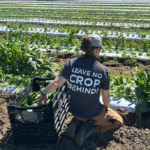
By Jeffrey North On a summer day at Stonefield Farm in South Acton, rows of lettuce, tomatoes, and callaloo are harvested not for a farmstand or supermarket but for food banks, pantries, and community kitchens. That distinction captures what makes Boston Area Gleaners unusual: it operates as both a working farm and a regional food–access organization, using Stonefield to grow food and move large volumes of fresh produce efficiently to communities facing hunger. For Belmont readers, the story is worth attention not only because it involves a nearby preserved farm, but also because it shows how food access depends as [READ MORE]
4-H: A Place to Learn, Lead, and Belong

By Amalia Müller “I pledge my Head to clearer thinking, my Heart to greater loyalty, my Hands to larger service, and my Health to better living, for my club, my community, my country and my world.” The 4-H Pledge 4-H is an organization I participate in, and it has brought me my closest friends and made me a better, more well-rounded person. 4-H is a nonprofit youth organization similar to the Girl Scouts and Boy Scouts. Unlike Scouts, 4-H is mixed ages and genders. The 4-H age groups are: Cloverbuds (ages 5-7), Juniors (ages 8-13), and Seniors (ages 14-18). [READ MORE]
Holding On and Letting Go

By Anne Marie Mahoney What should a bereavement support group and town government have in common? A deep respect for participants’ experience of loss. I do bereavement work, facilitating programs on coping with grief and loss in church settings and the Beech Street Center. Through Boston College, I teach other facilitators how to lead bereavement programs. How is this work relevant to Belmont politics? Reflecting on the divisive controversies over the naming of the new skating rink and the Belmont Center overlay zoning proposal, I realized that many speaking out on these issues were acting from a place of loss. [READ MORE]
Our Environmental Stewards: Tim Johnson, Native Plant Trust
This article is part of the Belmont Citizens Forum’s series on environmental leadership in Massachusetts. Native Plant Trust, based at Garden in the Woods in Framingham, is the nation’s first plant conservation organization and the only one devoted solely to New England’s native plants. It works across the region to protect rare and endangered species, manage sanctuaries from Maine to Vermont, and shows how gardens, streetscapes, and restored habitats can all support biodiversity in our changing climate. From its nurseries to its education programs and volunteer conservation corps, Native Plant Trust saves native plants in the wild, grows them for [READ MORE]
Fighting Algal Blooms: A Belmont High Schooler Has a Solution

By Omar Albarbari Every summer, harmful algal blooms (HABs) affect lakes and ponds across Massachusetts, sometimes leading to swimming advisories or closures. These blooms can produce toxins that threaten people, pets, and wildlife. Monitoring is expensive, and many of our local bodies of water are affected by these algal blooms. At the time of this writing, Hardy Pond in Waltham has an active bloom, resulting in warnings against swimming, fishing, and boating. HABs are rapid overgrowths of cyanobacteria or algae that have many negative consequences. They can block sunlight, exhaust dissolved oxygen and nutrients, and release cyanotoxins into the water. [READ MORE]
Completing Belmont’s Community Path Will Pay Dividends

By Jeffrey North A share of a $200‑million‑per‑year corridor A recent analysis commissioned by the Norwottuck Network estimates that finishing the 104‑mile Mass Central Rail Trail from Northampton to Boston could generate over $200 million in new economic activity each year, driven chiefly by trail‑oriented tourism and associated spending. The study projects 4 to 5.5 million annual visitors if the corridor is completed, with the investment in remaining gaps paying for itself in under a year. Belmont’s Community Bike Path is one of those gaps; without it, the corridor remains discontinuous, and the full tourism and spending potential cannot be [READ MORE]
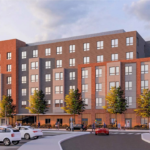
87-101 Blanchard Road to Be Redeveloped as Housing

By Vincent Stanton, Jr. Cambridge Point is the biggest, but not the only Cambridge development that will impact Belmont’s plans for Brighton Street. Bordering the proposed HCOD on two sides was, until early August, a frumpy 1.5-story brick- and wood-shingled commercial building at 87-101 Blanchard Road in Cambridge. Built in 1970, it was the last building on Blanchard before the street name changes to Brighton as it continues north. The building used to house retail businesses including Able Rug, The Quilt Shop, The Knittin’ Kitten, Orient Sunshine Massage, Sewing & Vac Center, and a Pepperidge Farms outlet store, but has [READ MORE]