
This article is part of the Belmont Citizens Forum’s series on environmental leadership in Massachusetts.
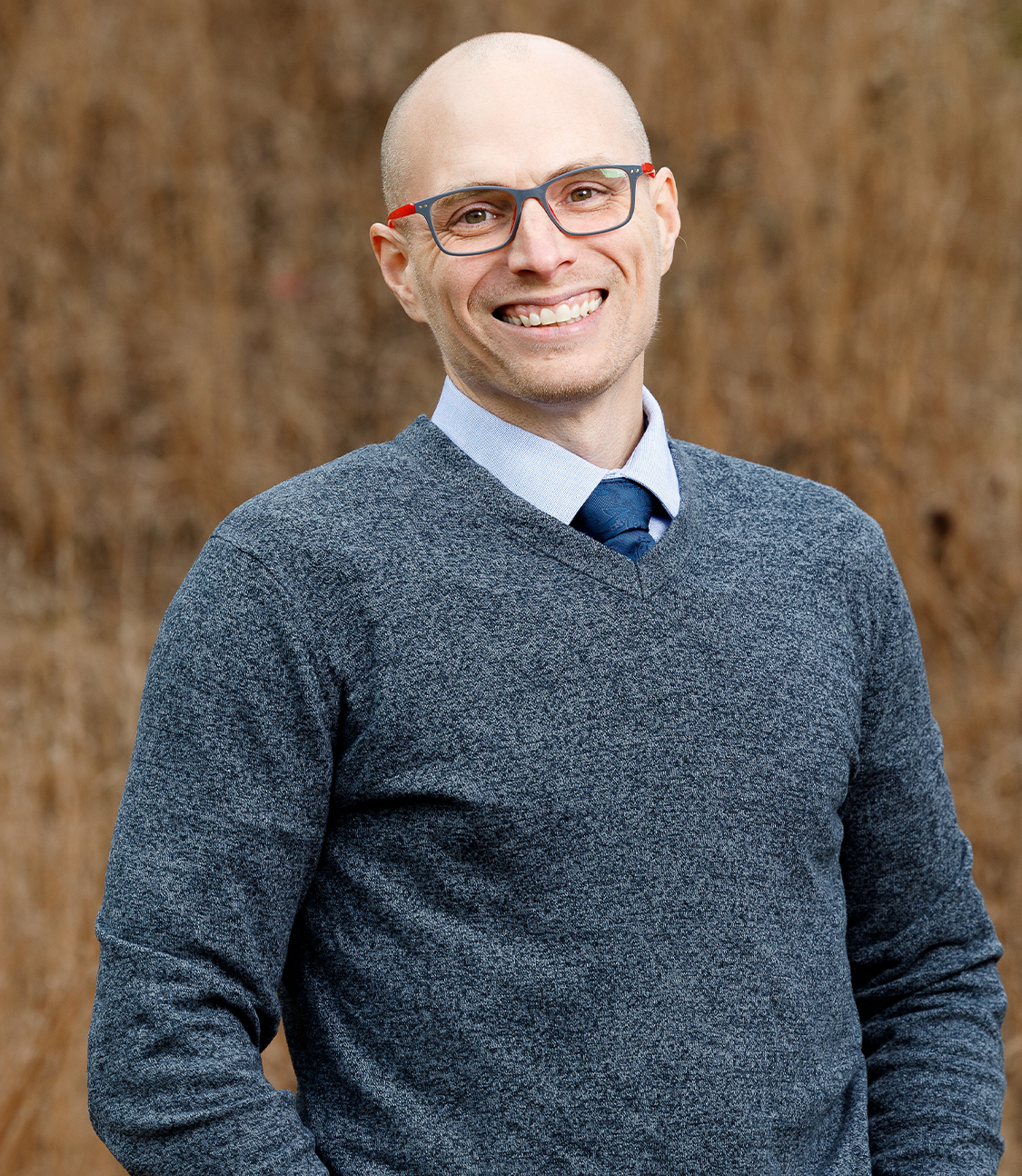
Tim Johnson
Native Plant Trust, based at Garden in the Woods in Framingham, is the nation’s first plant conservation organization and the only one devoted solely to New England’s native plants. It works across the region to protect rare and endangered species, manage sanctuaries from Maine to Vermont, and shows how gardens, streetscapes, and restored habitats can all support biodiversity in our changing climate. From its nurseries to its education programs and volunteer conservation corps, Native Plant Trust saves native plants in the wild, grows them for gardens and ecological restorations, and teaches people throughout New England how to use them to create more resilient landscapes.
The Belmont Citizens Forum spoke with Tim Johnson, CEO of Native Plant Trust, about its work in conservation, eco-horticulture, and public education, and about how residents and municipalities can help expand native-plant habitat in communities like Belmont. Johnson previously led the Smith College Botanic Garden and has worked in environmental horticulture and conservation science. He shared his vision for putting New England’s plants at the heart of local climate and biodiversity solutions withBCF editor Jeffrey North. Learn more at nativeplanttrust.org.
Native Plant Trust is the nation’s first plant conservation organization, but it is also very much a Massachusetts institution. Tim, as CEO, what role do you see it playing in advancing biodiversity and climate resilience in communities across our state?
Tim Johnson: Native Plant Trust is an extraordinary organization with 125 years of experience protecting native plants in this region and developing models and approaches that other regions have adopted. Our work plays out at a few different scales that integrate in a wonderfully dynamic way. The result is an approach that has much greater impact than one would expect for our organization’s size.
I think about the foundation of our work as informing the region of the plight of native plants; after all, you cannot change what you don’t measure. Through the Plant Conservation Volunteer program, we train community members to conduct hundreds of annual surveys across New England to detect changes in abundance and bank seeds for long-term conservation initiatives. These data, along with data from partners in the state heritage programs and historical data from herbaria, are used to create Flora Conservanda, a comprehensive assessment of species extinction risk for the plants of New England; this is the priority list for species conservation in our region. The organization also keeps the region’s professional botanists updated on taxonomic changes and new occurrences so they know which species to be looking for in the region. We produce two important resources for this: the Go Botany web platform and the publication Flora Novae Angliae.
Native Plant Trust also helps address native plant supply chain issues. We develop protocols to propagate native species and grow plants for restorations that demand locally adapted plant material. Last year, the organization launched the Restoration Accelerator™ dedicated to solving a decades-old issue by increasing the supply of locally adapted, locally grown seed for large-scale restorations.
Finally, one of the most important facets of Native Plant Trust’s work is its participatory nature. In addition to the Plant Conservation Volunteer program, we help professionals and amateurs alike develop their conservation and botanical skills, learn to designing native plant gardens, and develop new approaches to gardening and green spaces management that ditch harmful herbicides, pesticides, and synthetic fertilizers. We don’t just need a larger Native Plant Trust; we need a larger native plant movement.
Your path runs from childhood explorations in Wisconsin to graduate work on threatened orchids and leadership at Smith College’s Botanic Garden before joining Native Plant Trust. How have those experiences shaped your sense of what a conservation organization rooted in New England should be doing right now?
Johnson: The big takeaway for me–and I say this as a trained scientist–is that more so than science and practice, the rate-limiting factor in conservation work is not the science, but the pace at which we can change hearts and minds. If we collectively loved nature like a member of our community… like a member of their family… we would not have the climate change and biodiversity crises that we have today. And if we can cultivate that deep sense that nature is part of us and we are part of nature, implementing the changes we need to see from society will be much, much easier.
John Muir wrote about nature, “When we try to pick out anything by itself, we find it hitched to everything else in the universe.” The opportunity of being a conservation organization in New England doing work in New England is that we are almost always a very short walk away from something remarkable that can turn another heart and another mind toward the irreplaceable value of biodiversity.
Native Plant Trust has been involved in projects ranging from restored Connecticut salt marshes to alpine habitats in Maine and coastal systems threatened by sea-level rise. Which New England landscapes are most at risk in the near term, and what kinds of science, policy, and community partnerships do you think are most essential to protect them?
Johnson: Most of them are at risk. A report Native Plant Trust completed in 2021 with The Nature Conservancy titled Conserving Plant Diversity in New England revealed the degree to which we can excel at conserving land and fail at protecting biodiversity. While the region is making faster than expected progress on land conservation, our contemporary approach is failing to protect the full breadth of plant communities and rare plants.
The Global Strategy for Plant Conservation (GSPC) sets a goal of preserving 15% of a plant community as a baseline for protection. New England has 10 distinct forest communities; of those; only four meet the GSPC goal. Similarly, there are 18 distinct wetland communities in the region, which we all know are critical to cleaning our drinking water and providing habitat to migrating birds and year-round wildlife; only six meet the GSPC target. None of the five most abundant wetland communities in the region meet the target. An important policy change would be to incorporate into land conservation strategies the goal of having proportional representation of all these different ecosystems, as well as targeting what we call an “important plant area,” where rare and threatened species are at a higher density, to ensure land conservation dollars are being used efficiently to protect species. In this way, we can really know we are giving all biodiversity the best shot at survival.
Another important change I hope to see is a new focus on land stewardship, making this professional track visible to middle and high schoolers, developing early career and continuing education training opportunities, and increasing state and NGO support for land stewardship positions focused on effective landscape management. I fear that given the many ways humans are impacting natural areas—climate change, altered hydrology, disrupted disturbance regimes, agriculture—it isn’t realistic to simply place lands in easements and let them run wild without the ability to assist the landscape.
Finally, I’d like to see more focus on plant conservation in general. Globally, only about 6% of species-focused conservation dollars support plants. The majority of species on the Endangered Species List (ESA) in the United States are plants, and yet less than 5% of ESA funding goes to plants. This is nonsensical given that everything relies on plants and the potential to accelerate the rate of delisting through effective recovery by focusing more on plants.
You’ve emphasized the need to “know them, don’t grow them” when it comes to invasive plants, and Native Plant Trust offers guidance and classes on identification and control. For municipalities and residents in places like Belmont, what are the most practical steps we can take over the next few years to “root out” invasive plants and meaningfully address existing infestations?
Johnson: This is a really tough issue, and I don’t think scientists or conservation practitioners have figured it out. What do we do about a threat to nature that self-replicates, spreads on its own, and changes environments in ways that favor itself? I realize I could be talking about invasive plants or humans at large! How do we change human behaviors that facilitate the transit of these species in the face of global commerce and end-stage capitalism? With limited resources, how can we allocate more funding to work that may take years or even decades to resolve?
Step one is for states to create prohibited lists. Massachusetts already does this, banning the import, export, trade, sale, and distribution of plants on the Massachusetts Prohibited Plant List. Connecticut and New Hampshire also ban invasives, and New Jersey just passed a similar law.
Step two is enforcement, to remove invasive species in the landscape. It’s important to note how intrusive this can be; imagine telling your neighbor who has a mature tree that it should be removed because it is an invasive Bradford pear. They may understand that the species is an ecological menace, and they may also feel that it is wrong to cut down a tree.
Step three is that regions, and ideally the entire country, need to band together to prevent invasives from being passed around. The plants do not care about our geopolitical boundaries. It’s a tough problem with imperfect solutions, but I don’t know that ignoring it is a good idea. We do see that, with diligence and restoration approaches focused on repairing ecological processes, heavily invaded landscapes can be reclaimed.
You’ve talked about “bio-productive gardens” and ecological horticulture as ways to put yards and shared landscapes to work for nature. If you were advising a typical Massachusetts homeowner, school, or house of worship, what two or three design and maintenance changes would you recommend for the greatest impact on wildlife and climate resilience?
Johnson: First, I take a long-term view on gardeners. I trust that if you spend time in the landscape, you will eventually come around to organic practices and native plants. The trick is to help people along this very natural journey a little more quickly through positive reinforcement.
The most impactful thing a person can do to make their landscape healthier for nature and for kids, families, and their community is not to use herbicides or pesticides. Doing so might mean changing your plant selection to make sure you have the right plant in the right place. This change alone means that any wildlife—not to mention water and air—that comes through your landscape leaves a little healthier than it arrived.
Second, I would look at lawn reduction where possible. Lawn has very little ecological value and generally requires a large amount of chemical, fossil fuel, and water inputs to maintain it. That said, it’s tough to play baseball in a forest or to throw a frisbee in a meadow. Less is more; lawn should not be the default greenspace.
Third, plant natives, especially native trees, which not only provide food for large numbers of insects, which are nature’s protein bars, but also help to mitigate heat island effects and reduce heating costs. Research shows that landscapes with 70% native cover perform just as well as those with 100% native cover. So you don’t have to get rid of your peonies to have an ecologically bountiful yard. Most of the people I see moving towards natives are doing so one patch of lawn at a time. Progress is the goal, not perfection.
For institutions, I would look for ways to align the landscape’s purpose with the organization’s mission. You will almost certainly want a native plant-rich landscape if you adopt this mindset. Now that wetland is part of the college curriculum, that native tree canopy is habitat for raptors, and that meadow of milkweed is a demonstration garden for producing natural cordage.
Many readers are eager to plant more natives, but they find them in limited supply at local nurseries. With Garden in the Woods, Nasami Farm, and the Northeast Seed Network, how is Native Plant Trust working to build a resilient regional seed and plant supply? What would you like to see from the nursery industry and from local governments to support that shift?
Johnson: This isn’t my area of expertise, but I will share some thoughts.
Garden centers are constantly asking for more help managing and marketing natives, and customers are constantly demanding more transparency around how plants are produced and where the seeds come from. It should be easy to align these goals.
There is a real opportunity for the nursery industry in this region to lead the nation by establishing a certification or labeling standard for plants produced without pesticides and plants that are truly native to the region. Just as organic labeling commands a premium price, certified native species and certified pesticide-free labels can be a value add for retailers and consumers. Government incentives can help businesses absorb risk through training programs and capital improvements that enable nurseries to be more efficient at propagating plants from seed (which is not how most plants in the nursery trade are produced) and by isolating pesticide-free plants and equipment from contaminated areas.
Finally, the garden industry saw in the pandemic—when we were stuck at home and making big investments in our gardens—that we didn’t have enough tree and shrub stock on hand; prices skyrocketed, and the availability of small-caliper trees shrank. Again, there is an opportunity to help existing nurseries expand their capacity and to help new nurseries get started by creating programs that offset the three to seven year investment required to grow trees.
Native Plant Trust has made a point of expanding access to its gardens, courses, and conservation programs. What does equity look like in the world of native plant gardening and conservation, and how do you hope to broaden who sees themselves as part of this work in Massachusetts communities?
Johnson: The modern conservation movement made a big mistake in the 1950s by failing to embrace the civil rights movement. All of this work is about equity, access, and creating “a more perfect union,” to quote Barack Obama. It wasn’t accidental that people of color were excluded from the conservation movement; it was racism. The result is that the world of gardens and conservation is still segregated, and we have a lot of work ahead of us to mend this rift. I think many people of color see themselves as conservationists… they are just leery of engaging with organizations that marginalize them. In other words, how can we expect people to show up for the rights of nature when there are members of our community who have fewer rights than nature? We have to see conservation and land access as synonymous with social justice work; we have to embrace that it’s going to take time and sustained effort to fix what is broken; and we also have to be less accepting of the slow pace of change.
This series highlights environmental leadership in and around Massachusetts. For local officials, volunteers, and neighborhood groups in towns like Belmont, what partnerships or specific actions with Native Plant Trust would you most like to see emerge over the next few years?
Johnson: I would love to see people investing in their journeys, taking the resources Native Plant Trust provides and putting them to use in their neighborhoods, finding solutions that work for their neighbors, communities, and organizations. And I would like to see Native Plant Trust grow to a size that we can better support this work at a grassroots level.
If you could sit down with your peer leader of other regional conservation organizations, what questions would you most want to ask them about advancing shared environmental progress and strengthening our common natural wealth? What lessons from your experience at NPT would you most want to share with other environmental leaders across Massachusetts?
Johnson: The Commonwealth’s environmental organizations have some of the most skilled, dedicated, inspiring, and enjoyable leaders anywhere in the world… I’m not sure I have much to teach them. And I feel anytime I get to engage with our peers, they are eager to collaborate and well aligned with what needs to happen to the natural areas that make Massachusetts a state people want to live in, work in, and visit. I think the question I would ask is, what do I have to do to get us all in the same room more often?

Sorry, the comment form is closed at this time.