Our Environmental Stewards: Ian Cooke, NepRWA

 Environment, July/August 2026, Newsletter  Comments Off on Our Environmental Stewards: Ian Cooke, NepRWA
Jun 292026
 
Our Environmental Stewards: Ian Cooke, NepRWA

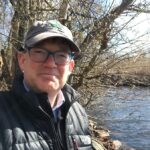
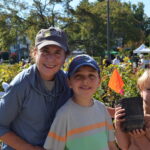
This article is part of the Belmont Citizens Forum’s series on environmental leadership in Massachusetts. Within 20 years, I expect to see a more free-flowing Neponset River teeming with native and anadromous fish, with a connected network of bike and pedestrian trails … where people can swim in their local pond or waterway … where restored floodplains and green infrastructure keep us cool, protect people from flooding, and support thriving wildlife. The Neponset River Watershed Association (NepRWA) works to protect and restore one of Greater Boston’s most historically significant rivers, whose 30‑mile course drains parts of 14 cities and towns [READ MORE]

Share

Lexington’s Conservation Stewards

 Environment, July/August 2026, Newsletter, Open Space  Comments Off on Lexington’s Conservation Stewards
Jun 292026
 
Lexington’s Conservation Stewards

By Jeffrey North Lexington’s Conservation Division and its network of Conservation Stewards form one of the most robust municipal stewardship programs in the region. Together, they care for more than 1,400 acres of conservation land and more than 50 miles of trails. This partnership offers a useful model for towns like Belmont that are looking to stretch limited staff capacity and improve the ecology and public enjoyment of local open space. The Conservation Division’s Core Mission Lexington’s Conservation Division is the town department charged with administering state and local wetlands laws, managing town-owned conservation land, and supporting the appointed Conservation [READ MORE]

Share

The Library Garden’s New Look Goes With The Flow of Wellington Brook

 Environment, July/August 2026, Newsletter, Open Space, Plants, Stormwater  Comments Off on The Library Garden’s New Look Goes With The Flow of Wellington Brook
Jun 252026
 
The Library Garden's New Look  Goes With The Flow of Wellington Brook

By Fred Bouchard “I saw the Wellington Brook as the most important ‘book’ in the library’s collection.” – Glen Valentine Whenever you visit the new Belmont Public Library, take time to visit the garden. Time out a bit from words and pages. Sit on a bench or rock wall. Amble about the paths. Read a poem aloud. Breathe in the trees’ oxygen. Quiz a robin. Play a wooden flute. Admire the bright azaleas. Look up at the seductive magnolias. Worship the majestic Dawn Redwood. Declaim from the amphitheater. But, above all, be sure to watch (and listen to) the Wellington Brook [READ MORE]

Share

Meet Belmont’s Natural Resources Manager

 Environment, July/August 2026, Plants  Comments Off on Meet Belmont’s Natural Resources Manager
Jun 222026
 
Meet Belmont’s Natural Resources Manager

William “Will” McPhee brings a background in forestry, horticulture, and municipal land stewardship to his new role as Belmont’s new natural resources manager. A graduate of Minuteman Regional Vocational Technical High School’s horticulture program, McPhee went on to study parks, recreation, and tourism at the University of Maine, where he  later earned a master’s degree in forestry. McPhee worked with the City of Bangor, Maine, on its emerald ash borer response program, helping the city plan for a pest that has damaged ash trees across much of the country. In Belmont, he first took on the role of tree warden [READ MORE]

Share

Miyawaki Forest Grows Through Two Seasons

 Environment, May/June 2026, Plants  Comments Off on Miyawaki Forest Grows Through Two Seasons
Apr 242026
 
Miyawaki Forest Grows Through Two Seasons

By Fred Bouchard and Jean Devine By Clay Pit Pond’s bridge on that brilliantly sunny October morning, dozens of eager planters — aged 12 to 80, armed with shovels and trowels — were swarming among hundreds of potted saplings and bushes at Belmont’s inaugural Miyawaki Forest. (Akira Miyawaki, 1928-2021, was a Japanese botanist who developed the practice of restoring small plots of degraded land with densely planted pocket parks.)  Curious joggers, dog-walkers, strollers, and pram-pushers who paused for a look-see or polite query barely slowed the feverish activity that unrolled all day long, from 8 AM to 6 PM. The [READ MORE]

Share

Environmental Leader: David O’Neill

 Climate Change, Environment, May/June 2026, Newsletter, Open Space  Comments Off on Environmental Leader: David O’Neill
Apr 242026
 
Environmental Leader: David O’Neill

Mass Audubon, founded in 1896, is one of the oldest and largest conservation organizations in New England. With more than 112 wildlife sanctuaries across Massachusetts, a network of 180,000 members and supporters, and a mission to protect the nature of Massachusetts for people and wildlife, Mass Audubon combines land protection, habitat restoration, conservation science, and environmental education to safeguard biodiversity and build climate resilience across the Commonwealth. The Belmont Citizens Forum spoke with David O’Neill, president and CEO of Mass Audubon, about the organization’s statewide conservation strategy, its partnerships with communities and policymakers, and his vision for the future of [READ MORE]

Share
Apr 242026
 
Community Preservation Committee Endorses Projects

By Aaron Pikcilingis Each spring at Belmont’s Annual Town Meeting, Town Meeting members (TMM) consider projects recommended by the Community Preservation Committee (CPC) and vote whether to award each Community Preservation Act (CPA) funding. TMM may choose to either fund the project as recommended, reject the project, or reduce the funding. CPA funding requires both the recommendation of the CPC and Town Meeting, so TMMs may not elect to vote for different projects or substantially alter a proposed project, nor may they vote to provide more CPA funding to a given project than is recommended by the CPC. For FY2027, [READ MORE]

Share

Environmental Stewards: Emily Norton, CRWA

 Climate Change, Environment, March/April 2026, Newsletter, Stormwater  Comments Off on Environmental Stewards: Emily Norton, CRWA
Feb 202026
 
Environmental Stewards: Emily Norton, CRWA

The Charles River Watershed Association (CRWA), founded in 1965, works to protect, restore, and enhance the Charles River and its surrounding communities. Through scientific monitoring, policy advocacy, and on-the-ground restoration, CRWA has helped transform the Charles from one of the nation’s most polluted rivers into a model of urban river recovery and climate resilience. The Belmont Citizens Forum spoke with Emily Norton, executive director of CRWA, about the organization’s watershed-wide initiatives, its community and policy partnerships, and her vision for the future of the Charles River. This interview has been edited for length and clarity: read the complete version at [READ MORE]

Share

Beth Lambert: Restoring Rivers and Wetlands

 Environment, January/February 2026, Water Quality  Comments Off on Beth Lambert: Restoring Rivers and Wetlands
Dec 172025
 
Beth Lambert: Restoring Rivers and Wetlands

By Jeffrey North This article is part of the Belmont Citizens Forum’s series on environmental leadership in Massachusetts. The Massachusetts Division of Ecological Restoration (DER), part of the Department of Fish and Game (DFG), works to restore and protect rivers, wetlands, and watersheds across the commonwealth. From removing aging dams to revitalizing salt marshes and wetlands, DER supports projects that strengthen ecosystems, improve climate resilience, and reconnect communities to nature. The Belmont Citizens Forum spoke with Beth Lambert, director of DER, about the division’s statewide restoration priorities and her vision for the future. Jeffrey North conducted the interview. BCF What [READ MORE]

Share

Why Recycling Stagnates

 Environment, January/February 2026, Recycling  Comments Off on Why Recycling Stagnates
Dec 172025
 
Why Recycling Stagnates

Belmont’s options for dealing with waste woes By Jeffrey North Dr. Jonathan S. Krones, associate professor of engineering at Brandeis University, gave a virtual presentation titled “Garbage 101: How the waste system actually works, and what we can do to achieve a more circular economy” sponsored by the Belmont Public Library last November. The talk offered a rare behind-the-scenes look at how waste and recycling systems actually function in Massachusetts and around the country. It also delivered a clarifying message to communities like Belmont: our recycling system is struggling not because residents are necessarily doing it wrong, but because the [READ MORE]

Share

OPINION: Treat Invasive Plant Removal as a System

 Environment, January/February 2026, Open Space, Plants  Comments Off on OPINION: Treat Invasive Plant Removal as a System
Dec 172025
 
OPINION: Treat Invasive Plant Removal as a System

By Jeffrey North Belmont’s conservation lands—Rock Meadow, Lone Tree Hill, Habitat, and our many wooded edges and wetland buffers—face a quiet but relentless challenge. Aggressive invasive plants threaten the fundamental health and richness of our local native plant communities, and consequently the fauna that rely on them for food and shelter. Invasive species such as glossy buckthorn, bittersweet, knotweed, and tree of heaven do not care about property boundaries or budget cycles. Yet our response to this threat is fragmented: volunteers clear a patch, a contractor mows a section, a grant funds a pilot project. Then, when the effort cannot [READ MORE]

Share

MyRWA Protects and Restores Mystic Watershed

 Climate Change, Environment, November/December 2025, Stormwater, Water Quality  Comments Off on MyRWA Protects and Restores Mystic Watershed
Oct 312025
 
MyRWA Protects and Restores Mystic Watershed

Our Environmental Stewards: Patrick Herron, Mystic River Watershed Association The Mystic River Watershed Association (MyRWA) has been a leader in restoring and protecting one of the most urbanized watersheds in New England. There are 44 lakes and ponds within the watershed, with its headwaters beginning in Reading and flowing to Boston Harbor. From ecological restoration and climate resilience projects to education, community engagement, and policy advocacy, MyRWA has built a reputation for turning data and public participation into lasting change. The Belmont Citizens Forum spoke with Patrick Herron, executive director of MyRWA, about the challenges and opportunities of protecting the [READ MORE]

Share

Miyawaki Forest Planted at Belmont Middle and High School

 Environment, November/December 2025, Open Space, Plants  Comments Off on Miyawaki Forest Planted at Belmont Middle and High School
Oct 312025
 
Miyawaki Forest Planted at Belmont Middle and High School

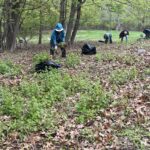
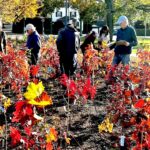
On Saturday, October 4, dozens of volunteers of all ages gathered at Belmont Middle and High School to plant a Miyawaki forest, also known as a mini forest. (See “Belmont’s First Miyawaki Forest Comes to BHS,” BCF Newsletter, July 2025.) They planted 1,400 native tree and shrub seedlings on 3,000 square feet—about the size of a public swimming pool. Photos by Jeffrey North.

Share

Rock Meadow Lacks a Conservation Restriction

 Environment, Lone Tree Hill, November/December 2025, Open Space  Comments Off on Rock Meadow Lacks a Conservation Restriction
Oct 312025
 
Rock Meadow Lacks a Conservation Restriction

By Dan Nolan A pastoral gem in Belmont, Rock Meadow is in full splendor each fall as the leaves turn, providing a backdrop for Instagram posts, family holiday cards, and yearbook photos. It’s a treasure year-round for people, animals, pollinators, and the entire ecosystem it shares with the rest of the Western Greenway. What it doesn’t share is the same level of protection. As the crow flies, the deer trots, and the water flows, the land is all connected. The Belmont Conservation Commission is seeking to strengthen that connection by providing Rock Meadow with the same level of enduring protection [READ MORE]

Share

Plastic Bags are on the Way Out, With or Without Bans

 Environment, Recycling, September/October 2025  Comments Off on Plastic Bags are on the Way Out, With or Without Bans
Aug 262025
 
Plastic Bags are on the Way Out, With or Without Bans

By Janet Domenitz If you’ve ever stood outside a supermarket and watched shoppers head to their cars, bags in hand, you’ll notice something striking these days: fewer and fewer plastic bags. That’s exactly what MASSPIRG Education Fund researchers set out to measure in a recent snapshot survey at grocery stores across Massachusetts—and the results are encouraging. Over the course of two weeks this summer, we observed shoppers exiting stores in 12 communities: half with local plastic bag bans, and half without. What we found was that in towns that restrict or phase out plastic bags, just 1% of shoppers left [READ MORE]

Share

Where Does the Water Go?

 Environment, September/October 2025, Stormwater, Water Quality  Comments Off on Where Does the Water Go?
Aug 262025
 
Where Does the Water Go?

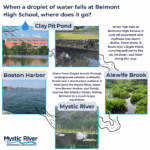
Understanding Clay Pit Pond and Belmont’s Hidden Rivers By Ry Emmert People don’t often think about where a raindrop goes after it hits the ground. It may splash on the pavement, flow toward a storm drain, and then seemingly disappear. However, if that droplet falls outside Belmont High School, it embarks on a complex and unexpected journey. This journey connects Belmont’s sidewalks to kayakers on the Mystic River, fish in the Charles River, and ships in Boston Harbor. The story begins with Clay Pit Pond, a shallow and iconic body of water situated between the high school and Concord Avenue. [READ MORE]

Share

Belmont Boasts Bountiful Owls

 Environment, Newsletter, September/October 2025  Comments Off on Belmont Boasts Bountiful Owls
Aug 262025
 
Belmont Boasts Bountiful Owls

by Fred Bouchard Let’s open with, then qualify, two generalizations about Barred, Snowy, and Saw-Whet Owls. Females run a bit larger than males; one might (erroneously) surmise that their voices are somewhat deeper in pitch. Most owls are strictly nocturnal. That said, our first two are crepuscular and diurnal, respectively. Barred Owl (Strix varia) Ubiquitous and crepuscular (active and vocal from dusk to dawn), Barred Owls rank among our easiest woodland owls to see. They tend to roost in outer branches, exposed. They don’t hug trunks for camouflage like Great Horned Owls or snuggle in holes like Screech Owls. Their [READ MORE]

Share

Lone Tree Hill Restoration Continues

 Environment, Lone Tree Hill, Open Space, Plants, September/October 2025  Comments Off on Lone Tree Hill Restoration Continues
Aug 262025
 
Lone Tree Hill Restoration Continues

By Jeffrey North and Joe Hibbard For over a decade, Lone Tree Hill has been a focal point of community-led ecological restoration in Belmont. The Belmont Citizens Forum, the Judy Record Conservation Fund, and many dedicated volunteers, all under the aegis of the town’s Land Management Committee for Lone Tree Hill, have shared this effort. Since the restoration work began, this conservation land has transformed from a neglected patch of invasive thickets to a thriving habitat increasingly dominated by native species. Last April 26, despite steady rain, more than 50 volunteers gathered at Lone Tree Hill’s Meadow Edge Trail for [READ MORE]

Share

Judy Record Conservation Fund Cares for Land

 Environment, Lone Tree Hill, September/October 2025  Comments Off on Judy Record Conservation Fund Cares for Land
Aug 262025
 
Judy Record Conservation Fund Cares for Land

By Roger Wrubel The Judy Record Conservation Fund (JR Fund) was founded in 2001 in honor and memory of Judy Record by her friends and family. Judy Record worked tirelessly and effectively from 1995 to 2000 as the leader of the McLean Open Space Alliance (MOSA), which began when eight apprehensive Belmont citizens met to discuss the rumored development of over 190 acres of woods and meadows surrounding the McLean Hospital campus. She stepped forward to lead the effort to preserve as much of the undeveloped land as possible. Record grew MOSA into an effective grassroots organization with 800 members. [READ MORE]

Share

Belmont’s First Miyawaki Forest Comes to BHS

 Climate Change, Environment, July/August 2025, Open Space, Plants  Comments Off on Belmont’s First Miyawaki Forest Comes to BHS
Jun 302025
 
Belmont’s First Miyawaki Forest Comes to BHS

By Jean Devine Picture this: It’s 2028, and on the Belmont High School campus, a small forest of native trees and shrubs is shooting toward the sky. The trunks sway gently and the leaves shimmer softly in the summer breeze. As you walk toward this grove, birds flit in and out, you hear a hum of bees, while other pollinators, insects, and worms, mostly invisible to you, thrive in deeper sections of this new habitat. Before you stands Belmont’s  first Miyawaki Forest (aka mini forest). Now, three years after planting, this forest is self-sufficient. And, it’s replicable! Maybe it has [READ MORE]

Share