
By Jeffrey North
Lexington’s Conservation Division and its network of Conservation Stewards form one of the most robust municipal stewardship programs in the region. Together, they care for more than 1,400 acres of conservation land and more than 50 miles of trails. This partnership offers a useful model for towns like Belmont that are looking to stretch limited staff capacity and improve the ecology and public enjoyment of local open space.
The Conservation Division’s Core Mission
Lexington’s Conservation Division is the town department charged with administering state and local wetlands laws, managing town-owned conservation land, and supporting the appointed Conservation Commission, which is responsible for protecting wetlands and open space, as well as working with Public Works and other departments. Its work ranges from reviewing development proposals under the Massachusetts Wetlands Protection Act and Lexington’s local wetlands bylaw to planning long-term stewardship of conservation areas.
In practice, staff shoulder three broad responsibilities: regulatory review, land management, and public engagement.
Managing 1,400 Acres of Open Space
Lexington’s conservation land spreads across 26 conservation areas, with more than 50 miles of trails and many boardwalks through wet areas. These forests, fields, and wetlands provide wildlife habitat, store floodwater, filter air and water, and offer residents spaces for walking, birding, skiing, and solitude.
The town manages these lands for multiple purposes: passive recreation and education, habitat protection, ecosystem services (e.g., fresh air and clean water), trail and wildlife connectivity, and preservation of scenic and historic character. To guide decisions at both the town-wide and property scale, the Conservation Commission adopted a comprehensive management guide, Principles and Policies for the Management of Lexington Conservation Land, in 2015.
Origins and Structure of the Stewards Program
Lexington’s Conservation Stewards program began as a loose network of neighbors who took it upon themselves to adopt local conservation parcels in the early 1980s. Over time, the town recognized both the need for more coordination and the enormous value of sustained volunteer involvement in caring for conservation lands.
Today, the Lexington Conservation Stewards number more than 230 volunteers. A Stewards Directors Group, formed roughly two decades ago, has a full-time stewardship coordinator position to support monthly directors’ meetings, project planning, and communication.
What Conservation Stewards Do on the Ground
Stewards take on much of the “boots on the ground” work that would otherwise overwhelm municipal staff. They build and maintain bridges and trails, improve wayfinding signage, restore meadows, remove invasive species, and repair wetland boardwalks.
Volunteers also help with neighborhood cleanups, trash removal, and small-scale erosion control, and they are the first eyes and ears to spot downed trees, damaged infrastructure, or emerging invasive problems. Though the town backs them up with a seasonal land management crew and occasional DPW assistance, volunteers do roughly 90% of the on-the-ground work.
Lead Stewards and Property-Scale Care
Each of Lexington’s 26 conservation areas has one or more Lead Stewards who coordinate care for that property and serve as points of contact with town staff. Lead Stewards help develop work plans, organize volunteer days, and track recurring needs such as invasive plant hotspots, muddy trail sections, or aging kiosks.
The town encourages residents and local groups to become Lead Stewards. These roles are crucial to preserving and maintaining Lexington’s conservation land. An online membership form allows residents to join the Conservation Stewards network. Staff then connect them with a specific property or project that matches residents’ interests and availability.
Partnerships, Training, and Community Building
In addition to individual volunteers, the Stewards program partners with local scout troops, churches, temples, businesses, and civic organizations on larger projects such as boardwalk construction, meadow restoration, and trail reroutes.
Recruitment and retention depend on consistent communication. The Conservation Division publishes a monthly e-newsletter, several articles in local newspapers each year, and guided hikes. An annual open house shares projects and welcomes new volunteers. Stewards receive training in sustainable trail design, safe use of hand tools, and specialized skills, such as “Game of Logging,” which helps volunteers work safely around downed trees. The town even has its own Lexington Conservation Stewardship Handbook.
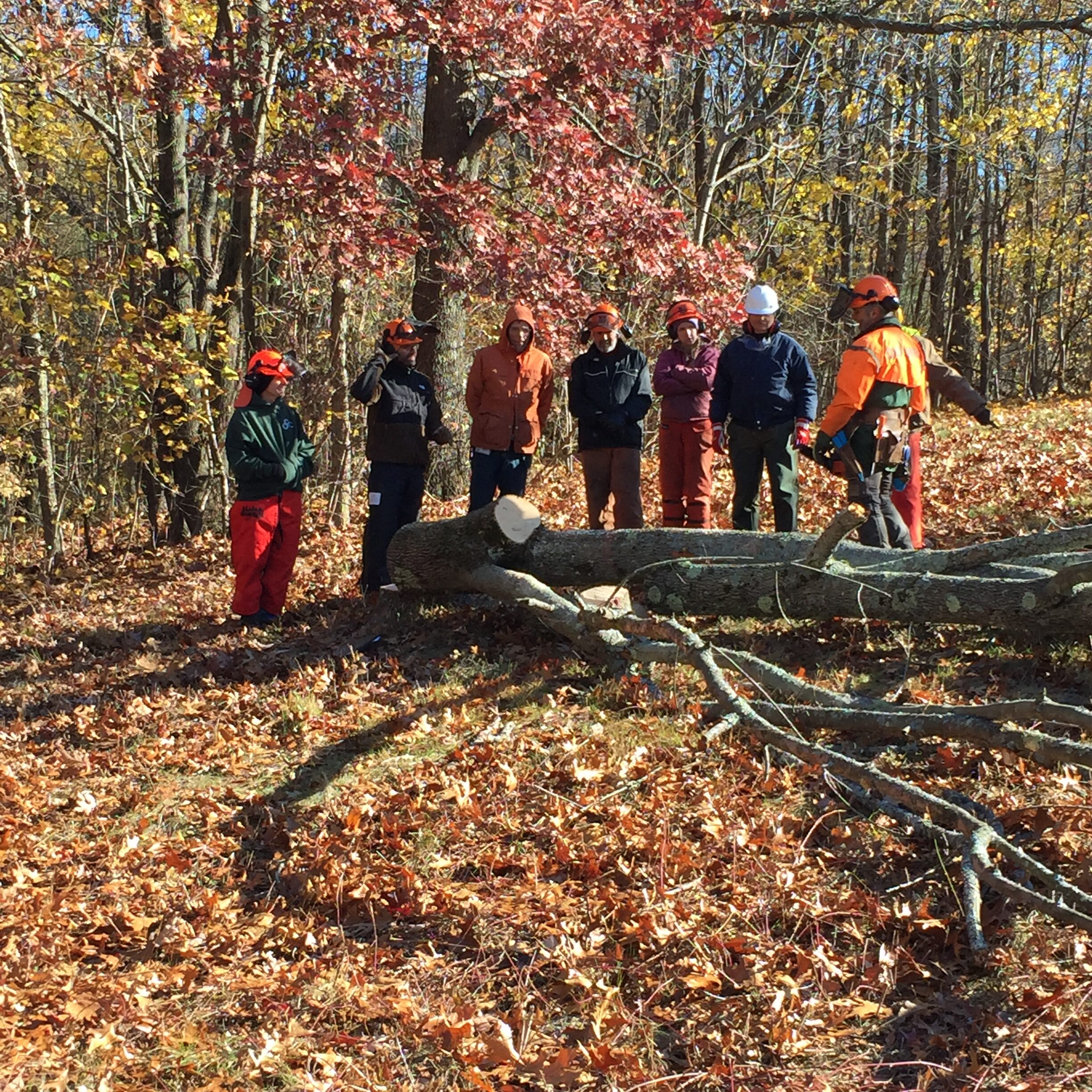
Photo: Lisbeth Bornhofft.
Ecological Benefits and Public Access
Stewardship efforts directly improve the ecological health of Lexington’s conservation lands. Managing meadow succession and removing invasive plants helps protect and enhance biodiversity, while trail maintenance work reduces erosion and keeps visitors on durable paths, limiting damage to sensitive habitats.
At the same time, these projects expand and preserve public access by keeping trails clear, repairing boardwalks, and improving signage so that visitors can confidently explore new areas. Interpretive walks and informal conversations on the trail help build a constituency for conservation, connecting residents’ daily experiences to broader questions of watershed protection, climate resilience, and regional habitat connectivity.
Funding, Challenges, and Lessons for Neighbors
Funding for Lexington’s conservation land management and stewardship comes from the town budget, Community Preservation Act funds, grants, and groups like the Lexington Nature Trust Fund (which the Conservation Commission uses to acquire, promote, manage, and maintain its properties). This patchwork enables both routine maintenance and more ambitious projects such as major boardwalk installations and ecological restoration plans for high-priority properties.
The program also faces challenges familiar to neighboring towns: aging volunteer leaders, the need to cultivate new generations of stewards, and the challenge of matching enthusiastic volunteer energy with townwide priorities. Lexington’s experience suggests that investing in staff capacity to coordinate volunteers, providing clear management plans, and recognizing volunteers’ contributions are key to sustaining a large-scale stewardship program over the long term.
A Sterling Model for Belmont
For Belmont residents, Lexington’s Conservation Division and Conservation Stewards demonstrate how a small staff can successfully care for a large, ecologically diverse open space system by working closely with trained volunteers. The combination of clear policy guidance, professional oversight, and empowered citizen stewards has produced a network of well-maintained woods, fields, and wetlands that serve both wildlife and people in a suburban region.
As communities confront pressures from climate change, regional growth, and recreational demand, Lexington’s model shows that volunteers are not just a nice addition but an essential part of long-term conservation land management. With thoughtful adaptation to local conditions, the core elements of property-based lead stewards, staff support for coordination, and a strong culture of training and appreciation could strengthen open-space stewardship in Belmont and beyond.
Jeffrey North is the managing editor of the Newsletter.
Lead Stewards: the town’s “eyes and ears and boots on the ground”
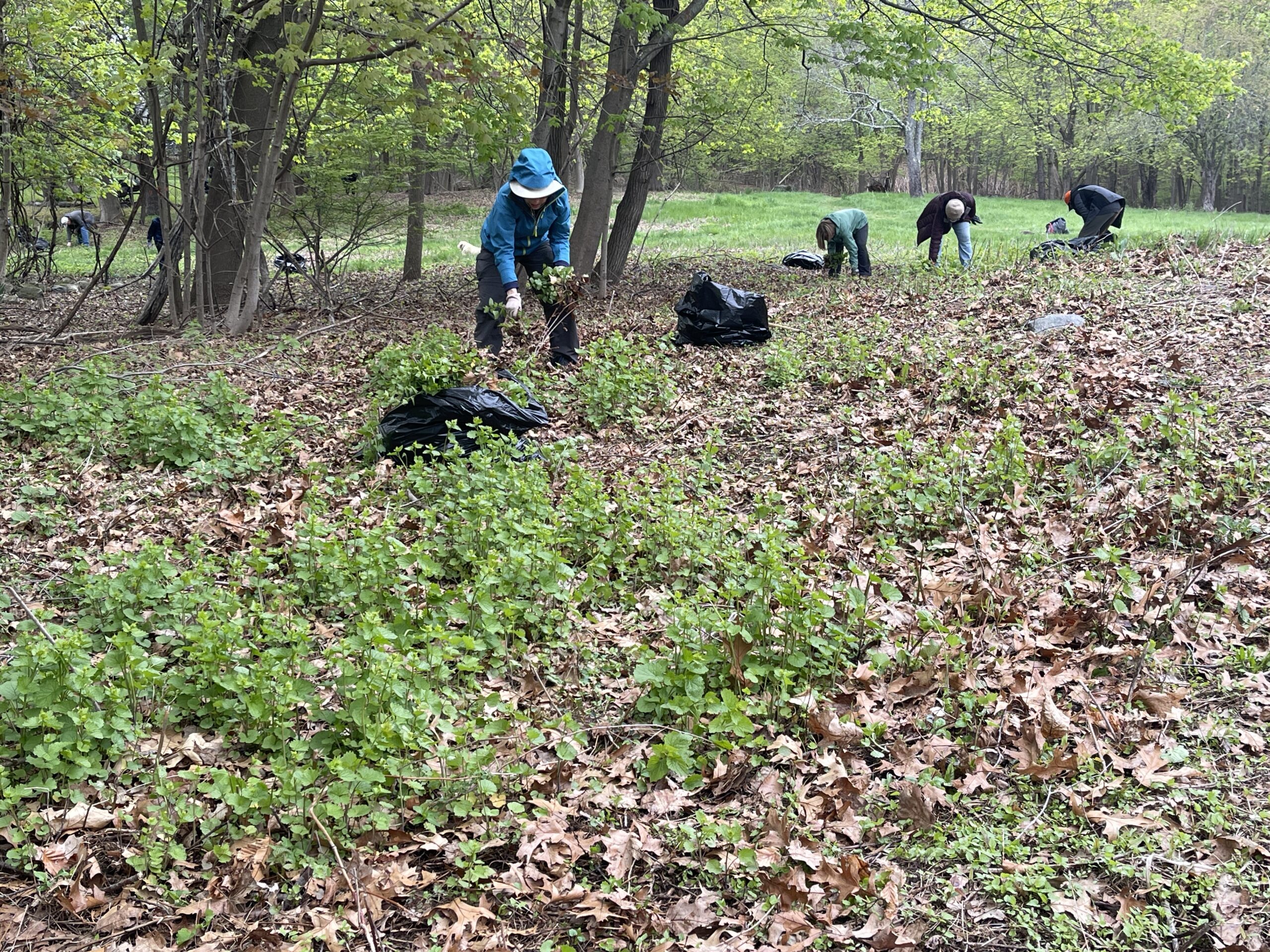
Stewards remove invasive plants in Lexington, MA. Photo: Lisbeth Bornhofft
Core duties
- Walk the assigned property about once a month to assess visitor use, trail conditions, signage, and any issues such as vandalism, trash, dog waste, or unauthorized motorized use.
- Monitor for safety and maintenance needs, including downed trees, damaged boardwalks, flooding, and overgrown or eroded trails.
- Watch for invasive species and conditions along road edges to help maintain the property’s visibility from the street.
Communication and coordination
- Report observations and issues to the Conservation Division, including suggestions for projects that would improve use, ecology, or upkeep of the property.
- Help organize workdays with other Conservation Stewards; the town provides contact lists of interested volunteers for that property.
- Optionally attend monthly evening meetings with Conservation staff to give updates, learn from other stewards, and get help planning stewardship projects.
Outreach and documentation
- Provide photos and highlights (e.g., notable flora, fauna, or visitor activities) for use in town social media and outreach about the conservation lands.
- Work collaboratively with conservation staff and the broader volunteer group, without prior technical expertise, as long as there is a willingness to be outdoors and to observe the land.

Sorry, the comment form is closed at this time.