
Mass Audubon, founded in 1896, is one of the oldest and largest conservation organizations in New England. With more than 112 wildlife sanctuaries across Massachusetts, a network of 180,000 members and supporters, and a mission to protect the nature of Massachusetts for people and wildlife, Mass Audubon combines land protection, habitat restoration, conservation science, and environmental education to safeguard biodiversity and build climate resilience across the Commonwealth.
The Belmont Citizens Forum spoke with David O’Neill, president and CEO of Mass Audubon, about the organization’s statewide conservation strategy, its partnerships with communities and policymakers, and his vision for the future of nature in Massachusetts. Jeffrey North conducted the interview.
BCF
Could you share a bit about your background and what led you to your current role as president and CEO of Mass Audubon?
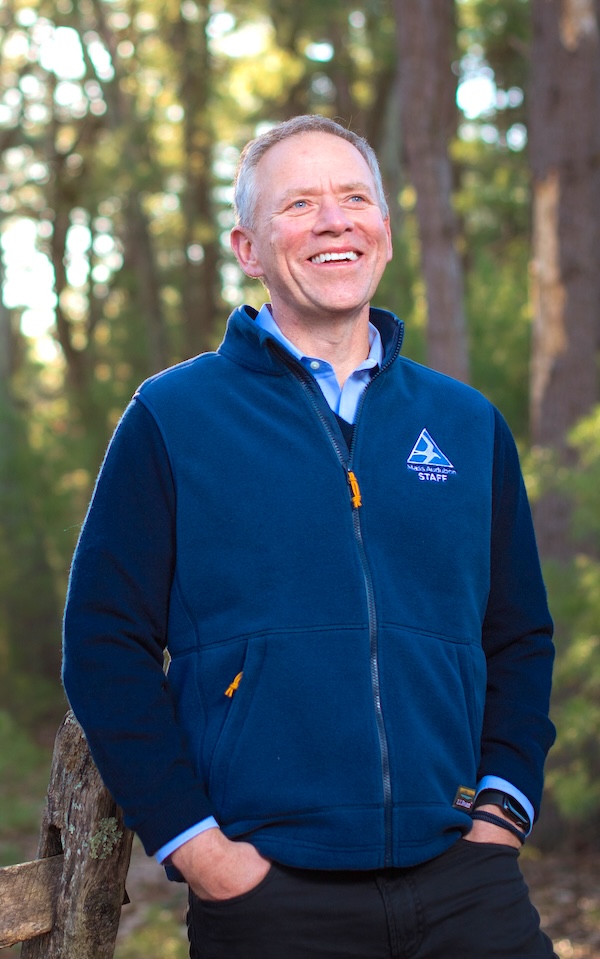
David O’Neill. Photo: Gretchen Ertle
O’Neill
Thank you for the opportunity to speak to your readers and to share with a community that is very important to Mass Audubon. Our Habitat Education Center and Wildlife Sanctuary is a gem in our sanctuary network, and I hope readers will visit soon and often.
I started my career as a Chesapeake Research Consortium Fellow working for the Chesapeake Bay Program at the time, which was considered a global model for estuary restoration. I worked for the director and deputy director and experienced extremely dedicated people working to save the bay, and I also learned the art of diplomacy, because we had to work across political divides and diverse industry stakeholders to build a consensus to value and then invest in Saving the Chesapeake Bay. I went on to serve as the executive director of Chesapeake Bay Trust, then moved to national and international conservation work. My job prior to joining Mass Audubon was as the chief conservation officer and special advisor to the President of the National Audubon Society. While these previous roles were exciting and rewarding, the honor of serving as the president of Mass Audubon has been my career highlight, working with amazing people on my team, with our dedicated members, and through partnerships every day. We are making significant and tangible progress in protecting the nature of Massachusetts for people and wildlife. Being part of our growing community is so rewarding because we are making progress together.
BCF
Mass Audubon is known primarily for birds, but can you explain why that’s only a part of the picture and talk about how the organization’s mission and scope have evolved over the last two decades?
O’Neill
We have been, are, and probably always will be best known as “the bird organization” by some – and that’s great. We were founded in 1896 by two pioneering women, Minna Hall and Harriet Hemenway, who set out to stop the feather trade, and we’re extraordinarily proud of our origin story.
But I’m also heartened to see Mass Audubon’s crucial evolution. We are focused on confronting the most challenging issues facing the natural world today, and while we still do a lot of work to protect birds and to celebrate them as sentinel species, we also advocate for horseshoe crabs, endangered sea turtles, moose, bobcats, and other wildlife that call the Commonwealth home.
The biggest shift we have made over the past five years is our effort to battle against the loss of biodiversity and climate change, often where those two issues intersect. For example, we’ve tripled our pace of land conservation to meet the state’s ambitious 30×30 goals, protecting 30% of Massachusetts lands by 2030. We are also scaling up our ecological restoration work. Our Tidmarsh Wildlife Sanctuary in Plymouth, for example, is a result of the largest freshwater wetland restoration project in New England and is now open to the public. We are also restoring thousands of acres of marshes, shorelines, and beaches along our coast, which are so vulnerable to sea-level rise and rich in biodiversity. And we’re engaging in climate-smart forestry to help improve the health of our forests and the wildlife that calls them home.
Our mission is to advocate for policies that protect nature, and we have ramped up these efforts by championing a variety of bills on Beacon Hill, including setting up a permanent state revenue source specifically for land and water conservation. In short, Mass Audubon has gone from “the bird folks” to nature’s fiercest ally in the Commonwealth.
And complementing all this work are the experiences and joy we provide at our sanctuaries each and every day. We have 10,000 campers joining us this summer to learn about and be a part of nature, and tens of thousands of visitors just exploring nature or participating in nature-based education programs. All of this adds up to growing a love of nature that, in return, expands the number of people who care about it and will fight to protect it.
BCF
Almost everyone is acutely aware of the threats that climate change poses to our region, but the question is, what can we do about it, and how is Mass Audubon working towards a solution?
O’Neill
The negative impacts of climate change are an existential crisis for people and wildlife. When coupled with the loss of biodiversity, we have real and immediate threats that we need to address now, and Mass Audubon is doing that at a pace and scale that is historic for our organization. After all, we only have one planet, and it is sending up red flags all over the place, so we’re taking action, providing hope, and demonstrating progress. We are not a doom-and-gloom organization; we are a doer organization, full of people with hope and a desire to make a difference.
The strategy we are leading across the Commonwealth to combat these threats is significantly focusing on accelerating the pace of land conservation and stemming biodiversity loss. That’s why we started the 30×30 Catalyst Fund, a $75M privately funded initiative to double the pace of land conservation. In the face of dwindling federal dollars and rampant development, we can’t afford to lose our forests, which are the best and most cost-effective solution to combating climate change and biodiversity loss. We’ve already used a portion of that money to protect thousands of acres, including 1,300 acres of old-growth forest in Winchendon and Ashburnham that would have been clear-cut by a developer.
We’re also spearheading the Nature for Massachusetts Coalition and collecting signatures to put nature directly on the ballot. As the current federal administration cancels and even claws back federal grant money for conservation, it’s essential that Massachusetts join other states that have a dedicated funding source specifically for land conservation. Our proposal seeks to reallocate $100M annually from the state’s sporting goods sales tax to save land, protect drinking water, and ensure our forests and nature in general can still be enjoyed by our grandchildren’s grandchildren.
By conserving land ourselves, financially contributing to other conservation groups to help them buy more conservation land, and offering our staff resources, expertise, and services to organizations working on related projects, we feel we’re participating in the most direct and effective way possible to achieve our biodiversity and resilience goals.
BCF
Suburbs like Belmont are proactive in making sure we have plenty of green space for people to enjoy, but what about the state’s more densely populated urban communities?
O’Neill
Speaking of Belmont, I know most of your readers are already familiar with our Habitat Education Center & Wildlife Sanctuary, where many families have enjoyed our camp (with sliding scale tuition to make it affordable), preschool, and intergenerational programs there, but if folks haven’t been there in a few months, they’ll find the entrance looks different. Not only is it more aesthetically pleasing, but it also enhances safety, accessibility, and the property’s ecological health. With an ADA-compliant ramp connecting the parking lot to the main building’s front entrance, adjustments to the doorway itself, and the planting of native grasses and shrubs, Habitat has a whole new look and feel that’s more inclusive of everyone while also showing off the beautiful historic home that serves as our nature center.
But on the accessibility front, one of the core tenets of our mission is that ensuring nature and all the benefits it offers is available to everyone no matter where they live. But the fact is, environmental justice communities have been on the short end of the stick when it comes to access to nature, and they feel those effects via lack of green space, a dearth of trees, and heat deserts that directly impact people’s health.
Last year, we opened Pawtucket Farm Wildlife Sanctuary in Lowell, which provides more than 20 acres of outdoor trails, farm fields, and wildlife habitat amid a densely populated city. It’s the result of a fantastic partnership between two local conservation organizations, Lowell Parks & Conservation Trust and Mill City Grows, and together we can provide the community with an all-persons trail, community gardens, environmental education programming, and a nature oasis in the middle of Lowell. Pawtucket Farm is the first urban wildlife sanctuary that Mass Audubon opened in 20 years, building on the success of our Boston Nature Center in Mattapan and Broad Meadow Brook in Worcester, and represents our commitment to finding ways to work with local partners to bring the benefits of open space to nature-deprived communities.
One project on the very near horizon that I’m extremely excited about is in Chelsea, one of the most densely populated communities in the entire state. This 18-acre site sits on the banks of Chelsea Creek, and we’re working with local nonprofits GreenRoots and The Neighborhood Developers to transform a former industrial site into a world-class waterfront greenspace that also includes mixed-income housing.
This groundbreaking project could be a national model going forward that proves affordable housing and land conservation don’t have to be at war with each other. Opening up public access to prime real estate at the confluence of two rivers in a city that suffers from lack of tree canopy, heat islands, and a lack of exposure to nature is essential to increasing equitable access to nature and aligns perfectly with our mission.
Everyone benefits from nature but not everyone has ready access to it. We’re working hard to change that.
BCF
What policy victories or milestones are you most proud of and what are your priorities going forward?
O’Neill
In spring 2024, after an all-out effort spearheaded by Mass Audubon, the Massachusetts Marine Fisheries Advisory Commission (MFAC) voted to ban the harvest of horseshoe crabs during their crucial spring spawning season, when horseshoe crabs come to shore to breed and lay eggs. This critically needed measure is expected to kickstart the Commonwealth’s depleted horseshoe crab populations on the road towards recovery, ensuring a 400-million-year-old species will survive and thrive.
We’ve all seen the stories about rats in Boston, but most people don’t know there’s an enormous negative cost to using rodenticides to solve the problem. SGARs (second-generation anticoagulant rodenticides) are having a deadly impact up and down the food chain. Rats eat the poison, the poison slows them down until they become easy prey, and then other animals like raptors eat the poisoned rats and become poisoned themselves. That’s why Mass Audubon is working with partners to call for lessening the use of rodenticides. There are nearly 50 communities (including Belmont) working to end the use of rodenticides in their cities/towns, and thousands of volunteers joined us at the State House last summer where the proposed legislation to end rodenticides at the state level now has more than 100 legislative sponsors.
But the most immediate and pressing priority is to make sure Massachusetts has a permanent state funding source in place to continue all of this work organizations like ours have begun. We’re going to continue to raise private funding sources to help, but we absolutely need a dedicated state funding source to meet our biodiversity and climate goals.
The only other thing I would like to add here is that Mass Audubon is committed to building a nature movement by tapping into the 165,000 members, the hundreds of thousands that visit our sanctuaries, building stronger ties with our partners, building relationships with businesses and others to fight for nature solutions. It will be a powerful force and voice for solutions that protect nature, and we hope you’ll join us. One immediate step you could take to be part of it is joining our Climate and Nature Champions program at Climate and Nature Champions.
BCF
If you could leave our readers with one key takeaway about what matters most in the decade ahead, what would it be?
O’Neill
The thing that matters most is for people to understand it’s not too late to achieve our goals, and the problem isn’t too big to solve. We use the tagline “hope, urgency, and action” to convey that we believe hope is essential to our success, that we must work with urgency, and that tangible action solves problems and creates more hope. And we have also said that in this uncertain political environment, where nature is threatened by federal policies, “progress is our protest.” In other words, while steps are being taken to undermine bedrock federal environmental laws, it is at the state level where we can be a bulwark to these decisions and where we can and will make progress.

Sorry, the comment form is closed at this time.