

William “Will” McPhee brings a background in forestry, horticulture, and municipal land stewardship to his new role as Belmont’s new natural resources manager. A graduate of Minuteman Regional Vocational Technical High School’s horticulture program, McPhee went on to study parks, recreation, and tourism at the University of Maine, where he later earned a master’s degree in forestry.
McPhee worked with the City of Bangor, Maine, on its emerald ash borer response program, helping the city plan for a pest that has damaged ash trees across much of the country. In Belmont, he first took on the role of tree warden and since March, he has added responsibilities as conservation agent, succeeding longtime Conservation Agent Mary Trudeau.
In this interview with Jeffrey North, McPhee discusses Belmont’s urban tree canopy, invasive species, climate resilience, open-space stewardship, and the role residents can play in caring for the town’s natural resources.
How would you describe your new position to town residents?
McPhee: I have been serving as tree warden for Belmont, which has been a busy role in itself. That job involves managing the town’s urban canopy and helping ensure the safety and health of both residents and trees. A large part of that work is minimizing the risk that trees in public rights-of-way could damage property, fall on passersby, or interfere with traffic.
More recently, I have also taken on the role of conservation agent, replacing Mary Trudeau, who served the town for many years. The two jobs overlap in some respects, but in other ways they are quite separate.
As the conservation agent, I work primarily with publicly owned spaces, including wetlands, wetland resource areas, conservation lands, and other open spaces in town. These include Rock Meadow, wetland aspects of Lone Tree Hill, Clay Pit Pond, Beaver Brook, Little Pond, portions of Fresh Pond, and other parcels.
It is a dynamic role. I work with the Conservation Commission and serve as an intermediary between the commission and the town, helping ensure that projects affecting these properties are carried out safely, ethically, and in an environmentally responsible manner. That can involve filings by private residents or cooperation with various town departments, depending on the project.
What drew you to urban forestry and municipal conservation, and what appealed to you about Belmont?
McPhee: My background has been in this “neck of the woods,” no pun intended, since I attended Minuteman Regional Vocational Technical High School, where I majored in horticulture. That started me on this path. After Minuteman, I went to the University of Maine, first in forestry and then in parks, recreation, and tourism, which is where I earned my bachelor’s degree. I later returned to the University of Maine for a master’s degree in forestry.
One thing led to another, and eventually those experiences brought me toward Belmont. Before coming here, I worked in Bangor during my master’s program on its emerald ash borer response program. When I finished that work and returned to Massachusetts, the opening for Belmont’s tree warden position seemed like a logical next step.
At my core, I have a love for nature. I have always preferred spending time outdoors to being inside. Working for a town gives me the chance to apply what I have studied while staying connected to the outdoors.
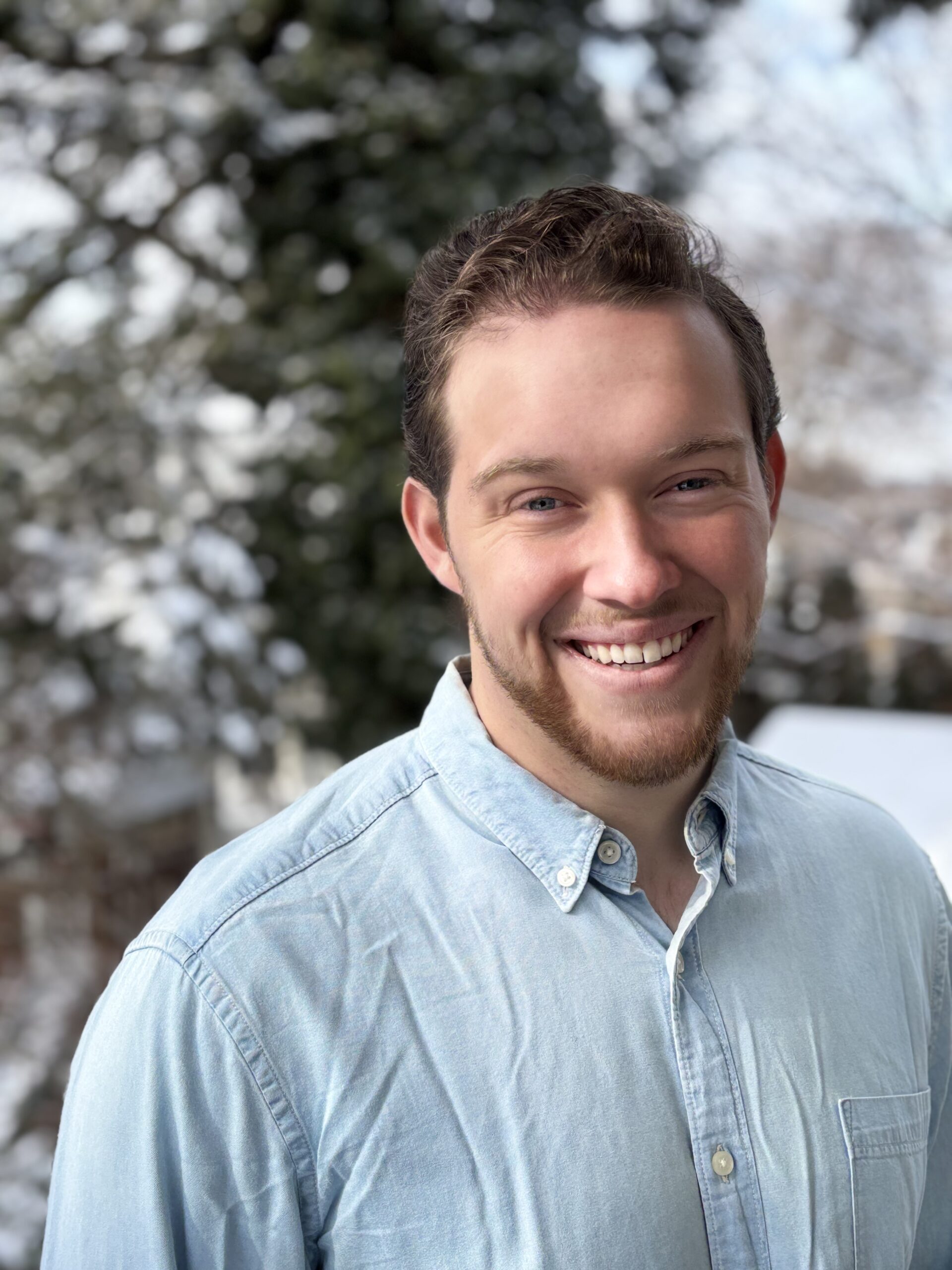
Will McPhee is Belmont’s new Natural Resources Manager Credit: Matthew McPhee
What are your top priorities for the next one to three years?
McPhee: My priorities remain focused on the safety and health of Belmont’s trees and on maintaining a healthy urban canopy. One of the biggest issues is that Belmont’s canopy has a large component of maples, including Norway maples (see September/October 2021 BCF Newsletter). We are not removing trees simply for the sake of removing them; there must be disease, decline, or a defect that poses a risk. But many Norway maples in town are nearing the end of their lifespans and beginning to decline.
As we remove those trees over time, we are trying to replace them with a wider variety of species. In a nutshell, my priority is to improve biodiversity in town with new native species. That helps improve not only the safety of our urban canopy but also its resilience against plant pathogens and pests.
We are already seeing those pressures. Belmont has beech leaf disease, and we must remove the copper beech that has stood on the town green for as many years as Belmont has been a town. Emerald ash borer is also present in town. Improving biodiversity is one way to help us deal with these and future issues.
Rock Meadow and Lone Tree Hill are beloved open spaces with complex management needs. How do you envision your role in guiding their care?
McPhee: The invasive species present at those locations are similar in many ways, and the overall response is broadly similar as well. The town works with contractors and other partners to manage invasive species, and part of my role is to help direct available town funds toward that management.
At Rock Meadow, for example, we have worked on invasive species such as glossy buckthorn and bittersweet, as well as numerous other invasive plants, including phragmites and black swallow-wort. We work with contractors when needed to reduce those populations. We have also partnered with others on more holistic management approaches, including limited use of livestock grazing to control certain species.
The specific method depends on the site and the problem. In some places, livestock grazing may be appropriate. In others, we use targeted mechanical removal or other control methods with help from contracted invasive-species specialists. The goal is to use the right tool for the right location while continuing to protect the character and ecological value of these open spaces.
How will you approach Belmont’s urban tree canopy amid climate-related stresses such as heat, drought, and intense storms?
McPhee: Our primary strategy has been to use native species. At the same time, as the climate continues to warm, some species that are native to this region may become less well adapted to local conditions. One approach is to use species that are still native to the eastern seaboard but come from somewhat farther south.
We look for trees that are better adapted to hotter temperatures and drought while still tolerating cold weather. That may include species from Virginia or Delaware, where winters can still bring snow but summers are hotter and more humid. Sweetgum is one example of a species we have planted that is better adapted to warmer conditions.
The goal is to build a more resilient canopy by selecting native or regionally appropriate trees that can handle the environmental conditions Belmont is likely to face in the coming decades.
How do you balance habitat protection with public enjoyment of open space?
McPhee: We try to work with the public as much as we can. For organized events, such as a cross-country running race on Rock Meadow, for example, we are open to allowing appropriate use of open spaces when events can be properly permitted and managed. There is nothing wrong with that as long as we can do it within the town’s guidelines.
At the same time, issues such as off-leash dogs, unofficial trails, and unmanaged recreational use create real management concerns. These activities can disturb wildlife, damage habitat, and spread invasive species. Seeds can get stuck in people’s boots or dogs’ fur and be carried to new areas, where a new patch of bittersweet or another invasive plant can take hold.
Off-leash dogs are a particular concern at Rock Meadow and Lone Tree Hill. Off-leash dogs can disturb wildlife, run through invasive plant patches, and contribute to seed dispersal. Pet waste is also a management issue. The town provides disposal facilities near parking areas, and we ask residents to use them.
We recognize that people value these spaces and want to enjoy them. Our job is to make that possible while also protecting the land’s ecological health.
What are the most pressing invasive species or ecological threats facing Belmont’s trees and conservation lands?
McPhee: The answer depends on the location. Each site in town has its own issues, whether those involve neighboring properties, wetland impacts, invasive species, or other concerns.
Among invasive plants, buckthorn and bittersweet are two of the most dominant species we are actively working to manage. There are many others as well. In some wetland areas, Phragmites is becoming a significant issue.
Another important challenge is ensuring residents understand when their property is in or near a wetland resource area and which regulations apply. When projects, development, or other activities affect wetlands, residents and the town need to be on the same page about the requirements of the Wetlands Protection Act and local conservation rules.
How can residents help with trees, wildlife, and land stewardship?
McPhee: I have not yet had as much time as I would like to work with community organizations, but that is a goal of mine. So far, much of my community interaction has involved Rock Meadow and the Victory Gardens.
For the urban canopy, one of the easiest and most helpful things residents can do is report concerns about town-owned trees. The DPW appreciates calls from residents who see something that looks wrong with a public tree. That could involve a limb that needs trimming, a tree that appears diseased or damaged, or a question about whether a tree may need attention.
On the wetlands and open-space side, several organizations offer opportunities for citizen science and volunteer involvement. These include state agencies such as the Department of Conservation and Recreation, Mass Audubon, the Mystic River Watershed Association, and the Charles River Watershed Association. Mass Audubon’s Habitat property in Belmont is one local place where residents can get involved with volunteer efforts.
Looking ahead 10 or 20 years, what would success look like for Belmont’s trees and open spaces?
McPhee: For the urban canopy, success would mean a more environmentally resilient canopy made up of many different species. Ideally, no one species would make up more than about 15 to 20% of the canopy. That is a long way from where we are now and not something that we can achieve in just a few years, but it is a useful long-term goal.
Over time, I would like to see an urban canopy that includes many native and regionally appropriate species, with greater biodiversity and stronger resilience to climate change, pests, and disease.
For open spaces, success would mean land managed effectively to control invasive species while still allowing residents to enjoy these spaces. That includes minimizing the spread of invasive plants, keeping dogs on leash, discouraging unofficial trails, and protecting the natural character of the landscape.
It also means having a community of residents who are involved with public spaces, whether by volunteering to help maintain them, serving on committees, reporting problems, or sharing concerns and ideas. Community involvement is essential.

Sorry, the comment form is closed at this time.