Environmental Stewards: Emily Norton, CRWA

 Climate Change, Environment, March/April 2026, Newsletter, Stormwater  Comments Off on Environmental Stewards: Emily Norton, CRWA
Feb 202026
 
Environmental Stewards: Emily Norton, CRWA

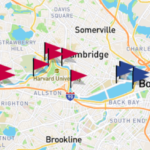
The Charles River Watershed Association (CRWA), founded in 1965, works to protect, restore, and enhance the Charles River and its surrounding communities. Through scientific monitoring, policy advocacy, and on-the-ground restoration, CRWA has helped transform the Charles from one of the nation’s most polluted rivers into a model of urban river recovery and climate resilience. The Belmont Citizens Forum spoke with Emily Norton, executive director of CRWA, about the organization’s watershed-wide initiatives, its community and policy partnerships, and her vision for the future of the Charles River. This interview has been edited for length and clarity: read the complete version at [READ MORE]


Share

Beth Lambert: Restoring Rivers and Wetlands

 Environment, January/February 2026, Water Quality  Comments Off on Beth Lambert: Restoring Rivers and Wetlands
Dec 172025
 
Beth Lambert: Restoring Rivers and Wetlands

By Jeffrey North This article is part of the Belmont Citizens Forum’s series on environmental leadership in Massachusetts. The Massachusetts Division of Ecological Restoration (DER), part of the Department of Fish and Game (DFG), works to restore and protect rivers, wetlands, and watersheds across the commonwealth. From removing aging dams to revitalizing salt marshes and wetlands, DER supports projects that strengthen ecosystems, improve climate resilience, and reconnect communities to nature. The Belmont Citizens Forum spoke with Beth Lambert, director of DER, about the division’s statewide restoration priorities and her vision for the future. Jeffrey North conducted the interview. BCF What [READ MORE]

Share

Letter to the Editor: November/December 2025

 November/December 2025, Stormwater, Water Quality  Comments Off on Letter to the Editor: November/December 2025
Oct 312025
 

To the Editor: Love the publication of this article [“Where Does the Water Go?”, BCF Newsletter, September/October 2025], but there is an important correction to make: “It briefly enters Clay Pit Pond, then exits via a culvert beneath Concord Avenue, flowing into Wellington Brook.” should read: “It briefly enters Clay Pit Pond, then exits via a culvert beneath Brighton Street, flowing into Wellington Brook.” Basically Wellington Brook flows from the library to a culvert under Concord Avenue, and then into Clay Pit Pond. Water flows out of Clay Pit Pond into a culvert under Brighton Street into another part of [READ MORE]

Share

MyRWA Protects and Restores Mystic Watershed

 Climate Change, Environment, November/December 2025, Stormwater, Water Quality  Comments Off on MyRWA Protects and Restores Mystic Watershed
Oct 312025
 
MyRWA Protects and Restores Mystic Watershed

Our Environmental Stewards: Patrick Herron, Mystic River Watershed Association The Mystic River Watershed Association (MyRWA) has been a leader in restoring and protecting one of the most urbanized watersheds in New England. There are 44 lakes and ponds within the watershed, with its headwaters beginning in Reading and flowing to Boston Harbor. From ecological restoration and climate resilience projects to education, community engagement, and policy advocacy, MyRWA has built a reputation for turning data and public participation into lasting change. The Belmont Citizens Forum spoke with Patrick Herron, executive director of MyRWA, about the challenges and opportunities of protecting the [READ MORE]

Share

Where Does the Water Go?

 Environment, September/October 2025, Stormwater, Water Quality  Comments Off on Where Does the Water Go?
Aug 262025
 
Where Does the Water Go?

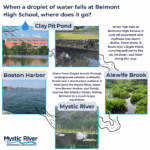
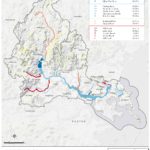
Understanding Clay Pit Pond and Belmont’s Hidden Rivers By Ry Emmert People don’t often think about where a raindrop goes after it hits the ground. It may splash on the pavement, flow toward a storm drain, and then seemingly disappear. However, if that droplet falls outside Belmont High School, it embarks on a complex and unexpected journey. This journey connects Belmont’s sidewalks to kayakers on the Mystic River, fish in the Charles River, and ships in Boston Harbor. The story begins with Clay Pit Pond, a shallow and iconic body of water situated between the high school and Concord Avenue. [READ MORE]

Share
Apr 292025
 
Conservation Commissions Protect Our Water

By Dorothy McGlincy and Jeffrey North Belmont is home to the Massachusetts Association of Conservation Commissions (MACC), a vital nonprofit organization dedicated to protecting Massachusetts’s natural resources by supporting conservation commissions across the Commonwealth. Since its founding in 1961, MACC has been a cornerstone of environmental advocacy, providing resources, training, and support to the state’s 351 conservation commissions and promoting the protection of natural resources for future generations. MACC is headquartered at Mass Audubon’s Habitat property on Juniper Road. A mission rooted in conservation At its core, MACC’s mission is to assist and empower local conservation commissions, which serve as [READ MORE]

Share

How to Save Our Soil and Waterways

 Climate Change, May/June 2025, Newsletter, Sewers, Water Quality  Comments Off on How to Save Our Soil and Waterways
Apr 292025
 
How to Save Our Soil and Waterways

By Anne-Marie Lambert It takes a village to clean up our waterways and rejuvenate the soil beneath our feet. I have been soaking in this topic for over a decade, studying the town’s annual reports describing efforts to eliminate pollutants leaking into our waterways and thinking through what makes a real difference. Step one is to care enough about the communities and ecosystems that we are a part of to realize that clean waterways and healthy soil matter. In the 1970s, citizens cared enough that Congress passed the Clean Water Act. This new regard for clean water resulted in regulations [READ MORE]

Share

Buy Rain Barrels to Conserve Water, Environment

 March/April 2025, Stormwater, Water Quality  Comments Off on Buy Rain Barrels to Conserve Water, Environment
Feb 272025
 
Buy Rain Barrels to Conserve Water, Environment

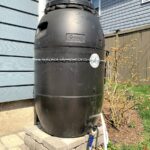
By Dean Hickman I have seven rain barrels, three around a detached garage and four around the house. Needless to say, I am a proponent of the humble rain barrel. These barrels collect water when it rains and provide “soft” chlorine-free water for the garden, including my fruit and vegetable plots when it’s dry. Some folks even wash their cars and windows with collected rainwater. Rain barrels include a spigot so you can access the water, and a mesh mosquito barrier. Rain barrels are not only a water conservation tool; using rainwater instead of your domestic water supply will also [READ MORE]

Share

How to be a Biodiversity Builder

 Environment, May/June 2024, Open Space, Plants, Stormwater, Water Quality  Comments Off on How to be a Biodiversity Builder
Apr 302024
 
How to be a Biodiversity Builder

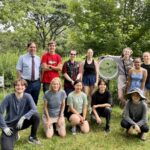
by Jean Devine An open mind, eagerness to learn new things, a willingness to work with peers from different schools, and a tolerance for hot weather, a bit of rain, and getting dirty are all it takes to be a Biodiversity Builder. Youth don’t join Biodiversity Builders (BB) to fill out their resume. They join because they’re curious about nature and maybe gardening, they worry about climate change, and they want to do something positive to help the planet. Youth who become Biodiversity Builders learn how to solve environmental and societal challenges, get down and dirty removing invasive plants and [READ MORE]

Share

Beavers vs Us: Who Manages Stormwater Best?

 Environment, May/June 2024, Newsletter, Open Space, Stormwater  Comments Off on Beavers vs Us: Who Manages Stormwater Best?
Apr 302024
 
Beavers vs Us: Who Manages Stormwater Best?

By Anne-Marie Lambert There’s a lot of complexity but not much bureaucracy involved when beavers take action to manage stormwater. Beavers don’t follow many rules and regulations to slow down a brook’s flow to a prescribed amount or filter pollutants like phosphates or nitrates. They don’t submit maintenance plans for what they will do differently when large rainstorms or new pollutants arrive. Beavers don’t wait for permit approvals or make decisions based on a checklist of laws and regulations. Beavers have evolved to build their homes across brooks to create whole new ecosystems that support many species that have evolved [READ MORE]

Share

Belmont Rower Looks Out for the Charles River

 Climate Change, Environment, March/April 2024  Comments Off on Belmont Rower Looks Out for the Charles River
Mar 012024
 
Belmont Rower Looks Out for the Charles River

By Zeus Smith As a US National Team rower, Belmont resident Maggie Fellows spends a lot of time on the Charles River. Since 2021, the Charles River Watershed Association (CRWA) has mobilized a cohort of passionate community leaders like Fellows to push for climate-smart policies and practices right in their backyards. Called River Advocates, this program brings together volunteers from various backgrounds and experiences to learn effective advocacy strategies and steward a more climate-resilient future. The River Advocates program is a crash course in civic engagement––by joining, volunteers find a community of like-minded individuals interested in learning about direct actions [READ MORE]

Share

Profiles in Belmont: Julia Blatt

 Environment, January 2024, Newsletter  Comments Off on Profiles in Belmont: Julia Blatt
Jan 052024
 
Profiles in Belmont: Julia Blatt

by Elissa Ely Shortly after the pandemic began, when the only response within anyone’s control was isolation, Julia Blatt and her husband bought kayaks. They had canoed as a family for more than 30 years—Montana, Idaho, Maine, Colorado, Florida, Vermont, New Hampshire—and for years her professional work had taken her kayaking through the Concord, Sudbury, and Assabet rivers. Sometimes she brought politicians with her (a form of visual education) and sometimes it was a form of solo field research. But this was different. The sky doesn’t know a pandemic is raging; birds and turtles have no idea and less interest. [READ MORE]

Share

EPA Pushes for Alewife Sewage Cleanup

 Environment, May/June 2023, Newsletter, Sewers, Stormwater, Water Quality  Comments Off on EPA Pushes for Alewife Sewage Cleanup
Apr 262023
 
EPA Pushes for Alewife Sewage Cleanup

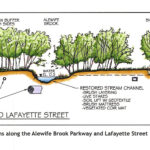
By Kristin Anderson and David White We are at an important point in the history of the Alewife Brook. The Massachusetts Water Resources Authority (MWRA) and the cities of Cambridge and Somerville are preparing a new long-term sewage control plan for the Alewife Brook/Upper Mystic River Watershed. Climate change, with its wetter rainy season, more intense storms, and sea level rise, is expected to result in more hazardous Alewife Brook sewage pollution and more flooding in the area. During some storms, the Alewife Brook floods into the houses, parks, and yards of area residents in environmental justice communities. Because of [READ MORE]

Share

Alewife Brook, Little Pond Get D Grades Again

 Environment, Newsletter, Sept/Oct 2022, Sewers, Water Quality  Comments Off on Alewife Brook, Little Pond Get D Grades Again
Sep 092022
 
Alewife Brook, Little Pond Get D Grades Again

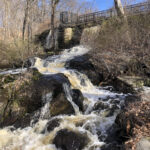
By Meg Muckenhoupt In 1972, the Clean Water Act called for all waterways to be “fishable and swimmable” by 1983, and for all pollution discharges to end by 1985. That still hasn’t happened, as is shown by the new annual water quality report card issued by the Environmental Protection Agency (EPA) for the Mystic River in July. All of Belmont’s brooks received a D or D+ grade because they failed to meet state E. coli bacteria standards for boating in 45% to 55% of samples taken in 2021. Site 2021 2014 Grade Total Grade Total Alewife Brook D 47% D [READ MORE]

Share
Mar 032022
 
Mystic Collaborative Plans For Climate Change

By Julie Wormser  Once upon a time, images of climate change featured skinny polar bears on melting ice floes, and hot, dusty desertscapes. Tragic for sure, but also very far away in time and space. Not any more. Last summer’s alarming weather—from 120 temperatures in the Pacific Northwest to record flooding rains here in the Northeast—has brought the immediate effects of climate change into sharper focus and more local concern. In Greater Boston, the most likely risks we need to prepare for are:  flooding from intense rainfall and coastal storms/sea level rise, hotter, drier summers, less predictable winter weather, and  [READ MORE]

Share

What is the Future of the Royal Road Woods?

 Environment, March/April 2022, Newsletter, Open Space  Comments Off on What is the Future of the Royal Road Woods?
Mar 032022
 
What is the Future of the Royal Road Woods?

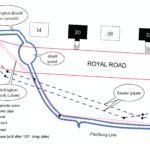
By Vincent Stanton, Jr. Skip to Bonus Material In 1844, when the Fitchburg Line was built, the Clark family owned a triangular lot bounded by the new train line, Common Street, and Clark Street. Wellington Brook ran along the north side of the triangle, just south of the Fitchburg Line. Royal Road and Dunbarton Street did not exist. After more than a century of Clark descendents the land was sold in 1931 to the Glendower Trust, a vehicle of real estate developers John Hubbard and Donald Kenyon. Hubbard and Kenyon laid out plans for Dunbarton Street and Glendower Road (shortly [READ MORE]

Share

Watershed Modeling Enhances Flood Resilience

 Climate Change, Environment, January 2022, Newsletter, Stormwater, Water Quality  Comments Off on Watershed Modeling Enhances Flood Resilience
Jan 032022
 
Watershed Modeling Enhances Flood Resilience

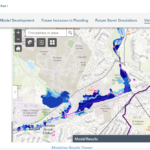
By Julia Hopkins and Julie Wood Climate change isn’t coming—it’s here. Sea-level rise, drought, blistering heat; the tangible effects of global warming are already happening in Massachusetts, and our highly urbanized watershed and those who call it home are increasingly vulnerable to its impacts. It also means extreme weather and severe inland flooding are some of the greatest threats to our watershed and our lives. In the northeastern United States, precipitation during heavy rain events increased by more than 70% according to the Fourth National Climate Assessment released in 2018. This trend is expected to continue as our climate warms. Today’s [READ MORE]

Share

Think Twice About Single-Use Plastics

 Environment, Newsletter, November-December 2021, Recycling, Water Quality  Comments Off on Think Twice About Single-Use Plastics
Nov 012021
 
Think Twice About Single-Use Plastics

By Lindsay Levine and Dean Hickman Envision the life-cycle of a single-use plastic item. Oil or natural gas is extracted from the ground, transported, chemically transformed into plastic which is then manufactured, transported to the point of sale, briefly used, and then tossed into the garbage. But it does not end there. Because of their durability, plastics last for hundreds of years and do not degrade meaningfully over your entire lifetime, except perhaps break into smaller pieces.  Now imagine that same process repeated for many of the items we use daily. Have you ever counted the number of single-use plastic [READ MORE]

Share

CRWA Works to Keep the Charles River Clean

 Environment, Newsletter, November-December 2021, Stormwater, Water Quality  Comments Off on CRWA Works to Keep the Charles River Clean
Nov 012021
 
CRWA Works to Keep the Charles River Clean

By Julia Hopkins and Lisa Kumpf Have you ever thought about what happens to that rain when extreme storms hit? If you call Belmont home, it ends up in the Charles or the Mystic River.  The town of Belmont is sandwiched between the Charles and Mystic Rivers, two beautiful, fragile natural resources that provide habitat for wildlife and enjoyment for humans. The town is split between the Charles River watershed and the Mystic River watershed.  A watershed is a land area that channels all rain and snowmelt into ponds, brooks, and streams that drain into a single river, and eventually [READ MORE]

Share
Nov 012021
 
Stormwater Threatens Our Waterways

By Michelle Liebtreu and Daria Clark The Mystic River is cleaner today than it has ever been. The Clean Water Act has been a major environmental success story. But the work is not yet done. As the most urbanized watershed in New England, the Mystic River watershed is especially subject to stormwater pollution, one of the leading sources of pollution in our water today. Stormwater pollution, also known as stormwater runoff, occurs when rain falls over land—driveways, lawns, and streets—picking up fertilizer, dog waste, salt, leaves, and trash. That polluted water flows into the nearest storm drains and catch basins, [READ MORE]

Share