How is Belmont Controlling Rodents?

 Environment, Newsletter, November-December 2021  Comments Off on How is Belmont Controlling Rodents?
Nov 012021
 
How is Belmont Controlling Rodents?

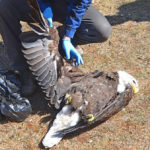
By Jeffrey North Two bald eagles have died in Middlesex County this year from second-generation anticoagulant rodenticide (SGAR) poisoning in Arlington and Waltham. The causes of death in both cases, anticoagulant rodenticide, were confirmed by MassWildlife officials after postmortem testing at Tufts Wildlife Clinic.  Three different SGARs were detected in theirlivers.  These are among the first cases of poisoning in American bald eagles in Massachusetts. Yet such secondary poisoning has been documented in hawks, owls, foxes, bobcats, coyotes, dogs, and cats.  And thousands of children ingest or are otherwise harmfully exposed to these poisons every year. According to the EPA, [READ MORE]

Share

Rodent Poisons Sicken and Kill Birds of Prey

 Newsletter, November-December 2021  Comments Off on Rodent Poisons Sicken and Kill Birds of Prey
Nov 012021
 
Rodent Poisons Sicken and Kill Birds of Prey

Study finds 100% of tested red-tailed hawks at Tufts clinic exposed to rodenticides By Angela Nelson This article originally appeared in the September 16, 2020 issue of Tufts Now, and is reprinted with permission.  Maureen Murray, director of Tufts Wildlife Clinic and clinical associate professor at Cummings School of Veterinary Medicine, has been studying rodenticide exposure in birds of prey for over a decade. Exposure to rodenticides occurs when people use these chemicals to kill unwanted pests. Mice and rats, or possibly other animals, eat the poison, and then the birds eat the poisoned prey.  Murray has witnessed a steady [READ MORE]

Share
Oct 292021
 
Clean Energy Policy Needs to be Equitable

By Aditya Jain As a high school intern with State Representative David Rogers’ office in the summer of 2020, I learned about the legislative process through Massachusetts Bill S9, the Climate Roadmap bill, which was signed into law in March 2021. During the summer of 2021, I researched equity in Massachusetts clean energy policies, interviewing experts in Massachusetts policies on clean energy access, technology, and workforce trends.   What is Environmental Justice? The United States Environmental Protection Agency (EPA) defines environmental justice as the “fair treatment and meaningful involvement of all people regardless of race, color, national origin, or income, [READ MORE]

Share

November/December 2021 Newsletter

 Newsletter, November-December 2021  Comments Off on November/December 2021 Newsletter
Oct 292021
 
November/December 2021 Newsletter

Read the November/ December 2021 issue. In this issue: Rodent Poisons Sicken and Kill Birds of Prey  Dr. Maureen Murray has witnessed a steady increase in the number of birds of prey that come into Tufts Wildlife Clinic with rodenticides in their systems—some with fatal levels. But even Murray was taken aback by the results of her most recent study. Read more. How is Belmont Controlling Rodents? Two bald eagles have died in Middlesex County this year from second-generation anticoagulant rodenticide (SGAR) poisoning in Arlington and Waltham. Read more. Law Could Prevent Eagle Poisoning The bald eagle I had watched grow [READ MORE]

Share
 Posted by at 1:42 pm

Events September 2021

 BCF Events, September 2021  Comments Off on Events September 2021
Aug 232021
 
Events September 2021

By Meg Muckenhoupt The only constant in life is change, according to Heraclitus, the Greek philosopher who strolled through Ephesus in the late sixth century B.C.E. The Greek letter most commonly used to represent change is delta, which is also the title of the variant of the coronavirus that is more contagious than previous versions and has persuaded the town of Belmont to mandate indoor masking.  So, instead of posting a page of fall walks, fundraising galas, hands-on classes, film screenings, talks, and volunteer opportunities, the Belmont Citizens Forum Newsletter’s event listings once again offer the thin milk of online [READ MORE]

Share

Letter to the Editor: Belmont Cycling Safety

 Bicycles and bike paths, Newsletter, September 2021, Traffic  Comments Off on Letter to the Editor: Belmont Cycling Safety
Aug 232021
 
Letter to the Editor: Belmont Cycling Safety

To the Editor: I am a long-time Boston-area bicycling advocate, CyclingSavvy Instructor, and League Cycling Instructor, responding to the article by Jeff Roth in the July-August Belmont Citizens Forum Newsletter.  I am pleased to see progress on the Belmont Community Path and the Alexander Avenue underpass; also proposals for traffic calming and roundabouts. However, the article states:  “Protected bicycle lanes (PBLs) lower crash rates by a factor of two to 23 times . . . ‘Dooring’ crashes, which account for 20% of bike/car crashes, disappear almost completely with PBLs.” The term “protected bike lanes” wraps itself in its own conclusion. [READ MORE]

Share

Travel the Town with the Belmont Passport

 Newsletter  Comments Off on Travel the Town with the Belmont Passport
Aug 232021
 
Travel the Town with the Belmont Passport

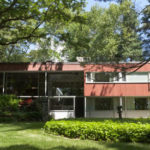
By Viktoria Haase  Looking for that fun family-friendly outdoor activity? Grab a Belmont Passport and start exploring!  A new Belmont Passport is now available to guide tours of local history. Town of Homes, the latest and third booklet in the series, highlights homes in Belmont, and describes their architecture, occupants, and other interesting facts that can help you understand why Belmont continues to enjoy its reputation as the “Town of Homes.”   Inside the Passport are 27 locations including:  The Howlett House designed by prominent architect Walter Gropius  Several homes built in the 1700s like the Josiah Shattuck House The [READ MORE]

Share
 Posted by at 3:16 pm

Belmont Was Once a Town of Farms

 Historic Preservation, Newsletter, Open Space, Plants, September 2021  Comments Off on Belmont Was Once a Town of Farms
Aug 232021
 
Belmont Was Once a Town of Farms

By Jane Sherwin Until the mid-20th century, agriculture was a significant part of Belmont life and economy. Three hundred years ago, it would have been unusual to find a family in this area with no engagement at all in growing things. Even a shoemaker would most likely have a few chickens, or a milk cow, or a small garden for vegetables.  The settlements on the land that is now Belmont go back nearly four hundred years. In 1630, Sir Richard Saltonstall led a group of families inland from the Massachusetts Bay Colony, to the area we now call Watertown, to [READ MORE]

Share

Leaf Blowers Damage Belmont’s Environment

 Air Quality, Newsletter, September 2021  Comments Off on Leaf Blowers Damage Belmont’s Environment
Aug 232021
 
Leaf Blowers Damage Belmont’s Environment

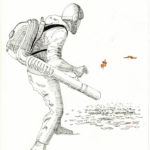
By Barry N. Kaye and Brian Kopperl Have you ever been in your backyard on a beautiful day when the noise of the leaf blowers next door was so loud that you could not have a quiet conversation, you were dodging the flying debris, and the smell was enough to make you go indoors? Most of us agree that leaf blowers are annoying, but some of us may not know just how harmful they really are.    Gas-powered leaf blowers typically have noise levels of 80 decibels (dB) or higher, which the Centers for Disease Control states can damage hearing. [READ MORE]

Share

Belmont’s Invasive Plants: Norway Maple

 Newsletter, Plants, September 2021  Comments Off on Belmont’s Invasive Plants: Norway Maple
Aug 232021
 
Belmont’s Invasive Plants: Norway Maple

By Jeffrey North Invasive plant species are disrupting ecosystems from Belmont to Beijing, permanently altering the ecology of our forests, fields, and gardens and causing biodiversity loss and species extinction. This article is the fourth in a series on invasive plant species found in Belmont, the implications of their presence, spread, ecological damage potential, and hopes for their removal and remediation. Acer platanoides, commonly known as the Norway maple, is a species of maple native to eastern and central Europe and western Asia. It was brought to North America in the mid-1700s as a shade tree.  The Norway maple is [READ MORE]

Share

Belmont Tree Replanting Resumes

 Environment, Newsletter, September 2021  Comments Off on Belmont Tree Replanting Resumes
Aug 232021
 
Belmont Tree Replanting Resumes

By Jeffrey North Belmont has about 15,000 trees located in public rights-of-way, parks, schools, and public green spaces throughout town. In any given year, approximately 100 trees need to be removed due to damage or disease. The town has a program to replace them with even more new trees that refresh and assure continuity for our urban forest.   Thirty-three years ago Belmont was named a USA Tree City by the Arbor Day Foundation. Forestry and funding are vital components of this continuing honor. The value of trees on our properties goes beyond aesthetics to vital impacts on health, climate [READ MORE]

Share

Help Belmont Students Breathe Easier

 Air Quality, Newsletter, September 2021  Comments Off on Help Belmont Students Breathe Easier
Aug 232021
 
Help Belmont Students Breathe Easier

By Erika Roberts So many of us are delighted the kids are in school full-time this fall. I for one will be skipping them hand-in-hand down the sidewalk on their first day back, even if my first and fourth graders are dying of embarrassment. The only part of the academic year that I dread happens daily during arrival and dismissal: dozens upon dozens of vehicles running their engines while parked as the drivers wait to pick up or drop off students.  With everything we have done to keep our children protected during a global pandemic, from remote learning to wearing [READ MORE]

Share

It’s Time to Switch from Gas to Clean Energy

 Environment, Newsletter, September 2021  Comments Off on It’s Time to Switch from Gas to Clean Energy
Aug 232021
 
It’s Time to Switch from Gas to Clean Energy

By Debora Hoffman Think natural gas is a clean fuel? Think again. The fossil fuel, touted as a bridge fuel in the fight against CO2 emissions, is far deadlier to the planet—and our health—than is publicized. The issue? Leaks. Leaked gas is methane, a far more potent greenhouse gas than CO2 (see “Is it Time to Get Natural Gas Out of Belmont?” BCF Newsletter, November 2020). During its first 20 years in the atmosphere, methane is 86% more potent as a greenhouse gas than CO2.  So how much gas is leaking? A lot. Statewide, gas utilities reported that 5,753 metric [READ MORE]

Share

Natural Gas is Making Us Sick

 Newsletter, September 2021  Comments Off on Natural Gas is Making Us Sick
Aug 232021
 
Natural Gas is Making Us Sick

By Adrienne Allen  Your Sunday night supper may be making you sick. Most of us heat our homes and cook our food with natural gas. Natural gas has long been promoted as the “clean” bridge from coal and oil to green energy. This year, a Harvard study on climate and air quality found that fossil fuel-related air pollution, including pollution from natural gas, kills one in five people worldwide. In the United States, natural gas use has increased 400% since the 1950s, with unfortunate health and environmental outcomes.  We often think about air pollution as an outdoor threat—like the wildfire [READ MORE]

Share

September/ October Newsletter

 Newsletter  Comments Off on September/ October Newsletter
Aug 232021
 
September/ October Newsletter

Read the September-October 2021 Newsletter PDF. In this issue:   Natural Gas is Making Us Sick We often think about air pollution as an outdoor threat, yet cooking indoors with gas can worsen indoor air quality, as chemicals become concentrated in our home, causing illness and even premature death. Read more.   It’s Time to Switch from Gas to Clean Energy The fossil fuel, touted as a bridge fuel in the fight against CO2 emissions, is far deadlier to the planet—and our health—than is publicized. The issue? Leaks. Read more. Help Belmont Students Breathe Easier Every day we subject our [READ MORE]

Share
 Posted by at 9:17 am

Events July-August 2021

 BCF Events, July-August 2021, Newsletter, Plants  Comments Off on Events July-August 2021
Jun 252021
 
Events July-August 2021

Though days are now long and warm, event listings for local organizations harken back to the dreary depths of winter. Few groups are planning meetings this summer, the season of bittersweet freedom, of sunny days so many people did not live to see. Voltaire wrote in Candide, “We must tend our garden,” but he didn’t specify how, or who should benefit from said garden. If you’d like to help support your local web of life, consider enrolling in a class with the Native Plant Trust: “Native Species, Cultivars, and Selections: What’s the Difference?” held on Friday, July 16, from 1-3 [READ MORE]

Share
Jun 252021
 

To the Editor: As a 40-year resident in Belmont I take exception to the tone of the article in the latest issue of the Belmont Citizens Forum concerning the treatment of the shore of Clay Pit Pond (“Clay Pit Pond Deforestation Damages Wetland,” Belmont Citizens Forum Newsletter, May/June 2021), which attempts to blame the residents who perpetrated an “ecologically damaging assault” on the area. Rather, it seems to me, that these “miscreants” have called attention to the town’s lack of attention and mismanagement of one of our town’s greatest assets: an attractive body of water in the middle of our [READ MORE]

Share

Belmont’s Invasive Plants: Japanese Knotweed

 Environment, July-August 2021, Newsletter, Open Space, Plants  Comments Off on Belmont’s Invasive Plants: Japanese Knotweed
Jun 252021
 
Belmont’s Invasive Plants: Japanese Knotweed

By Jeffrey North Invasive plant species are disrupting ecosystems from Belmont to Beijing, permanently altering the ecology of our forests, fields, and gardens and causing biodiversity loss and species extinction. This article is the third in a series on invasive plant species found in Belmont, the implications of their presence, spread, and ecological damage potential, and hopes for their removal and remediation. Japanese knotweed (Polygonum cuspidatum), also known as Asian knotweed, is native to Japan, China, and Korea. It is frequently found on the sides of volcanoes, where it breaks down igneous rock into new soil. You might think it [READ MORE]

Share

Fernald Site Contains Rare Specimen Trees

 Environment, July-August 2021, Newsletter, Open Space, Plants  Comments Off on Fernald Site Contains Rare Specimen Trees
Jun 252021
 
Fernald Site Contains Rare Specimen Trees

By Eric Olson It is vanishingly rare that a town within ten miles of Boston can, with a single purchase, add nearly 200 acres to its portfolio of open space. That is exactly what Waltham did in the fall of 2014 when its mayor and city council agreed to buy the former Fernald Development Center from the state. I bet most Belmont residents are at least passingly familiar with this property, tucked up in Waltham’s northeast corner between Trapelo and Waverley Oaks roads, less than a quarter-mile from the Belmont line. As a resident of Newton, I had never heard [READ MORE]

Share

Belmont Day School Cleans Up Lone Tree Hill

 Newsletter  Comments Off on Belmont Day School Cleans Up Lone Tree Hill
Jun 252021
 
Belmont Day School Cleans Up Lone Tree Hill

Nineteen students and three teachers from Belmont Day School spent the morning of May 19 removing invasive garlic mustard and trash from Belmont’s Lone Tree Hill. The bags of garlic mustard and trash were collected by Belmont’s Department of Public Works. Thank you to everyone who pitched in to help keep Belmont beautiful!

Share