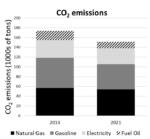
Read the July/August 2024 BCF Newsletter In this issue: Belmont Carbon Emissions Down 14% According to the Belmont Energy Committee’s most recent inventory, the town’s carbon emissions dropped from 177,000 tons to 150,000 tons per year between 2014 and 2021. Read more. Vision for a Better Belmont: Jeff Birenbaum Jeff Birenbaum is chair of the Belmont Planning Board. Read more. Concord Bike Lane May be Increasing Cycling This August will mark two years since the restriping of Concord Avenue, a project that repainted the lines on the road to switch the positions of the biking and parking lanes. Read more. [READ MORE]

Lone Tree Hill Voluteer Day 2024

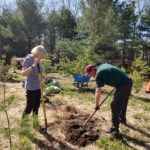
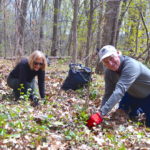
By Radha Iyengar On Saturday, April 27, a glorious sunny day, the Belmont Citizens Forum (BCF), in conjunction with the Judy Record Conservation Fund, held its 10th annual Lone Tree Hill Volunteer Day The volunteers included Girl Scouts Troop 82339, Cityside Subaru employees, and citizens from Belmont and the surrounding communities. Many hands made light work. At the Meadow Edge Trail, volunteers removed garlic mustard and planted 40 white pine saplings. In a few years, the trees planted will be a greenery screen for the houses on Summit Road. At the other end of the property, the volunteers collected 11 [READ MORE]
BCF Wins Customers’ Choice Award
Profiles in Belmont: Farmer Tim

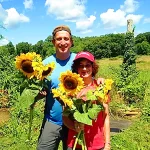
By Elissa Ely Choosing a favorite vegetable or melon, if you happen to be Farmer Tim Carroll, is like choosing a favorite child. If he’s eating a cantaloupe from his farm, cantaloupe is his favorite. When he’s eating a cherry tomato, the cantaloupe steps aside. “I’m not a fennel guy,” he says, but with such respect that no fennel could resent him. There are dozens and dozens of vegetable children in Farmer Tim’s world. Since 2015, his Dudley, MA, farm has grown multiple varieties of up to 50 kinds of produce each August through October. The season starts aboveground with [READ MORE]
How to be a Biodiversity Builder

by Jean Devine An open mind, eagerness to learn new things, a willingness to work with peers from different schools, and a tolerance for hot weather, a bit of rain, and getting dirty are all it takes to be a Biodiversity Builder. Youth don’t join Biodiversity Builders (BB) to fill out their resume. They join because they’re curious about nature and maybe gardening, they worry about climate change, and they want to do something positive to help the planet. Youth who become Biodiversity Builders learn how to solve environmental and societal challenges, get down and dirty removing invasive plants and [READ MORE]
Restoration Resumes on Lone Tree Hill

By Jeffrey North and Joseph Hibbard A crew of 18 technicians, crew leaders, designer, and managers gathered on Lone Tree Hill early on the misty morning of March 15. They were there for the third and final day of their work season kick-off with a day of training on Belmont conservation land. The Land Management Committee (LMC) for Lone Tree Hill (LTH) had granted permission to allow the Parterre Ecological Services “Class of 2024” to conduct an invasive species removal training session for field technicians. Their target zone was a section of the southeast corner of the Great Meadow. The [READ MORE]
Belmont Has a New List of Preferred Trees

By Eva Hoffman Belmont’s shade tree committee, in conjunction with the Department of Public Works (DPW) and the tree warden, has developed a list of preferred native trees for planting by the town on public property, for contractors planting street trees, and for residents who are seeking information for their gardens. The Belmont Preferred Trees List contains information on the size, characteristics, and growing conditions for each species. Twenty of the 45 recommended trees are marked “street tree,” which means they can be planted between the sidewalk and the street. But they aren’t exclusively street trees. They are adaptable, reliable [READ MORE]
Managing Nature Without Pesticides

By Judy Sheldon Whether we’re growing tidy-looking lawns, tree-lined paths to meander, or flower or vegetable gardens, our yards and our parks also provide food and shelter for other creatures. Bees, butterflies, ladybugs, spiders, and fireflies all live in our lawns, gardens, and trees. Birds eat the seeds, berries, fruits, and nuts from the plants. Some bird species get nutrients from insects, including mosquitoes and others we don’t want around. Rabbits eat mostly plants; squirrels and chipmunks thrive on fruits, nuts, and acorns. Larger birds, like hawks, owls, and even eagles, also eat the small animals and birds that live [READ MORE]
Beavers vs Us: Who Manages Stormwater Best?

By Anne-Marie Lambert There’s a lot of complexity but not much bureaucracy involved when beavers take action to manage stormwater. Beavers don’t follow many rules and regulations to slow down a brook’s flow to a prescribed amount or filter pollutants like phosphates or nitrates. They don’t submit maintenance plans for what they will do differently when large rainstorms or new pollutants arrive. Beavers don’t wait for permit approvals or make decisions based on a checklist of laws and regulations. Beavers have evolved to build their homes across brooks to create whole new ecosystems that support many species that have evolved [READ MORE]
Vision for a Better Belmont: Chris Ryan
This is the fourth of a new series of interviews with Belmont leaders about their vision for Belmont’s future. Jeffrey North conducted this interview. It has been edited for length and clarity. – Ed. Chris Ryan has served as Belmont’s town planner and director of planning and building (OPB) since September 2023. With more than 30 years of experience in city planning and economic development, Chris has worked at the town, city, county, regional, and state levels in the public sector in at least 10 communities and the New Jersey Meadowlands Commission; the Metropolitan Area Planning Council; and the Central [READ MORE]
Vacancy Registry Could be Good for Business

By Paul Joy and Taylor Yates One of the key issues that both the Vision 21 Implementation Committee and the Economic Development Committees grapple with is the long-term vacant storefronts in our vital commercial areas: Belmont Center and Cushing Square. Our committees are asked constantly about what Belmont should be doing to address these issues and drive down the vacancy rates in places like Leonard Street, which was reported to have a 20% vacancy rate by the Belmont Center Business Association. Large vacancies such as the old CVS space continue to languish as well. We agree that the situation here [READ MORE]
Belmont’s Section 3A Rezoning Process Explained – Summary

By Doug Koplow A longer version of this article is available. Belmont is undergoing a significant rezoning process in response to the state’s MBTA Communities Act, commonly referred to as Section 3A. This law, passed in January 2021, aims to increase housing stock across 177 communities served by the MBTA, including Belmont. It mandates changes to local zoning requirements to allow for increased construction of multifamily housing. It sets quantitative targets for the number of housing units, acreage covered, density, and the minimum size of a rezoned area. Because Belmont is classified as a commuter rail community, we must meet [READ MORE]
May/ June 2024 Newsletter

Read the May/June 2024 Newsletter In this issue: Belmont’s Section 3A Rezoning Process Explained Belmont is undergoing a significant rezoning process in response to the state’s MBTA Communities Act, commonly referred to as Section 3A. Read the summary or the full version. Vacancy Registry Could be Good for Business One of the key issues that both the Vision 21 Implementation Committee and the Economic Development Committees grapple with is the long-term vacant storefronts in our vital commercial areas: Belmont Center and Cushing Square. Read more. Vision for a Better Belmont: Chris Ryan Q&A with Belmont’s town planner and director of [READ MORE]
Belmont Ponders MBTA Rezoning
Belmont Ponders MBTA Rezoning: An Overview of 3A Requirements and Challenges By Doug Koplow This fall, Belmont Town Meeting will be asked to vote on a major rezoning proposal that will increase the scale and density of housing construction within a significant portion of the town. The changes are mandated by the stateMBTA Communities Multifamily Zoning Requirement, passed in January 2021. The law modifies Section 3A of the Massachusetts Zoning Act and is often referred to by its section number. Final guidelines , first issued in August 2022, set the compliance requirements for the town. This article provides an overview [READ MORE]
Native Peoples Lived in Belmont

By Mark Jarzombek It comes as a surprise to people who assume that Boston’s colonization began with the settlement of Boston in 1630 that there was an equally important settlement in Watertown that same year. It was organized by Sir Richard Saltonstall, along with approximately 40 families. Unlike the Bostonians, the group in Watertown consisted of ranchers and farmers living primarily in homesteads spread out over the rapidly deforested landscape. Though Boston takes the glory when it comes to the history of New England, the relationship between a town and its farm and pastureland was critical to the settlers’ success. [READ MORE]
Lone Tree Hill Volunteer Day April 27

Join us in stewarding Lone Tree Hill! The Belmont Citizens Forum, in conjunction with the Judy Record Conservation Fund, is holding its tenth annual cleanup and trail maintenance day on April 27, from 9 AM until noon. Help with planting white pine saplings along the Meadow Edge Trail, cleaning up, and removing invasives at the Mill Street parking lot and the Coal Road, respectively. Students can earn community service credits. Bounded by Concord Avenue, Pleasant Street, and Mill Street, Lone Tree Hill spans 119 acres of permanently protected conservation land and is available to everyone. It is stewarded through a [READ MORE]
Letter to the Editor: Rat Poisons and Wildlife

Dear Representatives of the Select Board, Health Department, Department of Public Works, Facilities Department (Schools), and Conservation Commission; As local communities in and around Belmont wake up to the dangers of second-generation anticoagulant rodenticides (SGARs) to children, wildlife, and pets, we see encouraging progress toward reducing and eliminating SGARs. We would like to share with you what is going on in neighboring towns in this regard as Save Belmont Wildlife seeks to work with our community to eliminate these poisons as part of a cross-community effort. We are working to prevent the further poisoning of Massachusetts birds of prey and [READ MORE]
Belmont Rower Looks Out for the Charles River

By Zeus Smith As a US National Team rower, Belmont resident Maggie Fellows spends a lot of time on the Charles River. Since 2021, the Charles River Watershed Association (CRWA) has mobilized a cohort of passionate community leaders like Fellows to push for climate-smart policies and practices right in their backyards. Called River Advocates, this program brings together volunteers from various backgrounds and experiences to learn effective advocacy strategies and steward a more climate-resilient future. The River Advocates program is a crash course in civic engagement––by joining, volunteers find a community of like-minded individuals interested in learning about direct actions [READ MORE]
E-Bike Library Lets Locals Take a Spin

By Sarah Firth Inae Hwang was torn: Should she buy a new electric bike? “I’ve been looking at e-bikes for six months straight, really looking to purchase one,” Hwang, a Belmont resident, said. Then, a friend referred her to the Camberville E-bike Lending Library, which Somerville resident Christopher Schmidt runs out of his Porter Square home. Hwang decided to take one of the e-bikes for a spin. “I was like, ‘Oh, I should totally borrow one because then I will know what it feels like, and how well it does or doesn’t work for me,’” she said. Hwang was hooked; [READ MORE]
Profiles in Belmont: Phil Thomas

By Elissa Ely “One ought to do good to others as simply as a horse runs or a bee makes honey.” – Marcus Aurelius There is so much we could say about Phil Thomas. We could talk about his distinguished career in high technology, which followed his distinguished career in Naval Intelligence. We could talk about growing up oceanside in Florida, where his father worked as a photographer for NASA and John Glenn visited the house. We could talk about his childhood hopes of becoming the next Mickey Mantle (stymied only, perhaps, by height). We could also talk about Phil’s [READ MORE]