Jerry’s Pond May Have A Chance to Shine

 Environment, History, Newsletter, November 2020, Open Space, Water Quality  Comments Off on Jerry’s Pond May Have A Chance to Shine
Nov 062020
 
Jerry’s Pond May Have A Chance to Shine

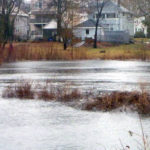
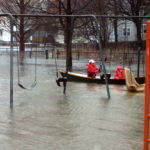
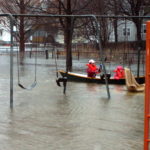
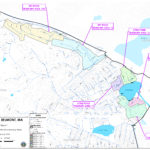
By Greg Harris Since developers have targeted the Alewife area for rapid development, with housing interests erecting massive apartment complexes and life sciences companies rushing to turn the area into a second Kendall Square, long-time residents have feared the trampling of their history, quality of life, community health, and the remaining natural environment. But these changes present opportunities as well as risks. If a coalition of long-time residents and neighborhood activists get their way, life science developer IQHQ’s $125 million dollar acquisition of land next to the Alewife T Station may result in the resurrection of Jerry’s Pond. This neighborhood [READ MORE]


Share

Carrots and Sticks Nudge Belmont’s Cleanup

 Environment, Newsletter, November 2020, Sewers, Stormwater, Water Quality  Comments Off on Carrots and Sticks Nudge Belmont’s Cleanup
Nov 062020
 
Carrots and Sticks Nudge Belmont’s Cleanup

By Anne-Marie Lambert Two key drivers are nudging Belmont to clean up our waterways and protect us from the storms coming with climate change: the threat behind an Environmental Protection Agency Consent Order and the tempting Massachusetts Municipal Vulnerability Program (MVP) Every six months, Belmont is obliged to file a report with the New England region of the federal Environmental Protection Agency (EPA) to demonstrate compliance with a 2017 consent order under the Clean Water Act. The town has to show steady progress cleaning up the sewage pollution Belmont has sent to Boston Harbor due to the intermingling of Belmont’s [READ MORE]

Share

Belmont Waterways Get Failing Grades

 Newsletter, Sept/Oct 2020, Sewers, Stormwater, Water Quality  Comments Off on Belmont Waterways Get Failing Grades
Sep 032020
 
Belmont Waterways Get Failing Grades

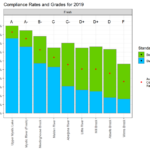
By Meg Muckenhoupt The Mystic River’s most recent water quality report card, released on August 13, gives Winn’s Brook an F for 2019—and the Little River and Alewife Brook earned Ds. The US Environmental Protection Agency (EPA) creates the  annual report card in collaboration with the Mystic River Watershed Association. It grades segments of the Mystic River’s lakes, river, and streams on how frequently they meet bacterial standards for swimming and boating. The Upper Mystic Lake and the Chelsea River got an A grade; they met boating and swimming standards 90% or more of the time in 2019. Winn’s Brook [READ MORE]

Share
Jun 302020
 
New Rock Meadow Parking Plan Proposed

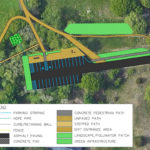
By Jeffrey North and Mary Trudeau The Belmont Conservation Commission recently engaged a team of Northeastern University students to explore parking lot and stormwater drainage improvements for Rock Meadow. As visitors to Rock Meadow can attest, the parking lot is inefficient, rutted, partially paved, and often filled with pockets of standing water. Improvements have been called for since at least 1968, when the report, A Program for Renewing Rock Meadow, stated the obvious: “The entrance is not attractive and does not do justice to the beautiful area beyond.” The arrival experience is incongruent with Rock Meadow’s value as a treasured [READ MORE]

Share

Cleaning Belmont’s Water Means More Work

 Environment, May/June 2020, Newsletter, Sewers, Stormwater, Water Quality  Comments Off on Cleaning Belmont’s Water Means More Work
May 032020
 
Cleaning Belmont's Water Means More Work

By Anne-Marie Lambert There is good news and bad news in Belmont’s January 31 Report on Compliance to the EPA. On the one hand, the town decided to go ahead and reline or replace many sewer laterals and rehabilitate significant sections of the sewer system in certain Belmont neighborhoods as part of a comprehensive construction project planned for spring 2020. On the other hand, the report indicates that while there was a lot of investigation work (dye testing and sampling) and design work between July 2019 and January 2020, there was no significant mitigation work during the fall construction season. [READ MORE]

Share

Belmont Tackles Climate Vulnerability Planning

 Environment, May/June 2020, Newsletter, Open Space, Stormwater, Water Quality  Comments Off on Belmont Tackles Climate Vulnerability Planning
May 032020
 
Belmont Tackles Climate Vulnerability Planning

By Catherine Bowen Take Belmont’s municipal vulnerability survey now. How is Belmont preparing for the impacts of climate change? As we are in the midst of a public health crisis, we are seeing the vulnerabilities and strengths of our community similarly to how we may experience them in a climate-change related crisis. It is timely that Belmont is now in the first phase of the Municipal Vulnerability Preparedness Program (MVP), a tool Massachusetts created in 2017 to enable local governments to prepare for the weather-related impacts of climate change and address vulnerabilities, including emergency communications. Modeled on the state’s Green [READ MORE]

Share
May 032020
 
Tree Loss Harms Urban Environments

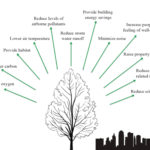
By Florence DiTirro The National Land Cover Database from 2001 estimated Belmont’s tree canopy was 27% of Belmont’s land. From 2003 to 2008, Boston’s urban tree cover declined from 29% to 28%. This downward trend continues if we look at our state, our country, and our globe. The Massachusetts urban tree cover declined between 0.32% and 0.24% in the five years from 2009 to 2014, and the United States overall lost 1.0% of urban tree cover. Global loss was measured as -0.2%. It’s a sad state that we are losing our trees. What is there not to like about trees? [READ MORE]

Share

Arlington Group Opposes Mugar Site Plans

 March/April 2020, Newsletter, Open Space, Water Quality  Comments Off on Arlington Group Opposes Mugar Site Plans
Mar 022020
 
Arlington Group Opposes Mugar Site Plans

By Meg Muckenhoupt The Mugar wetlands are 17.7 acres of open land in East Arlington. Oaktree Development has proposed constructing a 207-unit apartment complex and six duplex townhouses on this site, to be renamed Thorndike Place. The Coalition to Save the Mugar Wetlands opposes building on the site, which is bordered by Route 2, Thorndike Field, and Dorothy, Edith, and Burch Streets. The following interview with Clarissa Rowe, one of the founders of the Coalition to Save the Mugar Wetlands, was edited for length and clarity. Why is the Mugar site important? I think the reason Arlington and Belmont residents [READ MORE]

Share
Mar 022020
 
Arlington Group Opposes Mugar Site Plans

By Meg Muckenhoupt The Mugar wetlands are 17.7 acres of open land in East Arlington. Oaktree Development has proposed constructing a 207-unit apartment complex and six duplex townhouses on this site, to be renamed Thorndike Place. The Coalition to Save the Mugar Wetlands opposes building on the site, which is bordered by Route 2, Thorndike Field, and Dorothy, Edith, and Burch Streets. The following interview with Clarissa Rowe, one of the founders of the Coalition to Save the Mugar Wetlands, was edited for length and clarity. Why is the Mugar site important? I think the reason Arlington and Belmont residents [READ MORE]

Share
Jan 062020
 
Belmont Timeline

Belmont Timeline Featuring events significant to the Belmont’s history and Belmont Citizens Forum issues. 1654 The John Chenery house, 52 Washington Street, is built. The Chenery house is the oldest surviving house in Belmont. 1760 The Thomas Clark House is built on what is now Common Street. “Local tradition maintains that the Clark family witnessed the beginning of America’s War for Independence from the hill behind this house, seeing smoke and hearing the sounds of war breaking out on April 19, 1775.” —Joseph Cornish, BCF Newsletter,  January 2011. It was moved in 2012, and finally demolished in 2014. 1805 “Ice [READ MORE]

Share
Jan 062020
 
Letter to the Editor: Clay Pit Pond

To the Editor: As a neighbor, fan, and defender of poor Clay Pit Pond, I especially enjoyed the recent article (“Clay Pit Pond Progresses from Eyesore to Asset,” Belmont Citizens Forum Newsletter, November/December 2019). I would like to add a few more details on the recent history of the pond. When we moved to Belmont in the fall of 1974 there was a shopping cart in the pond by the inlet and advertisements about the upcoming Kiwanis Fishing Derby. I found the cart and derby in great contrast. Apparently the pond was regularly stocked for the event. No one noticed [READ MORE]

Share
Jan 062020
 
20 Years of Belmont Water Trouble

By Sumner Brown Belmont has two types of water trouble. One is flooding during heavy rains. The other trouble comes from leaking sewer pipes. Flooding Today, as I write this, there is no flooding in Belmont. Floods are rare enough that we do not make ourselves perpetually anxious about them, but parts of Belmont are vulnerable. In both Belmont and Arlington, people live in what were swamps, and there seem to be 100-year storms every 10 years. Climate change may have something to do with this. The Belmont Citizens Forum advocates for rain gardens and other measures to slow the [READ MORE]

Share

The BCF’s Origin

 January 2020, McLean, Newsletter, Sewers, Traffic, Water Quality  Comments Off on The BCF’s Origin
Jan 062020
 
The BCF's Origin

By Sue Bass This is the 20th anniversary of the Belmont Citizens Forum Newsletter; the organization was founded a little over 20 years ago. How did that happen, and why? In 1995, McLean Hospital began exploring publicly how to turn part of its 238-acre campus into cash. Psychiatric drugs had revolutionized mental health care; instead of long walks and fresh country air, medicine could prescribe quicker-acting treatment. McLean no longer needed a bucolic campus, and families relying on health insurance could no longer pay for it. The hospital was $40 million or more in debt. This was not the first [READ MORE]

Share
Jan 062020
 
20 Amazing Years of the Belmont Citizens Forum

  By Jim Graves As a founding board member of the Belmont Citizens Forum (BCF), who has been inactive in recent years, I am honored to share these thoughts on why the BCF has been so valuable and to applaud the individuals and supporters who have sustained the BCF for 20 years. Prior to starting the BCF, the founders worked to first improve, then oppose, and nearly defeat the development and zoning changes proposed for 238 acres of open space owned by Partners Healthcare and its subsidiary, McLean Hospital. Legal challenges by the BCF and supporters slowed implementation, and notably, [READ MORE]

Share
Nov 042019
 
Clay Pit Pond Progresses from Eyesore to Asset

By Michael Chesson Clay Pit Pond on Concord Avenue was once the site of Belmont’s largest industrial enterprise, a brickyard run by John H. and Robert A. Parry. The brothers bought 20¾ acres of land in 1888 on Concord Avenue and Underwood Street, with its valuable blue clay that turned an attractive reddish color when fired, and their yard produced 200,000 bricks a week. Just as the oil, steel, and railroad industries consolidated, the Parry brothers’ business in 1900 merged with the New England Brick Company, which owned three dozen other brickyards in the region. The firm installed new dryers, [READ MORE]

Share

Belmont’s Underground Pollution Problem

 Environment, Newsletter, November 2019, Sewers, Stormwater, Water Quality  Comments Off on Belmont’s Underground Pollution Problem
Nov 042019
 
Belmont’s Underground Pollution Problem

By Anne-Marie Lambert If only the 504 gallons of household wastewater which had been pouring into Wellington Brook and Winn’s Brook through underground culverts every day had been more visible, perhaps we as a town would have addressed the necessary repairs more urgently. That’s what Belmont did when a student noticed an oil spill leaking into Clay Pit Pond during a freeze on December 12, 2003. A ruptured return line to the underground storage tank at Mary Lee Burbank Elementary school travelled through the town’s storm drain system carrying 1,000 gallons of oil to Clay Pit Pond. Alerted to the [READ MORE]

Share

Letter to the Editor, July-Aug 2019

 Environment, July-Aug 2019, Water Quality  Comments Off on Letter to the Editor, July-Aug 2019
Jul 152019
 
Letter to the Editor, July-Aug 2019

More on disposing in the kitchen sink As a resident of Newton for 20-plus years and an activist in Waltham as well (Waltham Land Trust), I salute Belmont on your newsletter. It stands out, in my experience, as the best suburban NGO volunteer-run information medium. I’ve used its articles in my teaching at Brandeis. So, bravo and well done. I have a question for Mary Bradley, the compost fanatic (I am one, too, and refer to the May/June 2019 article, “Composting in Belmont: Breaking it Down,” typical of BCF articles in its detail and usefulness), and it’s this: has she [READ MORE]

Share
May 062019
 

View or download the May/June 2019 issue as a color PDF here, or read single articles below.   Articles in this issue: New Plans for McLean Land Density is key issue as town considers proposals for two McLean campus parcels By Sue Bass Twenty years ago, Belmont voted to allow development on McLean Hospital land on Belmont Hill. Now McLean is coming back to the town with new proposals for two parcels of land that are still undeveloped. Read more.   Composting in Belmont: Breaking it Down By Mary Bradley Composting is no longer just a backyard hobby for the ardent gardener. [READ MORE]

Share

Painstaking Progress on Belmont’s Multi-Decade Environmental Emergency

 Environment, May/June 2019, Newsletter, Open Space, Stormwater, Water Quality  Comments Off on Painstaking Progress on Belmont’s Multi-Decade Environmental Emergency
May 062019
 
Painstaking Progress on Belmont’s Multi-Decade Environmental Emergency

By Anne-Marie Lambert Belmont is working under a federal consent order to reduce the pollution it sends into Boston Harbor from leaks and connections of underground sewer pipes into the storm drain system. Cleanup According to the town’s January 30 Compliance Report to the US Environmental Protection Agency (EPA), Belmont redirected an additional 126 gallons per day (GPD) of sewage from our brooks and ponds to the Deer Island treatment plant in Boston Harbor. Sources included leaking sewer service laterals and sewer segments on Brettwood Road and Pierce Road (84 GPD) and three leaking sewer service laterals along Hoitt Road [READ MORE]

Share
May 062019
 
Belmont Roots, May/June 2019

Environmental News, Notes, and Events By Meg Muckenhoupt Well, it’s spring, sort of. The average last frost date in Belmont is somewhere between May 1 and May 11, depending on which website you believe—the Old Farmer’s Almanac? Plantmaps.com? But my grandmother in Newton never planted her tomatoes before Memorial Day. Warmth-loving plants such as tomatoes and peppers are sensitive to soil temperature as well as air temperature. They can suffer “transplant shock” and become stunted and grim if roots are a bit too chilled. Seeds are more secure in their identity, and will simply sit and shiver in the soil [READ MORE]

Share