Read the September/October 2024 BCF Newsletter. In this issue: Town Works to Make Streets Safer for All If you’ve noticed more speed bumps on Belmont’s streets, it’s not your imagination. Read more. Vision for a Better Belmont: Paul Joy As the chair of Belmont’s Economic Development Committee, what is your vision for economic development in Belmont, and how does it align with the town’s overall growth and prosperity? Read more. Profile in Belmont: Wendy Murphy “What is that house?” Wendy Murphy thought the first time she saw the mansion at 661 Pleasant Street: elevated, magisterial, remote, uninhabited, yet somehow alive. [READ MORE]
Group Plants Cambridge Front-Yard Forest

An abridged version of the article appeared in the July/August 2024 BCF Newsletter. Group Plants Front-Yard Forest in Cambridge By Susan Filene, Tori Antonino, Judy Perlman, and Ali Kruger The first Miyawaki forest in the northeast was planted on public land in Cambridge in September 2021. (Miyawaki Forest Boosts Biodiversity, Resilience, BCF Newsletter, May 2022). Similar little forests have been planted or are planned for nearby communities, including Somerville, Brookline, Watertown, Natick, and Worcester. It occurred to me that people could do something similar, on a smaller scale, in their urban/suburban yards. We could replace lawns with native species of [READ MORE]
New Connections Coming to Mystic Greenways

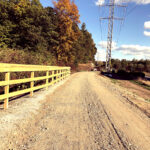
By Isaiah Johnson It’s a great time to enjoy Greater Boston’s parks and paths as we head into the middle of summer. Whether you walk, bike, or run, the Mystic Greenways are great places to get outside and enjoy fresh air. At the Mystic River Watershed Association (MyRWA), we are excited to see the path network along the Mystic River grow more connected every year, linking parks and greenways from the Mystic Lakes to Boston Harbor. The vision behind the Mystic Greenways is to connect 25 miles of paths, improve hundreds of acres of parklands, and engage thousands of community [READ MORE]
Belmont Boasts Bounteous Birds

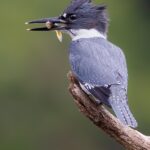
By Fred Bouchard Most of us try to cozy up to Mother Nature now that we’re increasingly climate-conscious, especially during longer days and presumably carefree hours of summer. Whether you’re in the garden, open spaces, or on woodsy walks, our home town offers a variety of eco-friendly locales to commune with Ma Nature’s little winged ambassadors. I offer four likely places, each hosting two not-obvious, strictly seasonal denizens that you might readily identify with your attentive ear and sharpened eye. We go from high altitude to low, and throw in an easily overlooked hotspot in nearby Cambridge. A good guide [READ MORE]
Rodenticides Are Killing Massachusetts Wildlife

Will Authorities Step Up? Courtesy of the Harvard Animal Law & Policy Clinic A coalition of Massachusetts residents petitioned the Massachusetts Department of Agricultural Resources (MDAR) in May to suspend the registrations of anticoagulant rodenticide products that are killing eagles, owls, and other wild animals throughout the Commonwealth. The petition—prepared by the Harvard Law School Animal Law & Policy Clinic—was submitted on behalf of bird rehabilitators Erin Hutchings, Jodi Swenson, and Linda Amato of Cape Ann Wildlife in Essex; mammal rehabilitator Jane Newhouse of Newhouse Wildlife Rescue in Chelmsford; Marci Cemenska of Save Lexington Wildlife; James Joyce II and Patricia [READ MORE]
Belmont Mosquito Control Services Explained
The Role of the East Middlesex Mosquito Control Project By Jeffrey North Mosquitoes can be more than just a summer nuisance; they can carry diseases like West Nile virus (WNV) and Eastern equine encephalitis (EEE). The East Middlesex Mosquito Control Project (EMMCP) works to protect Belmont residents from these diseases. Established in 1945, the EMMCP is a regional public health agency dedicated to controlling mosquito populations and minimizing the risk of mosquito-borne diseases. Serving 27 cities and towns across the greater Boston area, the EMMCP employs a team of entomologists, biologists, and environmental specialists to keep mosquito activity in check. [READ MORE]
Profiles in Belmont: Robert McLaughlin, Sr.

By Elissa Ely There is a temperament best suited for success in law, especially in the area of litigation. There is a temperament best suited for success in life, especially in the areas of personability and contentment. It seems unlikely that the two temperaments could coexist serenely in one character. Please meet Bob McLaughlin: indispensable town exemplar, and proof of the possible. He is chair, co-chair, or member of vital Belmont committees almost too numerous to count; senior and managing Boston law firm partner; white-haired scuba diver, water-and-downhill skier; sailor and seven-continent traveler (with no wish to see a penguin [READ MORE]
Concord Bike Lane May be Increasing Cycling

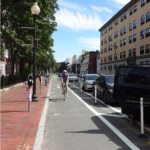
By Dan Eldridge This August will mark two years since the restriping of Concord Avenue, a project that repainted the lines on the road to switch the positions of the biking and parking lanes. Separated (sometimes called protected) bike lanes are against the curb and are usually separated from traffic by bollards, islands, or raised platforms: there are no plans to install bollards on Concord Avenue. In each case, a barrier is created so cyclists will encounter fewer vehicles and feel more secure. In the case of Concord Avenue, separation is indicated by painted lines and parked cars only. Separated [READ MORE]
Vision for a Better Belmont: Jeff Birenbaum

The stated goal of the Planning Board is to protect and preserve the character and the quality of life that defines Belmont (www.belmont-ma.gov/planning-board). Jeff Birenbaum is chair of the Belmont Planning Board. BCF How would you define Belmont’s character and quality of life, in a few sentences? Birenbaum Belmont, Massachusetts, is known for its great neighborhoods, excellent schools, vibrant community life, and keen sense of history. Its character and quality of life are shaped by its close-knit community feel. Residents value Belmont’s suburban charm, cultural diversity, recreational amenities access, and commitment to environmental sustainability. Preserving these aspects while responsibly managing [READ MORE]
Belmont Carbon Emissions Down 14%

By Roger Wrubel, Brian Kopperl, and James Booth According to the Belmont Energy Committee’s most recent inventory, the town’s carbon emissions dropped from 177,000 tons to 150,000 tons per year between 2014 and 2021. The drop, which measures emissions from gasoline, natural gas, fuel oil, and electricity, results from residents shifting away from home heating oil to other energy sources, driving more fuel-efficient vehicles, and drawing their electricity from a cleaner New England grid. Except for the shift away from fuel oil, none of these reductions are happening at a pace sufficient to reach zero emissions by 2050. The committee [READ MORE]
July/August 2024 Newsletter
Read the July/August 2024 BCF Newsletter In this issue: Belmont Carbon Emissions Down 14% According to the Belmont Energy Committee’s most recent inventory, the town’s carbon emissions dropped from 177,000 tons to 150,000 tons per year between 2014 and 2021. Read more. Vision for a Better Belmont: Jeff Birenbaum Jeff Birenbaum is chair of the Belmont Planning Board. Read more. Concord Bike Lane May be Increasing Cycling This August will mark two years since the restriping of Concord Avenue, a project that repainted the lines on the road to switch the positions of the biking and parking lanes. Read more. [READ MORE]
Lone Tree Hill Voluteer Day 2024

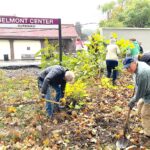
By Radha Iyengar On Saturday, April 27, a glorious sunny day, the Belmont Citizens Forum (BCF), in conjunction with the Judy Record Conservation Fund, held its 10th annual Lone Tree Hill Volunteer Day The volunteers included Girl Scouts Troop 82339, Cityside Subaru employees, and citizens from Belmont and the surrounding communities. Many hands made light work. At the Meadow Edge Trail, volunteers removed garlic mustard and planted 40 white pine saplings. In a few years, the trees planted will be a greenery screen for the houses on Summit Road. At the other end of the property, the volunteers collected 11 [READ MORE]
BCF Wins Customers’ Choice Award
Profiles in Belmont: Farmer Tim

By Elissa Ely Choosing a favorite vegetable or melon, if you happen to be Farmer Tim Carroll, is like choosing a favorite child. If he’s eating a cantaloupe from his farm, cantaloupe is his favorite. When he’s eating a cherry tomato, the cantaloupe steps aside. “I’m not a fennel guy,” he says, but with such respect that no fennel could resent him. There are dozens and dozens of vegetable children in Farmer Tim’s world. Since 2015, his Dudley, MA, farm has grown multiple varieties of up to 50 kinds of produce each August through October. The season starts aboveground with [READ MORE]
How to be a Biodiversity Builder

by Jean Devine An open mind, eagerness to learn new things, a willingness to work with peers from different schools, and a tolerance for hot weather, a bit of rain, and getting dirty are all it takes to be a Biodiversity Builder. Youth don’t join Biodiversity Builders (BB) to fill out their resume. They join because they’re curious about nature and maybe gardening, they worry about climate change, and they want to do something positive to help the planet. Youth who become Biodiversity Builders learn how to solve environmental and societal challenges, get down and dirty removing invasive plants and [READ MORE]
Restoration Resumes on Lone Tree Hill

By Jeffrey North and Joseph Hibbard A crew of 18 technicians, crew leaders, designer, and managers gathered on Lone Tree Hill early on the misty morning of March 15. They were there for the third and final day of their work season kick-off with a day of training on Belmont conservation land. The Land Management Committee (LMC) for Lone Tree Hill (LTH) had granted permission to allow the Parterre Ecological Services “Class of 2024” to conduct an invasive species removal training session for field technicians. Their target zone was a section of the southeast corner of the Great Meadow. The [READ MORE]
Belmont Has a New List of Preferred Trees

By Eva Hoffman Belmont’s shade tree committee, in conjunction with the Department of Public Works (DPW) and the tree warden, has developed a list of preferred native trees for planting by the town on public property, for contractors planting street trees, and for residents who are seeking information for their gardens. The Belmont Preferred Trees List contains information on the size, characteristics, and growing conditions for each species. Twenty of the 45 recommended trees are marked “street tree,” which means they can be planted between the sidewalk and the street. But they aren’t exclusively street trees. They are adaptable, reliable [READ MORE]
Managing Nature Without Pesticides

By Judy Sheldon Whether we’re growing tidy-looking lawns, tree-lined paths to meander, or flower or vegetable gardens, our yards and our parks also provide food and shelter for other creatures. Bees, butterflies, ladybugs, spiders, and fireflies all live in our lawns, gardens, and trees. Birds eat the seeds, berries, fruits, and nuts from the plants. Some bird species get nutrients from insects, including mosquitoes and others we don’t want around. Rabbits eat mostly plants; squirrels and chipmunks thrive on fruits, nuts, and acorns. Larger birds, like hawks, owls, and even eagles, also eat the small animals and birds that live [READ MORE]
Beavers vs Us: Who Manages Stormwater Best?

By Anne-Marie Lambert There’s a lot of complexity but not much bureaucracy involved when beavers take action to manage stormwater. Beavers don’t follow many rules and regulations to slow down a brook’s flow to a prescribed amount or filter pollutants like phosphates or nitrates. They don’t submit maintenance plans for what they will do differently when large rainstorms or new pollutants arrive. Beavers don’t wait for permit approvals or make decisions based on a checklist of laws and regulations. Beavers have evolved to build their homes across brooks to create whole new ecosystems that support many species that have evolved [READ MORE]
Vision for a Better Belmont: Chris Ryan
This is the fourth of a new series of interviews with Belmont leaders about their vision for Belmont’s future. Jeffrey North conducted this interview. It has been edited for length and clarity. – Ed. Chris Ryan has served as Belmont’s town planner and director of planning and building (OPB) since September 2023. With more than 30 years of experience in city planning and economic development, Chris has worked at the town, city, county, regional, and state levels in the public sector in at least 10 communities and the New Jersey Meadowlands Commission; the Metropolitan Area Planning Council; and the Central [READ MORE]