Belmont Creates Clean-Energy Corridor

 Climate Change, March/April 2026, Solar Power  Comments Off on Belmont Creates Clean-Energy Corridor
Feb 202026
 
Belmont Creates Clean-Energy Corridor

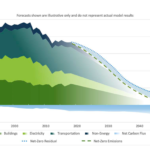
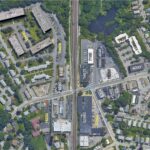
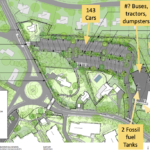
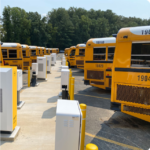
Sustainable infrastructure has fiscal, environmental benefits By Peter Dizikes Belmont is entering a new era of local energy production. Today, renewable energy capacity is becoming a normal component of our public buildings and even the town’s vehicle fleet because clean energy offers both fiscal savings and environmental benefits. Consider the flurry of recent building activity on lower Concord Avenue. Over the past five years, the town opened the new Belmont Public Library, the Belmont Sports Complex, Home of the Skip Viglirolo Rink, and the Belmont Middle and High School, all heavily powered by renewable energy. Together, these structures are turning [READ MORE]


Share

Environmental Stewards: Emily Norton, CRWA

 Climate Change, Environment, March/April 2026, Newsletter, Stormwater  Comments Off on Environmental Stewards: Emily Norton, CRWA
Feb 202026
 
Environmental Stewards: Emily Norton, CRWA

The Charles River Watershed Association (CRWA), founded in 1965, works to protect, restore, and enhance the Charles River and its surrounding communities. Through scientific monitoring, policy advocacy, and on-the-ground restoration, CRWA has helped transform the Charles from one of the nation’s most polluted rivers into a model of urban river recovery and climate resilience. The Belmont Citizens Forum spoke with Emily Norton, executive director of CRWA, about the organization’s watershed-wide initiatives, its community and policy partnerships, and her vision for the future of the Charles River. This interview has been edited for length and clarity: read the complete version at [READ MORE]

Share

Book Review: Here Comes the Sun by Bill McKibben

 Climate Change, November/December 2025, Solar Power  Comments Off on Book Review: Here Comes the Sun by Bill McKibben
Oct 312025
 
Book Review: Here Comes the Sun by Bill McKibben

By Jeffrey North with assistance from Roger Wrubel In his latest book, Here Comes the Sun, environmental writer and activist Bill McKibben offers a compelling case for why solar energy may be the most hopeful—and practical—path forward in the fight against climate change. McKibben, who has long been a voice for climate action and grassroots mobilization, weaves together history, science, and policy to argue that solar power is not only technologically viable but also socially transformative. McKibben begins by tracing the origins of the modern solar movement, reminding readers that the technology is hardly new. What has changed, he notes, [READ MORE]

Share

MyRWA Protects and Restores Mystic Watershed

 Climate Change, Environment, November/December 2025, Stormwater, Water Quality  Comments Off on MyRWA Protects and Restores Mystic Watershed
Oct 312025
 
MyRWA Protects and Restores Mystic Watershed

Our Environmental Stewards: Patrick Herron, Mystic River Watershed Association The Mystic River Watershed Association (MyRWA) has been a leader in restoring and protecting one of the most urbanized watersheds in New England. There are 44 lakes and ponds within the watershed, with its headwaters beginning in Reading and flowing to Boston Harbor. From ecological restoration and climate resilience projects to education, community engagement, and policy advocacy, MyRWA has built a reputation for turning data and public participation into lasting change. The Belmont Citizens Forum spoke with Patrick Herron, executive director of MyRWA, about the challenges and opportunities of protecting the [READ MORE]

Share

Belmont’s Electricity Comes from NE Power Pool

 Climate Change, Newsletter, September/October 2025  Comments Off on Belmont’s Electricity Comes from NE Power Pool
Aug 262025
 
Belmont’s Electricity Comes from NE Power Pool

By Dave Beavers To further explore the question, “Where does my electricity come from?” (See “Follow Belmont Electricity From Source to Socket“, BCF Newsletter, July/August 2025), this article considers what happens upstream of the Belmont Light substation at Blair Pond. Beyond Blair Pond Our Blair Pond substation is supplied by a transmission line from Alewife which connects Belmont to the New England grid. The Independent System Operator of New England (ISO-NE) operates the grid and administers the wholesale electricity market in New England. It is one of seven regional grid operators in the United States. Belmont Light is a stakeholder [READ MORE]

Share

Belmont’s First Miyawaki Forest Comes to BHS

 Climate Change, Environment, July/August 2025, Open Space, Plants  Comments Off on Belmont’s First Miyawaki Forest Comes to BHS
Jun 302025
 
Belmont’s First Miyawaki Forest Comes to BHS

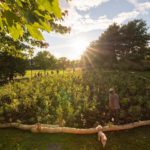
By Jean Devine Picture this: It’s 2028, and on the Belmont High School campus, a small forest of native trees and shrubs is shooting toward the sky. The trunks sway gently and the leaves shimmer softly in the summer breeze. As you walk toward this grove, birds flit in and out, you hear a hum of bees, while other pollinators, insects, and worms, mostly invisible to you, thrive in deeper sections of this new habitat. Before you stands Belmont’s  first Miyawaki Forest (aka mini forest). Now, three years after planting, this forest is self-sufficient. And, it’s replicable! Maybe it has [READ MORE]

Share
Apr 292025
 
Conservation Commissions Protect Our Water

By Dorothy McGlincy and Jeffrey North Belmont is home to the Massachusetts Association of Conservation Commissions (MACC), a vital nonprofit organization dedicated to protecting Massachusetts’s natural resources by supporting conservation commissions across the Commonwealth. Since its founding in 1961, MACC has been a cornerstone of environmental advocacy, providing resources, training, and support to the state’s 351 conservation commissions and promoting the protection of natural resources for future generations. MACC is headquartered at Mass Audubon’s Habitat property on Juniper Road. A mission rooted in conservation At its core, MACC’s mission is to assist and empower local conservation commissions, which serve as [READ MORE]

Share

How to Save Our Soil and Waterways

 Climate Change, May/June 2025, Newsletter, Sewers, Water Quality  Comments Off on How to Save Our Soil and Waterways
Apr 292025
 
How to Save Our Soil and Waterways

By Anne-Marie Lambert It takes a village to clean up our waterways and rejuvenate the soil beneath our feet. I have been soaking in this topic for over a decade, studying the town’s annual reports describing efforts to eliminate pollutants leaking into our waterways and thinking through what makes a real difference. Step one is to care enough about the communities and ecosystems that we are a part of to realize that clean waterways and healthy soil matter. In the 1970s, citizens cared enough that Congress passed the Clean Water Act. This new regard for clean water resulted in regulations [READ MORE]

Share

Belmont Carbon Emissions Down 14%

 Climate Change, Environment, July/August 2024, Solar Power  Comments Off on Belmont Carbon Emissions Down 14%
Jun 252024
 
Belmont Carbon Emissions Down 14%

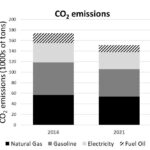
By Roger Wrubel, Brian Kopperl, and James Booth According to the Belmont Energy Committee’s most recent inventory, the town’s carbon emissions dropped from 177,000 tons to 150,000 tons per year between 2014 and 2021. The drop, which measures emissions from gasoline, natural gas, fuel oil, and electricity, results from residents shifting away from home heating oil to other energy sources, driving more fuel-efficient vehicles, and drawing their electricity from a cleaner New England grid. Except for the shift away from fuel oil, none of these reductions are happening at a pace sufficient to reach zero emissions by 2050. The committee [READ MORE]

Share

Belmont Rower Looks Out for the Charles River

 Climate Change, Environment, March/April 2024  Comments Off on Belmont Rower Looks Out for the Charles River
Mar 012024
 
Belmont Rower Looks Out for the Charles River

By Zeus Smith As a US National Team rower, Belmont resident Maggie Fellows spends a lot of time on the Charles River. Since 2021, the Charles River Watershed Association (CRWA) has mobilized a cohort of passionate community leaders like Fellows to push for climate-smart policies and practices right in their backyards. Called River Advocates, this program brings together volunteers from various backgrounds and experiences to learn effective advocacy strategies and steward a more climate-resilient future. The River Advocates program is a crash course in civic engagement––by joining, volunteers find a community of like-minded individuals interested in learning about direct actions [READ MORE]

Share
Nov 012023
 
How to Make Decisions About Heat Pumps

By Will Brownsberger Edited and reprinted with permission from Brownsberger’s blog, willbrownsberger.com/heat-pumps. Many people are seeking to shrink their personal carbon footprint. Many also seek to participate constructively in the energy systems transitions necessary to achieve net zero carbon emissions. There is a broad consensus among climate planners in Massachusetts that we need to electrify heating in buildings. However, each building raises unique challenges. This article attempts to summarize the environmental and consumer considerations for people seeking to electrify home heating. Many of these issues are explored in more depth in this heat pump outline. Several good heat pump applications [READ MORE]

Share

Why Belmont Needs the Specialized Energy Code

 Climate Change, Newsletter  Comments Off on Why Belmont Needs the Specialized Energy Code
Aug 312023
 
Why Belmont Needs the Specialized Energy Code

By Roger Wrubel Massachusetts adopted An Act Creating A Next-Generation Roadmap for Massachusetts Climate Policy (Roadmap) in 2021. The act directed the Department of Energy Resources (DOER) to update the existing energy building codes and to create a new Opt-In Specialized Energy Code to encourage the construction of all-electric buildings.  The state needs to update energy building codes because the policy requires reduced greenhouse gas emissions. The policy set greenhouse gas emissions limits of at least 50% below the 1990 baseline by 2030, at least 75% below the baseline by 2040, and required net-zero emissions by 2050. By 2050, emissions [READ MORE]

Share

Could Town Buildings Generate Solar Power?

 Climate Change, Environment, January/February 2023, Newsletter, Solar Power  Comments Off on Could Town Buildings Generate Solar Power?
Jan 032023
 
Could Town Buildings Generate Solar Power?

By Aditya Jain and Vincent Stanton, Jr. Imagine a project that would produce a new recurring revenue stream for Belmont without any upfront cost, utilizing only town-owned land and buildings, while lowering electricity costs and helping the town achieve its green energy goals. That could be the payoff for installing photovoltaic (PV) panels on town properties. Suitable town-owned sites include non-historic buildings with large flat rooftops, parking lots, and open ground including the former incinerator site along Concord Avenue. Adding PV arrays on privately owned rooftops and parking lots could significantly expand the network of arrays and improve the economics. [READ MORE]

Share
Jan 032023
 
School Claims Parking is “Educational Use”

By Justin Roe Belmont Hill School submitted their long-awaited plan for the Belmont Hill woodlands area to the planning board in October. The response from Belmont’s residents was instantaneous and overwhelming in opposing the proposal.  Within three weeks, Belmont’s Select Committee and Planning Board have received hundreds of letters voicing town opposition to the project. A petition in opposition has attracted over 2,200 signatures, and hundreds of lawn signs and banners are popping up in every district in Belmont. School action groups from Lexington and Waltham are taking an active role. All within a few weeks.  The school presented its [READ MORE]

Share
Oct 312022
 

To the Editor: New England in the fall is renowned for its beauty—the trees are blazes of color, birds, squirrels, and other animals are busily preparing for winter, and the occasional whiff of woodsmoke floats in the air. Driving up Prospect Street, one is met with the pleasant sight of the pristine lawns and stately brick buildings of the Belmont Hill School—a self-described educator of “men of good character,” where “boys are expected to collaborate and become part of something larger than themselves.” Which is why it’s such a shame that the Belmont Hill School is apparently ignoring its own [READ MORE]

Share

Electric Buses Are Coming to Belmont

 Climate Change, Newsletter, November 2022  Comments Off on Electric Buses Are Coming to Belmont
Oct 272022
 
Electric Buses Are Coming to Belmont

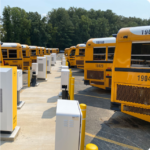
By Brian Kopperl and Roger Wrubel With the right conditions, electric school buses (EV) can replace the familiar diesel school bus at a cost that is both financially and environmentally attractive. EV buses are quieter than diesel and healthier, too, and all the major bus manufacturers, from Thomas and Bluebird to Lion, now make them. Other Massachusetts  towns like Beverly, Dracut, and Acton already have their electric fleets in operation or on order; Belmont should too.   The Energy Committee has encouraged Belmont schools to start a phased transition by including three EV buses (out of 10 expected total buses) [READ MORE]

Share

How Belmont Can Switch to Electric Vehicles

 Climate Change, Newsletter, November 2022  Comments Off on How Belmont Can Switch to Electric Vehicles
Oct 272022
 
How Belmont Can Switch to Electric Vehicles

By Roger Wrubel and Brian Kopperl If Belmont is to reach its goal of reducing greenhouse gas emissions to 80% of 2007 levels by 2050, all sectors of the community must do their part. The Belmont Energy Committee has proposed an “EV First” policy requiring the town to consider electric vehicles (EVs) for all lightweight vehicle purchases. The policy allows for exemption requests by departments if EVs do not meet their needs or are too expensive.  We collected data on the concerns of town staff in transitioning to EVs. We analyzed each of these concerns: lack of EV charging infrastructure, [READ MORE]

Share

Wicked Hot Mystic Maps Summer Heat

 Air Quality, Climate Change, Environment, Newsletter, Sept/Oct 2022  Comments Off on Wicked Hot Mystic Maps Summer Heat
Sep 092022
 
Wicked Hot Mystic Maps Summer Heat

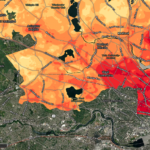
Detail of a map of surface temperatures recorded by Wicked Hot Mystic, a collaborative project of the Museum of Science, Boston, in partnership with the Resilient Mystic River Collaborative (RMC), Mystic River Watershed Association, and the Metropolitan Area Planning Council. On August 12 and 13, 2021, over 80 volunteers joined MOS and MyRWA in measuring ground-level air temperature, humidity, and air particulate matter using special sensors mounted on cars and bikes. This data was collected August 12 at 3 pm. Note that the McLean conservation land is 10F cooler than surrounding areas.    For more information see www.mos.org/explore/public-events/wicked-hot-mystic

Share

Gas Leaks Are a Civil Rights Issue

 Climate Change, Environment, July-August 2022, Newsletter  Comments Off on Gas Leaks Are a Civil Rights Issue
Jun 212022
 
Gas Leaks Are a Civil Rights Issue

By Aditya Jain Governments have embraced natural gas as a “bridge fuel” to completely renewable energy sources, yet natural gas is far from a clean energy source (“It’s Time to Switch from Gas to Clean Energy,” BCF Newsletter, August/September 2021). Natural gas leaks in streets and homes cause significant public health hazards and environmental damage.  Across Massachusetts, gas leaks are often underestimated by officials and underserved by gas companies. While numerous gas leaks in Belmont are listed and mapped, other communities of underrepresented minorities face the heaviest burden of this pollution. Massachusetts-based energy researchers analyzed gas leaks in different geographic [READ MORE]

Share

Miyawaki Forest Boosts Biodiversity, Resilience

 Climate Change, Environment, May/June 2022, Newsletter, Plants  Comments Off on Miyawaki Forest Boosts Biodiversity, Resilience
May 082022
 
Miyawaki Forest Boosts Biodiversity, Resilience

By Maya Dutta  The first Miyawaki forest in the northeast United States was planted in Cambridge’s Danehy Park last September. Miyawaki forests are dense, biodiverse pocket forests that aim to recreate the symbiotic relationships between diverse life forms that make a natural forest so resilient. By densely planting a diverse array of native species, Miyawaki forests encourage nutrient exchange between the plants and with fungal and microbial life in the soil, resulting in fast-growing forests with high survival rates.  Benefits of Miyawaki forests The Miyawaki method offers a vision of not just planting trees to raise their sheer number, but [READ MORE]

Share