To the Editor: Overall, it’s positive that the Belmont Citizens Forum devoted two articles to the topic of affordable housing in Belmont in the September/October Newsletter. However, it was disappointing that the picture of 40B was incomplete, and neither article acknowledged the benefits of increasing the stock of housing—both affordable and market rate—including social, racial, and economic benefits for the residents of Belmont and the region. “How Affordable Housing Works in Belmont,” by Meg Muckenhoupt, incorrectly states the townhome number of the 91 Beatrice Circle site development as 32. The developer originally proposed 16 units and then revised it to [READ MORE]

Carrots and Sticks Nudge Belmont’s Cleanup

By Anne-Marie Lambert Two key drivers are nudging Belmont to clean up our waterways and protect us from the storms coming with climate change: the threat behind an Environmental Protection Agency Consent Order and the tempting Massachusetts Municipal Vulnerability Program (MVP) Every six months, Belmont is obliged to file a report with the New England region of the federal Environmental Protection Agency (EPA) to demonstrate compliance with a 2017 consent order under the Clean Water Act. The town has to show steady progress cleaning up the sewage pollution Belmont has sent to Boston Harbor due to the intermingling of Belmont’s [READ MORE]
Energy Retrofit Keeps Saving after 10 Years

By Will Browsberger A little over 10 years ago, my wife and I proposed to my parents that we downsize into a two-family house together and make it as energy efficient as possible. (See “Deep Energy Retrofit Shrinks Utility Bills,” Belmont Citizens Forum Newsletter, September 2010.) This is a story of four experiments. First, the living arrangement has worked out very well for all of us—we can be helpful in little ways to my parents and we feel very fortunate to see them more. Our only wish is that we had made the decision when the kids were younger. Second, [READ MORE]
Is it Time to Get Natural Gas Out of Belmont?

By Roger Wrubel In 2009, Town Meeting adopted a Belmont Climate Action resolution committing to an 80% reduction in our town’s greenhouse gas (GHG) emissions by 2050. An inventory in 2015 found that Belmont had reduced its GHG emissions by 5% compared with 2007. The inventory showed that the most of Belmont’s emissions came from home heating and vehicles. Most of the reduction in emissions in the last nine years is attributable to a shift from using oil for home heating to natural gas, and a similar shift to natural gas from coal and oil to generate electricity for the [READ MORE]
Belmont Waterways Get Failing Grades

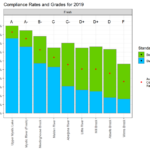
By Meg Muckenhoupt The Mystic River’s most recent water quality report card, released on August 13, gives Winn’s Brook an F for 2019—and the Little River and Alewife Brook earned Ds. The US Environmental Protection Agency (EPA) creates the annual report card in collaboration with the Mystic River Watershed Association. It grades segments of the Mystic River’s lakes, river, and streams on how frequently they meet bacterial standards for swimming and boating. The Upper Mystic Lake and the Chelsea River got an A grade; they met boating and swimming standards 90% or more of the time in 2019. Winn’s Brook [READ MORE]
Pomponi Takes Over Habitat Sanctuary

The beauty of Massachusetts Audubon sanctuaries is how deeply rooted they are in their individual communities. Habitat is no exception. Belmont citizens have helped shape Habitat’s programming and gardens and seek solace in its wooded paths and intimate landscape. Renata Pomponi, who is now managing Habitat, understands how special Habitat is, for the natural habitat it protects and the community that considers it their own. It is a true sanctuary within Boston’s metropolitan area. I spoke with Pomponi briefly last month, and she explained how her role came to be. * * * With COVID-19 and the cancelation of programs [READ MORE]
How Affordable Housing Works in Belmont

By Meg Muckenhoupt With 12 townhouses proposed for a half-acre site at 91 Beatrice Circle, Belmont is buzzing with questions about how a developer can suggest such a dense development. The answers—because this question does not have a single, simple answer—have to do with a law known as Chapter 40B, aka the “Massachusetts Comprehensive Permit Law,” the legal definition of “affordable housing,” and how Belmont has developed up to now. What is Chapter 40B? Chapter 40B is a state law that was passed in 1969 to increase the supply of affordable housing in Massachusetts. As the Department of Housing and [READ MORE]
Wrubel Connected People with Nature

By Anne Paulsen, with contributions from Martha Moore, Heli Tomford, and Sharon Vanderslice Roger Wrubel, entomologist, teacher, conservationist, and community activist, became the director of the Habitat Wildlife Education Center and Sanctuary in 2000 and retired this June. Trained in the study of insects, he spent time at Tufts and UMass Boston teaching and writing and was conscious of the need to build strong bonds between the natural world and people. In the ensuing years, Roger forged that relationship with foresight and determination. Roger moved to Belmont in 1989 and began his community activism as a member of the Solid [READ MORE]
25% Belmont Bike Path Design Presented

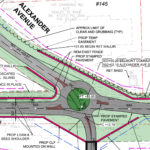
By Jarrod Goentzel Recent meetings offered a first look at the official 25% draft plan for the Belmont Community Path, which should include most significant features, and continued conversations with state leaders about how and when it can be built. On July 16, the Community Path Project Committee (CPPC) held a virtual public meeting for the design firm, where Nitsch Engineering presented draft 25% design drawings for the first two construction phases (bit.ly/20200716BCPpresentation). A video of the full meeting, including public questions and feedback, is available at Belmont Media Center (bit.ly/20200716BCPvideo). Phase 1 includes the rail trail from Brighton Street [READ MORE]
Belmont Roots September 2020

By Meg Muckenhoupt Well, it’s fall, and most meetings are still being held via screens and speakers. I’m sorry. There are still some things you can do alone, or sitting on your couch, that might help you understand and improve the world. The following organizations are offering a variety of virtual events. These are highlights: Mass Audubon is holding several online classes this fall, including Identifying Hawks in Flight (Wednesday, September 9, 7–8:30 PM, $20 member/ $24 nonmembers), Beginner Birdwatching (eight classes beginning Thursday, September 10, 7–8:30 PM, $100 members/ $120 nonmembers), and Nature Writing (two classes beginning Thursday, October [READ MORE]
Affordable Housing on Belmont Hill
By Sumner Brown Affordable housing and Chapter 40B affordable housing are not exactly the same. My wife and I moved to Belmont from Cambridge while I was a graduate student. We rented. It was wonderful! We had wildlife, trees, and grass outside our windows. We had a parking spot. We bicycled to work and school. We liked the neighbors and the neighborhood. We lived in the lower part of a single-family house while the owner, Miss Bryant, an elderly woman, and her dog Zangy were upstairs. The building was of very high quality, but this was not luxurious housing. There [READ MORE]
Belmont Spreads Compost Townwide

Town puts out RFP for preferred vendor program By Julie Wu Since its inception in 2018, Belmont Composts!, a project of the nonprofit Belmont Food Collaborative, which also runs the Farmers’ Market, has urged curbside composting to reduce Belmont’s trash, saving both town funds and the environment. Using online and in-person outreach and leveraging collective bargaining power to obtain bulk discount rates, Belmont Composts! has made it possible for more than 600 households to sign up with curbside compost companies. With approximately 10,000 households in Belmont, there is potential for much more participation. In October 2019, the cities of Newton [READ MORE]
The Litter Guy Cleans Up Belmont

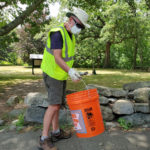
By Patrick O’Dougherty Photos by Mary Bradley As a boy, I became aware of seeing litter almost everywhere. Among the many things we did and learned about as Boy Scouts was public service. Picking up litter was one of our services. In the 1970s, a targeted ad campaign seemed to diminish the amount of litter in public spaces. Adulthood has taken me in many different directions, and litter wasn’t something about which I thought. About 20 years ago, I fell in love with cycling and I began to notice litter again. Lots of it. Apparently, litter is back. My memories [READ MORE]
BCF Editor Publishes “The Truth About Baked Beans”

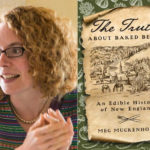
When she isn’t editing the BCF Newsletter, Meg Muckenhoupt writes about land use, the environment, gardening—and food. Her latest book, The Truth About Baked Beans, was released on August 30 by NYU Press. As the NYU Press states, “The Truth about Baked Beans explores New England’s culinary myths and reality through some of the region’s most famous foods: baked beans, brown bread, clams, cod and lobster, maple syrup, pies, and Yankee pot roast. From 1870 to 1920, the idea of New England food was presented in magazines, newspapers, and cookbooks, often through fictitious and sometimes bizarre origin stories touted as [READ MORE]
Lone Tree Hill Volunteer Day Postponed

Belmont Citizens Forum’s Eighth Annual Lone Tree Hill Volunteer Day in conjunction with the Judy Record Conservation Fund scheduled for April 24, 2020, at the Lone Tree Hill parcel has been postponed to the fall due to the current Coronavirus shelter in place order. A big shout out to the good Samaritans who picked up the trash at the bottom of Coal Road, along Pleasant Street and at the Mill Street parking lot. Later this year we plan to complete the planting of trees along the Pine Allee. THANK YOU TO OUR CORPORATE SPONSORS Gold Level Sponsors Anne Mahon Realty [READ MORE]
Belmont’s Last Pandemic: the 1918 Flu

By Vincent Stanton, Jr. Thought you could escape coronavirus news in the pages of the BCF Newsletter? You are safe, but there is a catch. If you can tolerate more grim news, consider taking a trip back to the last global pandemic, the so-called “Spanish Influenza” of 1918. The story of how Belmont responded is replete with both striking similarities to the 2020 coronavirus response and sharp differences. A weekly record of the influenza pandemic as it swept through Belmont in the fall of 1918 can be found in the pages of the Belmont Patriot. However, before diving into the [READ MORE]
It’s Officially Census Day

By now, all Belmont households have received one or more official invitations by mail to take the 2020 Census. It has never been easier or more important to take the census. Residents can respond on their own, whether online, over the phone, or by mail—all without having to meet a census taker. With the flexibility and support of Belmont residents, we will achieve a complete and accurate count to help guide funding decisions for things like health centers, roads, and emergency services. Both phone and online options are available in 13 languages, and assistance in many more languages is available [READ MORE]
Tree Loss Harms Urban Environments

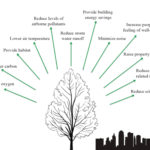
By Florence DiTirro The National Land Cover Database from 2001 estimated Belmont’s tree canopy was 27% of Belmont’s land. From 2003 to 2008, Boston’s urban tree cover declined from 29% to 28%. This downward trend continues if we look at our state, our country, and our globe. The Massachusetts urban tree cover declined between 0.32% and 0.24% in the five years from 2009 to 2014, and the United States overall lost 1.0% of urban tree cover. Global loss was measured as -0.2%. It’s a sad state that we are losing our trees. What is there not to like about trees? [READ MORE]
Lydia Ogilby Remembered

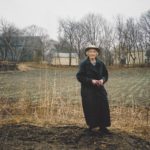
By Neal Winston Lydia Phippen Ogilby passed away on November 1, 2019, at age 98 at her historic John Bright House on Washington Street, adjacent to the 10-acre Belmont Farm. Living in Belmont from a young age, she was known by townspeople as a spirited preservationist of its heritage and land. Lydia’s strong and generous opinions embodied the Belmont spirit of independence and industriousness of her forebears. Her portrait by Belmont photographer Richard Cheek hangs in Town Hall. She is seen standing in her field, seemingly growing out of the earth, ever vigilant, defying the pressures of development around her. [READ MORE]
Community Path Began Decades Ago

By Vincent Stanton, Jr. It has taken over two decades of stop-and-start development to bring the Belmont Community Path to its current state of planning and formal design, but a timeline for construction of the path is finally in sight. The design and engineering of Phase I of the Belmont Community Path, from Brighton Street to the Clark Street Bridge, started last fall and should take about two years to complete. In the next two years, path plans will progress through three major milestones: 25, 75, and 100 percent design, as part of a Massachusetts Department of Transportation (MassDOT) guided [READ MORE]