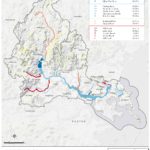
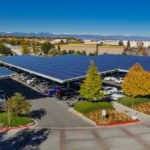
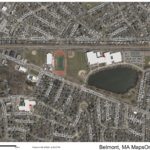
By Aaron Pikcilingis and Paul Rickter Providing high-quality town services amid budgetary constraints requires us to use every strategy at our disposal. The Structural Change Impact Group (SCIG) was charged with evaluating potential strategies that could reduce costs, improve efficiency, or improve the quality of service for our town. Of the strategies we evaluated, regionalizing town services is one of the most promising. Belmont already participates in several regional arrangements, but the SCIG identified new opportunities for consideration. Benefits of Regionalized Town Services Reduced costs Regionalized municipalities can benefit from group purchasing because individually, smaller municipalities don’t buy enough [READ MORE]

Alewife Brook, Little Pond Get D Grades Again

By Meg Muckenhoupt In 1972, the Clean Water Act called for all waterways to be “fishable and swimmable” by 1983, and for all pollution discharges to end by 1985. That still hasn’t happened, as is shown by the new annual water quality report card issued by the Environmental Protection Agency (EPA) for the Mystic River in July. All of Belmont’s brooks received a D or D+ grade because they failed to meet state E. coli bacteria standards for boating in 45% to 55% of samples taken in 2021. Site 2021 2014 Grade Total Grade Total Alewife Brook D 47% D [READ MORE]
Belmont Bus Routes to Shift in Spring 2023

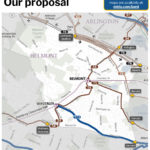
By Meg Muckenhoupt Belmont’s mass transit users may have very different travel options under the MBTA’s proposed Bus Network Redesign. The MBTA is proposing changes including eliminating the the #74 bus route to Harvard Square and adding a new #54 bus route from Arlington Center to Riverside, Newton. You can view the complete proposal presented at Belmont’s July 28 Traffic Advisory Committee meeting at bit.ly/BFC-New-Bus. The new routes will be rolled out in 2023. Belmont residents have repeatedly expressed concerns about the new #54 route which runs from Belmont Center through the tunnel under the commuter rail tracks and down [READ MORE]
Spare a Thought for Lone Tree Hill

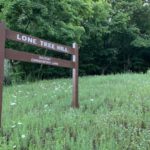
By Dean Hickman and Leonard Katz Between Pleasant Street and Trapelo Road to the south, Concord Avenue to the north, and Mill Street to the west, Lone Tree Hill wraps around McLean Hospital and sits above Belmont, providing us with a peaceful and secluded mix of woods and meadows where we can escape the hustle and bustle of suburban life down below. It is also Belmont’s gateway to Rock Meadow on the other side of Mill Street as well as to the more secluded trails of the Western Greenway which head west into neighboring Waltham and Lexington. Anyone looking for [READ MORE]
Town Plans Sustainable Library

By Marty Bitner and Clair Colburn The proposed new library, designed by Oudens Ello Architecture, is an all-electric, highly sustainable building, but what are those sustainable features? What is the process of designing a holistically sustainable building? Right-Sizing Buildings contribute to 40% of global energy consumption and 33% of greenhouse gas emissions. Since heating buildings is the largest source of carbon emissions in Belmont, the first goal in sustainability is to make sure that our new library is no larger than it needs to be. Having the right size building means that space is not being unnecessarily heated and cooled [READ MORE]
Wicked Hot Mystic Maps Summer Heat

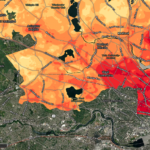
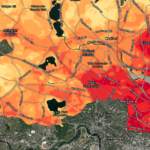
Detail of a map of surface temperatures recorded by Wicked Hot Mystic, a collaborative project of the Museum of Science, Boston, in partnership with the Resilient Mystic River Collaborative (RMC), Mystic River Watershed Association, and the Metropolitan Area Planning Council. On August 12 and 13, 2021, over 80 volunteers joined MOS and MyRWA in measuring ground-level air temperature, humidity, and air particulate matter using special sensors mounted on cars and bikes. This data was collected August 12 at 3 pm. Note that the McLean conservation land is 10F cooler than surrounding areas. For more information see www.mos.org/explore/public-events/wicked-hot-mystic
Reflections on “Belmont’s Fiscal Cliff”
By Vincent Stanton, Jr. Although “Belmont’s Looming Fiscal Cliff” makes several important points about Belmont’s tax base, some of the details should be clarified for BCF readers. Lexington and Watertown have both recently raised taxes, largely driven by the construction of new schools. Lexington’s most recent tax increase was in June 2022, when voters approved a debt exclusion to fund a $35.2 million new police station. The average tax bill is expected to increase by $258/year in the first year. Previously, in December 2017, Lexington voters approved debt exclusions for two new schools and a new fire station with an [READ MORE]
Why We are Running a Pro-Development Piece
By Vincent Stanton, Jr. Long-time readers of the Newsletter may be surprised to see an article proposing more intensive development in Belmont. The Belmont Citizens Forum was created in 2000 by a group of residents who opposed the scale of development proposed by McLean Hospital on its Belmont Hill campus—initially over 1,000,000 square feet. Much of that development has not transpired, as commercial property developers have not found the McLean location attractive. The McLean development proposed in the late 1990s came with the promise of substantial new revenue. Specifically, in 1999 the town’s financial impact consultant estimated that the McLean [READ MORE]
Belmont is Sitting on a Fiscal Cliff

By Max Colice, Elizabeth Dionne, and Dan Barry Belmont is effectively insolvent. It cannot pay its operating expenses and pension debt without one-time federal aid. Compounding this problem, Belmont’s operating expenses are rising faster than its revenue. Unless Belmont increases its revenue, the town may have to cut services drastically. Like every other town in Massachusetts, Belmont’s revenue comes mainly from property taxes. The Board of Assessors assesses each property’s value, then computes the property tax by multiplying the property value by the property tax rate. Even though Belmont’s property tax rate is relatively low, its single-family property tax bill [READ MORE]
September/October 22 Newsletter

Read the September/October 22 Newsletter In this issue: Belmont is Sitting on a Fiscal Cliff Belmont is effectively insolvent. Unless Belmont increases its revenue, the town may have to cut services drastically. Read more. Why We are Running a Pro-Development Piece Long-time readers of the Newsletter may be surprised to see an article proposing more intensive development in Belmont. Read more. Reflections on “Belmont’s Fiscal Cliff” Although “Belmont’s Looming Fiscal Cliff” makes several important points about Belmont’s tax base, some of the details should be clarified for BCF readers. Read more. Wicked Hot Mystic Maps Summer Heat On August 12 [READ MORE]
Volunteers Battle Invasives

On Saturday mornings in May and June, Lone Tree Hill’s Invasives Working Group led volunteers removing black swallowwort and garlic mustard from areas near Mill Street and in Lone Tree HiIll’s Barn area, which abuts Rock Meadow’s driveway, parking lot, and entrance path. To volunteer for work in July and August (which may shift to different times, species, and areas), email Leonard Katz: ldkatz86@gmail.com
Affordable Housing: A Primer

By Tomi Olsen The Belmont Housing Trust (BHT) is committed to enhancing Belmont residents’ knowledge of affordable housing. We would like to define some terminology to make it clearer when we talk to the community about the need for affordable housing and ways to accomplish it. The BHA and the BHT There is often confusion about the difference between the Belmont Housing Trust and the Belmont Housing Authority (BHA). Each is a distinct organization. Housing trusts are typically nonprofit organizations while housing authorities are state agencies. The BHT, like other housing trusts in the Commonwealth, is a nonprofit corporation (501c3) [READ MORE]
Belmont Porchfest to Celebrate Our Resilience

By Mary Bradley Planning is underway for Belmont Porchfest’s most ambitious event yet to reflect on and celebrate our resilience as a community. Porchfest is scheduled for September 10, and registration is open at BelmontPorchfest.org. Expect to see our new “Thank You Sponsors!” signs in front of EVERY registered porch beginning in early July. A peek behind the curtain reveals plans for a Park Palooza (location TBA) featuring student musicians, a community-wide art project, and food vendors. The art project is geared toward all ages, aimed to bring out our inner painters and writers, each creating a small part [READ MORE]
Gas Leaks Are a Civil Rights Issue

By Aditya Jain Governments have embraced natural gas as a “bridge fuel” to completely renewable energy sources, yet natural gas is far from a clean energy source (“It’s Time to Switch from Gas to Clean Energy,” BCF Newsletter, August/September 2021). Natural gas leaks in streets and homes cause significant public health hazards and environmental damage. Across Massachusetts, gas leaks are often underestimated by officials and underserved by gas companies. While numerous gas leaks in Belmont are listed and mapped, other communities of underrepresented minorities face the heaviest burden of this pollution. Massachusetts-based energy researchers analyzed gas leaks in different geographic [READ MORE]
What is a CISMA, and Why Do We Need One?

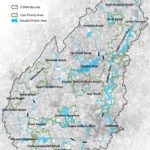
By Jeffrey North New York state has eight very large ones. Oregon has 10. Michigan has more than 20 (required by law for every county). The number of Comprehensive Invasive Species Management Associations (CISMAs) across the country is approaching 400. Massachusetts has one. But that number is likely to increase. With the likely passage of the invasive species bill (H4595), financial and administrative resources will be available for CISMAs and a host of other programs, plans, and projects for controlling invasive plants. The bill would establish an invasive species trust fund. A statewide invasive species coordinator would be appointed, along [READ MORE]
Belmont’s Invasive Species: Black Swallowwort

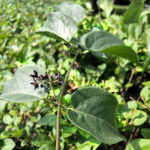
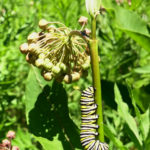
By Jeffrey North Black swallowwort is a killer. Monarch butterflies mistake the plant for native common milkweed, and lay their eggs in the non-native invader, where the larvae die. Besides threatening the population of migrating monarch butterflies, it is toxic to mammals, and by crowding out food for wildlife, worsens wildlife habitat. Vincetoxicum nigrum, also known as Louise’s swallowwort or black dog-strangling vine, is a species of plant native to Europe and found primarily in Italy, France, Portugal, and Spain. Black swallowwort was probably introduced to North America as an ornamental plant in the 1800s. The first sighting of Vincetoxicum [READ MORE]
Restoration Resumes on Lone Tree Hill

By Jeffrey North A crew of field horticulture technicians returned to the Lone Tree Hill conservation area for their first visit in 2022 on May 20. Begun in late 2020, the work to enhance the ecological integrity of Belmont’s 80-acre conservation land site addresses the most egregious infestations of biodiversity-erasing invasive plant species. (See Restoration Projects Approved for Lone Tree Hill, BCF Newsletter, May 2021) The mission this time was to cut or pull and spray garlic mustard in bloom. As garlic mustard is one of the first plants to start actively growing in late March, leaves can be sprayed [READ MORE]
Mass Central Rail Trail Continues Expansion

By John Dieckmann Progress continues on the Wayside section of the Mass Central Rail Trail (MCRT) from I-495 to Boston. Two paved segments were recently completed: five miles, from the Waltham-Weston town line to Route 20 in Wayland at Russell’s Garden Center, and approximately three miles from Brighton Street in Belmont to Lowell Street in Somerville. In addition, two major segments are under construction. The Somerville-Cambridge section being constructed along with the Green Line Extension will open in late summer and will complete the MCRT from Brighton Street to Boston in the vicinity of the TD Garden. Construction has [READ MORE]
Could the Community Path Host a Solar Array?

By Vincent Stanton, Jr. Additional material—including calculations of how much energy could be generated—is available in the full version . Below is the version which appeared in the print newsletter. – Ed. The imminent arrival of the Belmont Community Path prompts the question: what other productive uses might be devised for the Fitchburg Line corridor? One possibility is siting a south-facing solar photovoltaic (PV) array along the tracks. Conditions for a PV array Aspects of path layout relevant to design of a PV array include length, orientation to the sun, and the presence of a substrate to which PV panels can [READ MORE]
Do We Need a New High School Parking Lot?

By Anne Paulsen Belmont is a small town and space is limited. Land use planning is key to maintaining a town that is walkable and bikeable with shopping, services, recreation, educational opportunities, and open space close at hand. The key is how to make the best use of this limited space. The town is now planning the completion of the high and middle schools, and plans are underway for a new skating rink and library. Parking is a big part of the plans. For the last 50 years, off-street surface parking in the area west of Harris Field has been [READ MORE]