Lydia Ogilby Remembered

 Newsletter  Comments Off on Lydia Ogilby Remembered
Mar 022020
 
Lydia Ogilby Remembered

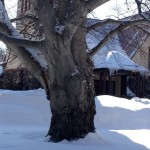
By Neal Winston Lydia Phippen Ogilby passed away on November 1, 2019, at age 98 at her historic John Bright House on Washington Street, adjacent to the 10-acre Belmont Farm. Living in Belmont from a young age, she was known by townspeople as a spirited preservationist of its heritage and land. Lydia’s strong and generous opinions embodied the Belmont spirit of independence and industriousness of her forebears. Her portrait by Belmont photographer Richard Cheek hangs in Town Hall. She is seen standing in her field, seemingly growing out of the earth, ever vigilant, defying the pressures of development around her. [READ MORE]

Share
Mar 022020
 
Community Path Began Decades Ago

By Vincent Stanton, Jr. It has taken over two decades of stop-and-start development to bring the Belmont Community Path to its current state of planning and formal design, but a timeline for construction of the path is finally in sight. The design and engineering of Phase I of the Belmont Community Path, from Brighton Street to the Clark Street Bridge, started last fall and should take about two years to complete. In the next two years, path plans will progress through three major milestones: 25, 75, and 100 percent design, as part of a Massachusetts Department of Transportation (MassDOT) guided [READ MORE]

Share
Mar 022020
 
Arlington Group Opposes Mugar Site Plans

By Meg Muckenhoupt The Mugar wetlands are 17.7 acres of open land in East Arlington. Oaktree Development has proposed constructing a 207-unit apartment complex and six duplex townhouses on this site, to be renamed Thorndike Place. The Coalition to Save the Mugar Wetlands opposes building on the site, which is bordered by Route 2, Thorndike Field, and Dorothy, Edith, and Burch Streets. The following interview with Clarissa Rowe, one of the founders of the Coalition to Save the Mugar Wetlands, was edited for length and clarity. Why is the Mugar site important? I think the reason Arlington and Belmont residents [READ MORE]

Share
Feb 272020
 
Lone Tree Hill Cleanup Day April 25

Lone Tree Hill Cleanup Day Join us in stewarding Lone Tree Hill! The Belmont Citizens Forum, in conjunction with the Judy Record Conservation Fund, is holding its eighth annual cleanup and trail maintenance day on Saturday, April 25, from 9 AM until noon. Help complete the planting of trees along the Pine Allee, clean up and remove invasive species at the Coal Road area, and pick up trash at the Mill Street parking lot and South Pleasant Street area at the Coal Road kiosk. Students can earn community service credits. This event is made possible by generous local business sponsors. [READ MORE]

Share
Jan 062020
 
Belmont Timeline

Belmont Timeline Featuring events significant to the Belmont’s history and Belmont Citizens Forum issues. 1654 The John Chenery house, 52 Washington Street, is built. The Chenery house is the oldest surviving house in Belmont. 1760 The Thomas Clark House is built on what is now Common Street. “Local tradition maintains that the Clark family witnessed the beginning of America’s War for Independence from the hill behind this house, seeing smoke and hearing the sounds of war breaking out on April 19, 1775.” —Joseph Cornish, BCF Newsletter,  January 2011. It was moved in 2012, and finally demolished in 2014. 1805 “Ice [READ MORE]

Share

Construction Continues on the Uplands

 March 2016, Newsletter  Comments Off on Construction Continues on the Uplands
Mar 152016
 
Construction Continues on the Uplands

By Anne-Marie Lambert The first red-winged blackbirds now returning to the fields by Little River may not think much of the “wildlife habitat replication area” alongside the newly constructed buildings at the Uplands. This newly seeded replication area sits between the former Little River, now a large drainage ditch next to Frontage Road, and one of the four-story Tyvek-wrapped buildings that comprise The Royal, formerly named The Residences at Acorn Park. In a contested 2014 ruling, the Massachusetts Superior Court determined that this replication area (next to what amounts to a Route 2 drainage ditch running under Acorn Park Drive) [READ MORE]

Share

Porous Pavement Can Drain Sloped Sites

 May 2015, Newsletter, Stormwater  Comments Off on Porous Pavement Can Drain Sloped Sites
May 122015
 
Porous Pavement Can Drain Sloped Sites

by Kristopher Houle, P.E. A longer version of this article, including several references, originally appeared on the Ecological Landscape Alliance’s blog. Many green infrastructure alternatives exist for reducing stormwater runoff. Porous asphalt is one that has clear benefits. In New England, porous asphalt has been used successfully in sidewalks, parking lots, subdivision roads, and highways. Research has demonstrated its function for  stormwater attenuation, recharging local waterways, runoff treatment, and chloride source control. As an engineer and practitioner, I commonly see projects that would benefit from its use, but porous asphalt has been excluded from the final design for reasons relating [READ MORE]

Share

Path Neighbors Can Choose Trees For Privacy

 Bike Paths, May 2015, Newsletter, Open Space  Comments Off on Path Neighbors Can Choose Trees For Privacy
May 122015
 
Path Neighbors Can Choose Trees For Privacy

By Meg Muckenhoupt Community paths allow more people to travel without using cars—and a lot of people want to do just that. It is estimated that more than 2 million people walk, run, and bike the Minuteman Bikeway in Cambridge, Arlington, Lexington, and Bedford each year. Understandably, neighbors living in homes abutting new paths are often concerned about the effects of having so many visitors passing by their yards. Different communities have varying approaches to living with bike trails. Today, 22 years after the Minuteman Bikeway officially opened, about a quarter of properties abutting the Bikeway in Arlington have no [READ MORE]

Share

Copper Beeches Grace Belmont Grounds

 March 2015, Newsletter  Comments Off on Copper Beeches Grace Belmont Grounds
Mar 122015
 
Copper Beeches Grace Belmont Grounds

By Elizabeth Gourley “There is no finer specimen tree; so beautiful that it overwhelms one at first glance,” states Michael Dirr, University of Georgia professor and author of Manual of Woody Landscape Plants, on the merits of the European beech (Fagus sylvatica). One of the most striking cultivars of European beech is the copper beech (Fagus sylvatica ‘Cuprea’). A lovely specimen can be found in the small park adjacent to The First Church in Belmont Unitarian Universalist where Concord Avenue and Common Street intersect. This majestic tree has been overseeing our comings and goings for over 150 years. Tom Walsh, [READ MORE]

Share