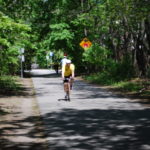
by John Dieckmann As reported previously, the town of Belmont has set aside $100,000 from its capital budget, and the state of Massachusetts has also allocated $100,000 for an in-depth engineering feasibility study of the routes outlined in the report from the Community Path Advisory Committee (CPAC). This is a key step in construction of a bicycle and pedestrian path through Belmont, from Brighton Street to Waltham, as part of the Mass Central Rail Trail from Boston to Northampton. In essence there are two primary route alternatives, one on each side of the commuter rail tracks. On the south side [READ MORE]

Electric Vehicles: What You Need To Know

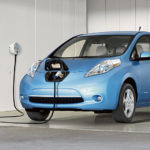
by Kim Slack At a recent meeting of Sustainable Belmont, Kim Slack was part of a panel discussing the benefits of electric vehicles (EVs). The following is his summary of that discussion. Of the many reasons to consider an all-electric car, two key factors are low operating costs and the health of the planet. Low operating costs. Electric vehicles (EVs) are more energy-efficient than gas-powered automobiles. Electric cars can travel up to 115 miles on the energy contained in a gallon of gas, according to the Environmental Protection Agency (EPA) miles-per-gallon-equivalent measure (MPGe), which is the average distance traveled per unit [READ MORE]
Seven Community Benefits of Bikeways

The Metropolitan Area Planning Council passed along this article to our office recently. It was written in 2014 by Taz Loomans, addressing congestion in her native Phoenix. Points of it apply to Belmont and our surrounding communities as well. We have edited it considerably; but you may read the full article at BloomingRock.com. 1. Bikeways make places more valuable. A 2006 study found that in Minneapolis, median home values rose $510 for every quarter-mile they were located closer to an off-street bikeway. In Washington DC,, 85% of nearby residents say the 15th Street bike lane is a valuable community asset. [READ MORE]
Shared Street has More Space for Trees

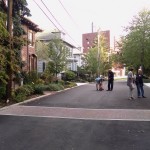
by Meg Muckenhoupt In October 2014, the city of Cambridge finished building its first “shared street” on Longfellow Road, a dead-end street across from Mount Auburn Hospital. One year later, the paving and plantings looked as if they’d always been there. . . and as if it is perfectly natural to have cars, bicycles, pedestrians, and dogs all in the same space. The project began in 2012, when Longfellow Road residents started considering how to repair their street and sidewalk. Several street trees were unhealthy, and needed to be removed—but new trees couldn’t be planted on Longfellow Road because the [READ MORE]
What Will Our Future Commutes Look Like?
By Meg Muckenhoupt Where will residents of Belmont and neighboring towns travel in 2030, and how will they get there? Last winter provoked massive debate about the MBTA’s failure to transport hundreds of thousands of commuters to jobs and schools. But in January, before the snows started, Waltham mayor Jeannette McCarthy raised some eyebrows by announcing that she supports building an elevated electric monorail to run from Burlington through Waltham to the Fitchburg/South Acton commuter rail and beyond to Westwood. Will our future hold decrepit, decaying subways and clogged roads, futuristic transport fit for Epcot Center, or some mix of [READ MORE]