
By Elissa Ely
Most of us work in one profession; maybe two, if there’s a second chapter. A rare number find themselves in three. But vanishingly few have led so many lives that it’s hard to keep count (and for that matter, hard to limit the words on their profile).
If someone introduced you to Cabell Eames today, it would be as founder of Castling Strategies, a woman-owned policy consulting and advocacy firm. The public interest initiatives she shepherds include climate change, social justice, and immigration reform. Her position requires a polymath: someone with scientific comprehension, political and interpersonal sophistication, adeptness in writing legislative briefs, policy fact sheets, press releases, op-ed pieces. Altogether, it’s like playing three-dimensional chess.
But if someone had introduced you to Cabell when she was young, you would have met a different person. She grew up, an only child, in a neighborhood between the Phillip Morris tobacco plant and the Dupont chemical facility in Richmond, Virginia. Her parents smoked (of course), and town residents were stricken with autoimmune diseases. Maybe relatedly, her mother was diagnosed with multiple sclerosis when Cabell was in the fourth grade. She became an involuntary caretaker; the two of them lived on scarcity, food stamps, and Swanson TV dinners. Salisbury Steak was the favorite.
Even when home life wasn’t revolving around her mother, it was turbulent. Her parents had divorced contentiously, and Cabell was their unwilling peacemaker. Respite came in a Pekinese named Sugar and the great world outdoors. “The environment lives, breathes, and gave me companionship,” she says. “I had grass, soil, river. I could sit under a tree and have a hundred friends. I had peace around me.” Neighbors from the Lumbee Tribe cemented her bond with the earth. “I’d walk into the woods and listen to the conversations. It was all alive.”
If someone introduced you to Cabell as an adolescent, she was already acting and in her first television commercial. Her father, a restaurateur in Richmond, needed publicity—thus, the commercial—and she needed money. Like the creek and woods, acting was freedom. She decided to become a stage performer.
Working in a series of restaurants her father owned, including one in the former home of Robert E. Lee (where the entire Richmond legislation would descend after 5 pm), she started as a dishwasher at 14, graduated to coat check girl at 15, then hostess, waitress, and bartender. By 22, she was managing a restaurant in New York and financing an incipient actress’s life. Joey Ramone and Iggy Pop were neighbors. There were movement classes (“I was a terrible dancer”), singing lessons, and courses in Shakespeare. Her grandfather had been a Shakespearean scholar at the Virginia Military Institute, and she learned early that “the words move in beats.”
She formally began her career in activism in New York, knocking on upstate doors for the Sierra Club’s rainforest initiative. Meanwhile, she was working as a makeup artist for drag performers on the side. If you’re paying attention, by now you’ve started to understand the multiplicity of her life.
But in New York, Cabell also saw crime, drugs, and friends diminished from addiction. “If I hadn’t left, I could
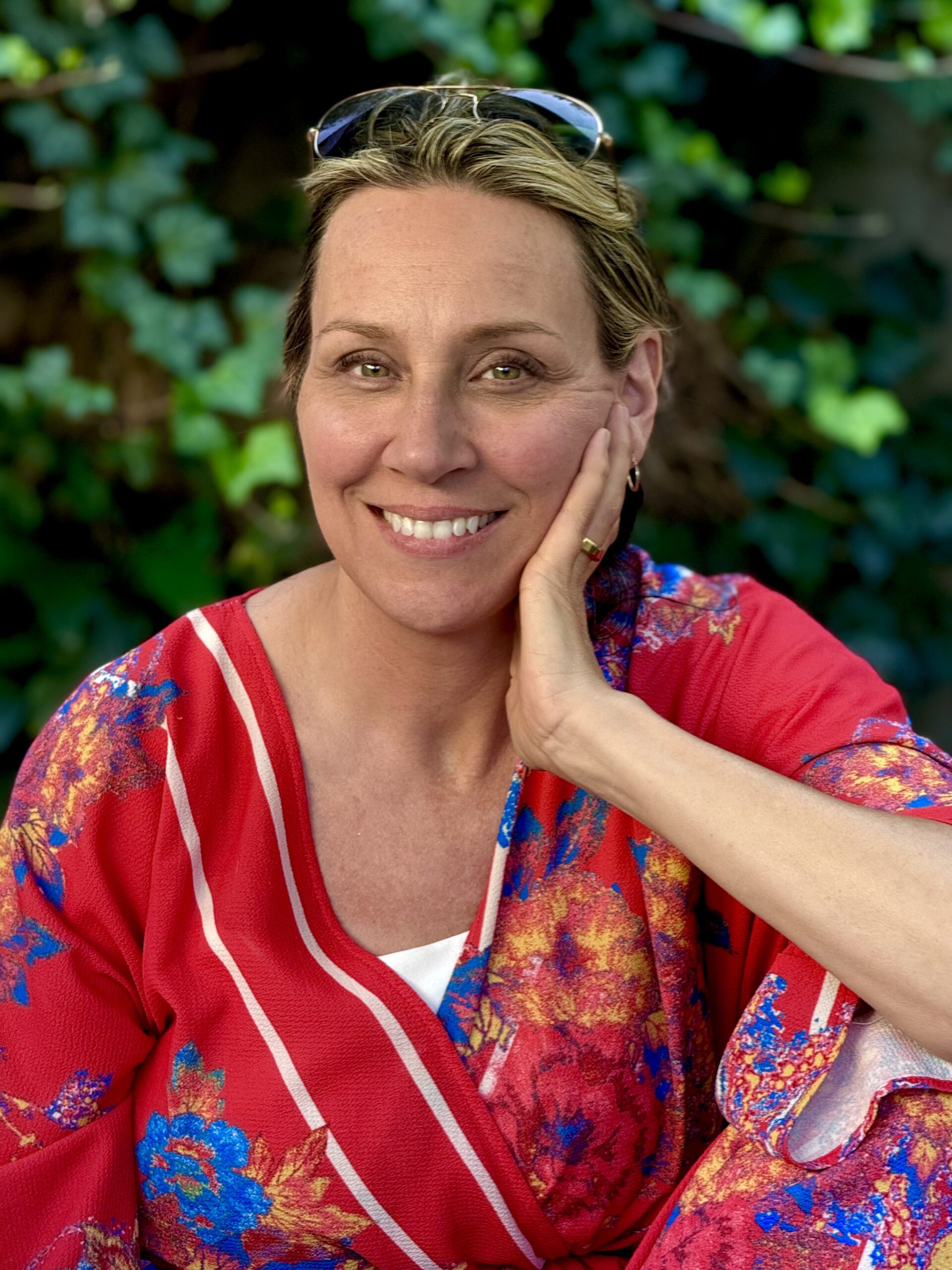
Cabell Eames. Copyright: Annie Valve
have been sucked into it,” she recalls. She left for Los Angeles where, when not in tryouts, she organized a successful door-to-door recycling campaign and opened a makeup business (“drag makeup artists are the best of the best. You literally create a face”). In the ashes and shock of 9/11, she let go of acting. “It was such a raw time,” she says. “I’m an activist at heart, and always knew there was an underbelly I had to fight. Acting felt selfish when so much was at stake. That’s when the shift happened.”
The shift has guided a path since then. It took her to Massachusetts with her future husband (an actor!), to work on a mayoral campaign in Haverhill, to meet Bob Massie and eventually to run his gubernatorial campaign. When they were babies, her kids knocked on doors with her.
The shift took her to an immigration law firm in Boston, where she presented immigration policy proposals and worked with federal policymakers on immigration issues. She also worked with congressional offices to help secure H-1B visa approvals (working so fast and hard that eventually she worked herself out of a job). “If I can’t get hold of someone, I just show up,” she explains. “Sometimes I skip the phone calls.”
Next came the Better Future Project and a roadmap bill about climate regulation. That job had some irony. “All these people had EVs,” she says. “But I was an environmentalist, and I couldn’t afford one.”
Then, further expansion. She helped a national company run focus groups on solar energy, filed anti-artificial turf legislation, and with the Charles River Watershed Association, collaborated with local, state and federal leaders on climate resiliency policy. Most of the organizations she once worked for have become her Castling Strategies clients. These are causes and people she came to care for; a Venn diagram connecting who she was then to who she is now.
In 2013, Cabell and her family moved to Belmont. “I remember driving down Concord Street, loving the green space and the trees,” she says. She figured it was only a stop on their way back to LA, but 13 years later, they’re renting the same place. In Belmont, she found what she calls “Hobbit town charm.” Of course, there are ambitions as well. She wants a moratorium on artificial turf, and every time a tree comes down, she wishes one would be planted in replacement. “The tree bank is anemic,” she argues. Also, more farms. “Everybody should have fresh food. We’ve gotten so far away from the land.”
All these hours and days and months, all this lobbying and advocacy and strategizing, all these meetings and events (the floors of the State
House in the middle of the night are very familiar), leave little time for being outdoors. Cabell once sat among trees in Virginia and found a hundred friends. She misses “the sound of cicadas.” But through countless lives, she has become herself. Few of us can say we do what we are.
Elissa Ely is a community psychiatrist
Tribute to Elissa Ely
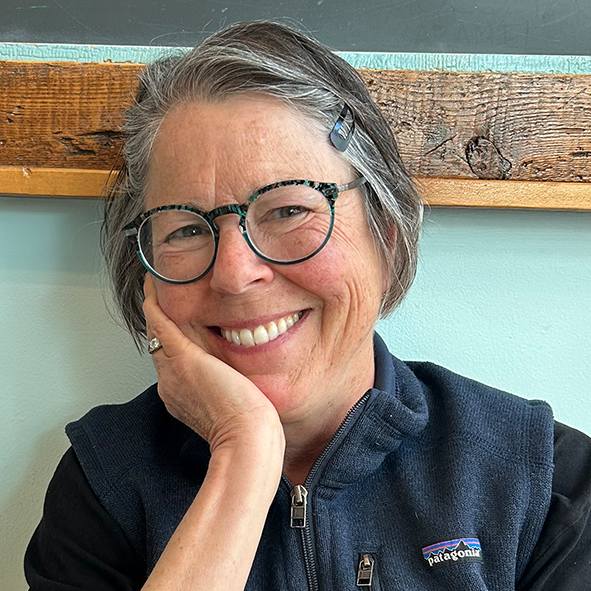
Elissa Ely has written some 20 profiles for BCF Newsletter – Courtesy photo.
Thank you, Elissa Ely, for more than three wonderful years of “Profiles in Belmont.”
With curiosity, warmth, and a journalist’s patient attention, Elissa has introduced Belmont Citizens Forum Newsletter readers to a remarkable range of neighbors, volunteers, public servants, artists, advocates, business owners, and quiet community builders. Her profiles have helped us see Belmont not just as a place of issues and institutions, but as a town shaped by individual lives, memories, commitments, humor, grief, generosity, and service.
Readers have cherished these pieces because Elissa has a gift for listening. She finds the telling detail, the unexpected turn, the human moment that makes a profile stay with us. Again and again, she has reminded us that civic life is made personal by the people who show up, contribute, and care.
As Elissa moves on to other projects, we want to express our deep appreciation for her time with the Newsletter as an adjunct journalist. Her “Profiles in Belmont” have enriched our pages and our understanding of the community we share.
With gratitude and best wishes, thank you, Elissa.

Sorry, the comment form is closed at this time.