Mar 012021
 
Belmont's Invasive Plants: Garlic Mustard

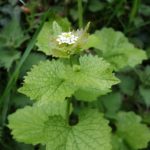
By Jeffrey North Invasive plant species are disrupting ecosystems globally and here in Belmont. Biological invasions are a leading cause of biodiversity loss and even species extinction, and invasive plants are permanently altering the ecology of our forests, fields, and gardens. This article is the first in a series on invasive plant species found in Belmont and the implications of their presence, spread, and ecological damage potential, as well as hopes for their removal and remediation. Garlic mustard (Alliara petiolata) is changing the character of the woodlands in the Northeast. It can outcompete native herbaceous species, depriving the natives of [READ MORE]

Share

Mystic Charles Pollinator Pathways

 January 2021, Newsletter  Comments Off on Mystic Charles Pollinator Pathways
Jan 052021
 
Mystic Charles Pollinator Pathways

The Mystic Charles Pollinator Pathways group is a volunteer coalition of gardeners and native plant enthusiasts that has come together to promote and create more pollinator habitats in our region in response to the significant declines in native pollinator species such as bees, butterflies, wasps, and moths. The group is mapping private and public pollinator gardens in the Mystic and Metrowest Charles River watershed communities to show existing resources and identify where more are needed (see the map. The group currently includes sites in Arlington, Belmont, Cambridge, Lexington, Medford, Newton, Somerville, Waltham, Watertown, Winchester, and Woburn, and welcomes new participants. [READ MORE]

Share

Belmont Roots November 2020

 Environment, Newsletter, November 2020  Comments Off on Belmont Roots November 2020
Nov 082020
 
Belmont Roots November 2020

Now is the winter of our discontent. We’ve watched all the videos of past events at the Belmont Historical Society and the Charles River Watershed Association. It’s getting cold, but it may be time to get outside. Nature is a balm when screens separate you from the world. If you’ve walked all of the Western Greenway and Lone Tree Hill, consider trying the ACROSS Lexington Challenge. Walk all 12 ACROSS Lexington trails—more than 35 miles!—record the dates, and submit your record to get a certificate and get added to the “baggers” list. Many spellcheck algorithms replace “COVID-19,” the virus, with [READ MORE]

Share
May 032020
 
Tree Loss Harms Urban Environments

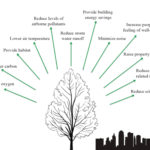
By Florence DiTirro The National Land Cover Database from 2001 estimated Belmont’s tree canopy was 27% of Belmont’s land. From 2003 to 2008, Boston’s urban tree cover declined from 29% to 28%. This downward trend continues if we look at our state, our country, and our globe. The Massachusetts urban tree cover declined between 0.32% and 0.24% in the five years from 2009 to 2014, and the United States overall lost 1.0% of urban tree cover. Global loss was measured as -0.2%. It’s a sad state that we are losing our trees. What is there not to like about trees? [READ MORE]

Share

Drought-Resistant Gardens Are Within Reach

 March 2016, Newsletter, Stormwater  Comments Off on Drought-Resistant Gardens Are Within Reach
Mar 152016
 
Drought-Resistant Gardens Are Within Reach

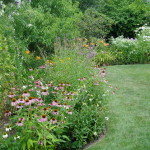
By Irene Fairley When I moved to Winn Street in the early 1970s, the property was mostly covered in lawn, especially the back yard. This neighborhood has a high water table as the Winn Brook goes underground here and weaves over to Little Pond. I think everyone on the street has at least one sump pump. It was not unusual to have water in basements with heavy rainfall or to see water standing above ground. My goal was to replace a large portion of the lawn with plantings that would absorb more of the rainwater and enhance habitat for birds [READ MORE]

Share

Make a Garden in Your Sidewalk “Hell Strip”

 Newsletter, November 2015, Stormwater  Comments Off on Make a Garden in Your Sidewalk “Hell Strip”
Sep 162015
 
Make a Garden in Your Sidewalk "Hell Strip"

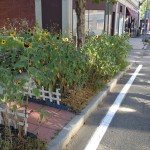
By Kate Bowen Hell strip. There. I wrote it, but I didn’t coin the phrase. That credit is given to Lauren Springer Ogden, a renowned gardener, who came up with the term “hell strip.” You know exactly what I am talking about:  that evil zone between you and the road. It might be paved; it might have some weeds; it might have some tidy grass; or it might be bursting with life—a microcosm of annuals, perennials, and wildlife. Many Belmont streets have paved shoulders. The town does not formally encourage restoring paved hell strips, and  open shoulders are often paved [READ MORE]

Share