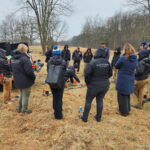
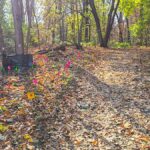
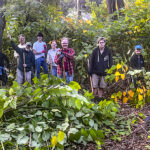
To the editor; As the founder of Arlington MA Invasives ArMI, I read your recent post about the need to coordinate invasive plant management [“Opinion: Treat Invasive Plant Removal as a System,” BCF Newsletter, January/February 2026] with interest. You mention the need to work across jurisdictions. Absolutely! Yet there are systemic roadblocks to making that happen. It has been my experience that the slicing and dicing of “owners” of town lands can create significant hurdles to coordinating actions, even in contiguous town lands being stewarded by different departments, boards, or commissions as “owners.” Effective invasives control is complicated where private [READ MORE]

OPINION: Treat Invasive Plant Removal as a System

By Jeffrey North Belmont’s conservation lands—Rock Meadow, Lone Tree Hill, Habitat, and our many wooded edges and wetland buffers—face a quiet but relentless challenge. Aggressive invasive plants threaten the fundamental health and richness of our local native plant communities, and consequently the fauna that rely on them for food and shelter. Invasive species such as glossy buckthorn, bittersweet, knotweed, and tree of heaven do not care about property boundaries or budget cycles. Yet our response to this threat is fragmented: volunteers clear a patch, a contractor mows a section, a grant funds a pilot project. Then, when the effort cannot [READ MORE]
Lone Tree Hill Restoration Continues

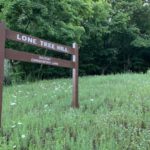
By Jeffrey North and Joe Hibbard For over a decade, Lone Tree Hill has been a focal point of community-led ecological restoration in Belmont. The Belmont Citizens Forum, the Judy Record Conservation Fund, and many dedicated volunteers, all under the aegis of the town’s Land Management Committee for Lone Tree Hill, have shared this effort. Since the restoration work began, this conservation land has transformed from a neglected patch of invasive thickets to a thriving habitat increasingly dominated by native species. Last April 26, despite steady rain, more than 50 volunteers gathered at Lone Tree Hill’s Meadow Edge Trail for [READ MORE]
Another Successful Lone Tree Hill Volunteer Day

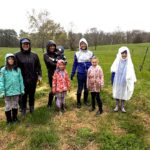
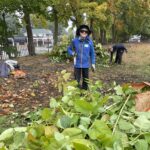
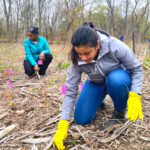
By Radha Iyengar On Saturday, April 26, a day with steady rain, the Belmont Citizens Forum (BCF), in conjunction with the Judy Record Conservation Fund, held its 11th annual Lone Tree Hill Volunteer Day. The volunteers included Girl Scout Daisy Troop 63278, Cityside Subaru employees, volunteers from Habitat, and citizens from Belmont and the surrounding communities. Many hands made light work. At the Meadow Edge Trail, volunteers removed garlic mustard and planted 50 white pine saplings, 10 eastern red cedar saplings and also replaced five white pine trees that did not survive the planting from last year. Volunteers also transplanted [READ MORE]
There is More to Restore on Lone Tree Hill

By Joseph Hibbard and Jeffrey North A crew of 30 field technicians, crew leaders, and one or two landscape designers kicked off the Lone Tree Hill work season on Lone Tree Hill on March 14 with a day of training. For the second consecutive year, the Land Management Committee (LMC) for Lone Tree Hill (LTH) granted permission for the Parterre Ecological Services “Class of 2025” to conduct an invasive species removal training session for field technicians. The trainees’ target area was a section in the northeast corner of the Great Meadow. The training area provided a hands-on workspace for training [READ MORE]
Akebia (Chocolate Vine) Invades Belmont

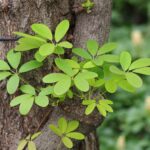
By Dean Hickman and Leonard Katz Akebia quinata, also known as chocolate vine, is an evergreen ground cover and climbing vine with compound leaves, typically having five leaflets with notched tips. It is invasive in our area, and has taken over as ground cover and climbed and smothered trees in two forested conservation areas in Belmont: Beaver Brook Reservation, northeast of the upper Mill Pond off Mill Street; and in the Pleasant Street area of Lone Tree Hill, across the brook from the Coal Road Trail, on the hill above the back entrance to the Star Market parking lot. Akebia [READ MORE]
Belmont Serves Subdues Center Knotweed
Belmont’s Victory Gardens Remain Vibrant

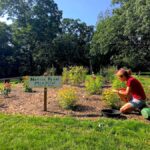
By Jeffrey North Victory gardening in Belmont has never been more popular (local food production activity during World War II notwithstanding). One of the largest and oldest continuously active community gardens in the Boston area, Belmont’s Rock Meadow Victory Gardens consists of 132 garden plots of varying sizes, typically ranging from 12 by 12 feet to 50 by 50 feet. The gardens cover about three acres of land at the Rock Meadow Conservation Area along Mill Street, between Trapelo Road on the south and Winter Street on the north. After glaciers retreated 10,000 years ago, Native Americans burned the land [READ MORE]
Belmont’s Trees Enrich Town Streetscape

By Vicki Amalfitano, Lucia Gates, Eva Hoffman, and Adam Howe What makes you feel at ease when you drive down a town street? Would it be as comfortable on a hot summer’s day without shade trees? Tall, beautiful oak, maple, and birch trees; magnificent beech trees, flowering dogwood, magnolia, and cherry trees enrich our streets and yards. They fill our senses with their beauty, and they cool our homes. They take in the carbon dioxide we breathe out, and they release the oxygen we breathe in. We are grateful for the trees’ benefits and their positive impact on the value [READ MORE]
Restoration Resumes on Lone Tree Hill

By Jeffrey North and Joseph Hibbard A crew of 18 technicians, crew leaders, designer, and managers gathered on Lone Tree Hill early on the misty morning of March 15. They were there for the third and final day of their work season kick-off with a day of training on Belmont conservation land. The Land Management Committee (LMC) for Lone Tree Hill (LTH) had granted permission to allow the Parterre Ecological Services “Class of 2024” to conduct an invasive species removal training session for field technicians. Their target zone was a section of the southeast corner of the Great Meadow. The [READ MORE]
Lone Tree Hill Saw Improvements in 2023

By Radha Iyengar Belmont’s Lone Tree Hill Conservation area benefited from another year of conservation, restoration, and stewardship, thanks mainly to the efforts of the Land Management Committee for Lone Tree Hill (LMC). Many Belmontonians and visitors enjoy this 119-acre conservation property for walking, biking, viewing wildlife, and being out in nature. The LMC was created through a memorandum of agreement between the town and McLean Hospital in 1999. The agreement outlined the development restrictions for the McLean Hospital campus. It also reserved approximately 119 acres of the campus as publicly accessible open space, including a new municipal cemetery, and [READ MORE]
Residents Restore Royal Road Woods Ecosystem

By Vincent Stanton, Jr. and Pamela Andrews Belmont Conservation Volunteers (BCV) formed earlier this year to work on “restoring our natural spaces for everyone to enjoy.” Volunteer efforts have focused on reining in the extensive and expanding invasive species displacing native plants which support local insects, birds, and mammals. The BCV emerged from pioneering volunteer work by Leonard Katz on Lone Tree Hill. (See “Spare a Thought for Lone Tree Hill”, BCF Newsletter, September 2022.) To expand that work to town-owned land, Katz and Sustainable Belmont leader Dean Hickman obtained permission from both the Select Board and, because many of [READ MORE]
Profiles in Belmont: Dean Hickman

By Elissa Ely Before he became chair of Sustainable Belmont, before the PhD in pharmacogenetics, before moving to the United States, certainly before any awareness of the environmental needs of a Massachusetts town next to Cambridge, Dean Hickman was picking up litter. “Have been picking up trash anywhere I go since I could walk,” his Instagram says. Growing up in farm country west of London, traveling the footpath systems, Dean took the “Keep Britain Tidy” campaign of the 1960s to heart. Many decades later, on a late rainy afternoon when he could have been enjoying a mug of tea, we [READ MORE]
Let Your Hidden Native Plant Garden Emerge

By Heather Pruiksma Spring has sprung, and gardeners everywhere are itching to get their hands into the soil and among the roots. At Grow Native Massachusetts, we encourage including more native plants in your gardens, which can be less work than it might seem — if you’re willing to be a little patient. Native plants are plants that have been growing in a particular habitat and region, typically for thousands of years or much longer. Also called indigenous, they are well adapted to the climate, light, and soil conditions that characterize their ecosystem. Within this system, they have evolved important relationships [READ MORE]
Invasive Plants Can Harm Local Birds

By Meg Muckenhoupt May is the peak of spring migration season in Massachusetts, and thousands of birds are landing in Belmont. (You can even get radar reports on which birds are arriving overnight on birdcast.info.) But what will these birds do when they get here? Will they find the resources they need to survive, raise young, and embark on fall migrations next September? The answer may depend on what’s growing around Belmont—and a lot of what’s growing around Belmont is invasive plants. Plants change birds’ lives North American birds evolved with native plants. Most bird-lovers know that different types of [READ MORE]
Volunteers Plant, Clean Up at Lone Tree Hill

By Radha Iyengar The Belmont Citizens Forum (BCF), in conjunction with the Judy Record Conservation Fund, held its ninth annual Lone Tree Hill Volunteer Day on Saturday, April 22, an overcast and cool day. Volunteers included Girl Scouts Troop 82027, employees of Cityside Subaru, M&T Bank,and the Sai Group, and residents of Belmont and the surrounding communities. Many hands made light work. At the Pine Allee, efficient volunteers planted forty white pine saplings. The new plants replaced the Allee’s missing trees and some of the dead saplings from previous volunteer day plantings. At the adjacent meadow the volunteers planted slender [READ MORE]
Profiles in Belmont: Jean Devine

By Elissa Ely There were woods behind Jean Devine’s house growing up in Manchester, New Hampshire. As a child, she liked pressing leaves and hated wearing socks; her mother would send her outside on ‘safaris’ with apple slices, the family dog trailing behind. She was always late to school. Jean was unafraid of bugs and fascinated by Daddy Longlegs. Woods and spiders did not turn her into the environmental educator, native-plant coach, and landscaper she eventually became, but they were her introduction to nature. Her mother belonged to the Garden Club in an era when plots were visually beautiful, organized [READ MORE]
Why Care About Removing Invasive Plants?

By Joseph Hibbard and Jeffrey North The Belmont Citizens Forum Newsletter has been printing articles about the perils and poisons of non-native invasive plant species on these pages for years. Readers have learned that garlic mustard changes the chemistry of the soil to gain an advantage over other plant species in forest and edge areas. Our article on black swallowwort described that plant’s deadly toxicity to Monarch butterfly larvae that mistakenly consume it instead of nourishing native milkweed. We have described how Asiatic bittersweet rapidly climbs native trees, blocks the sunlight, and eventually topples the tree while changing our viewsheds. [READ MORE]
Belmont’s Invasive Species: Ailanthus

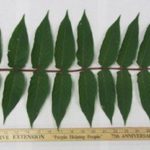
By Jeffrey North Tree-of-heaven (Ailanthus altissima), typically called ailanthus, is a rapacious deciduous tree native to China. It was first introduced into the United States when it was imported as an ornamental plant to Philadelphia in 1784 and later to New York in 1820. On the West Coast, immigrants brought the plant from Asia and planted it in California in the 1850s. The tree was initially valued as a fast-growing ornamental shade tree that was tolerant of poor soils and a broad range of site conditions. It tolerates vehicle exhaust and other air pollution quite nicely. It was widely planted [READ MORE]
Spare a Thought for Lone Tree Hill

By Dean Hickman and Leonard Katz Between Pleasant Street and Trapelo Road to the south, Concord Avenue to the north, and Mill Street to the west, Lone Tree Hill wraps around McLean Hospital and sits above Belmont, providing us with a peaceful and secluded mix of woods and meadows where we can escape the hustle and bustle of suburban life down below. It is also Belmont’s gateway to Rock Meadow on the other side of Mill Street as well as to the more secluded trails of the Western Greenway which head west into neighboring Waltham and Lexington. Anyone looking for [READ MORE]