View or download the May/June 2019 issue as a color PDF here, or read single articles below. Articles in this issue: New Plans for McLean Land Density is key issue as town considers proposals for two McLean campus parcels By Sue Bass Twenty years ago, Belmont voted to allow development on McLean Hospital land on Belmont Hill. Now McLean is coming back to the town with new proposals for two parcels of land that are still undeveloped. Read more. Composting in Belmont: Breaking it Down By Mary Bradley Composting is no longer just a backyard hobby for the ardent gardener. [READ MORE]

New Plans for McLean Land

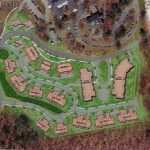
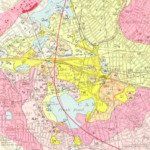
Density is key issue as town considers proposals for two McLean campus parcels By Sue Bass Twenty years ago, Belmont voted to allow development on McLean Hospital land on Belmont Hill. The town-wide referendum of July 1999 endorsed the previous Town Meeting vote to change zoning for 238 acres. The largest portion for new construction became the Woodlands, 121 luxury townhouses on twenty-six acres. Another portion became Waverley Woods, 40 units of affordable housing on an acre and a third. Some land was preserved from construction. One hundred and twenty acres were set aside for open space, and fourteen acres [READ MORE]
Composting in Belmont: Breaking it Down

By Mary Bradley A Virtuous Cycle Composting is no longer just a backyard hobby for the ardent gardener. It has Facebook groups and a following from environmentalists, politicians, and scientists. Most praise compost as a means to keep food waste out of landfills and reduce release of methane. While consensus ends there, composting has evolved from a tale of worms, microbes, and bacteria to the realm of politics, emerging technologies, and scientific disputes. For me, however, composting is about magic: Wave one hand over an orange peel clutched in your other hand, and reveal a fistful of dirt. If that’s [READ MORE]
WEEDS: Plants in the wrong place

By Lucia Gates All photos courtesy of Wikimedia Commons Like gardeners everywhere, we Belmontians struggle with weeds. While it might be tempting to take the easy approach and eliminate them with herbicides and chemical weed killers, as gardeners we also know that we have to protect everything in our garden. There are ways to manage weeds safely. This article focuses on flower beds and not lawns, although some of the information will be useful in grassy situations. Also, some weeds, such as wild grape vines and wild multiflora roses, are unlikely to be a problem in a flower bed, but [READ MORE]
Painstaking Progress on Belmont’s Multi-Decade Environmental Emergency

By Anne-Marie Lambert Belmont is working under a federal consent order to reduce the pollution it sends into Boston Harbor from leaks and connections of underground sewer pipes into the storm drain system. Cleanup According to the town’s January 30 Compliance Report to the US Environmental Protection Agency (EPA), Belmont redirected an additional 126 gallons per day (GPD) of sewage from our brooks and ponds to the Deer Island treatment plant in Boston Harbor. Sources included leaking sewer service laterals and sewer segments on Brettwood Road and Pierce Road (84 GPD) and three leaking sewer service laterals along Hoitt Road [READ MORE]
Belmont Roots, May/June 2019

Environmental News, Notes, and Events By Meg Muckenhoupt Well, it’s spring, sort of. The average last frost date in Belmont is somewhere between May 1 and May 11, depending on which website you believe—the Old Farmer’s Almanac? Plantmaps.com? But my grandmother in Newton never planted her tomatoes before Memorial Day. Warmth-loving plants such as tomatoes and peppers are sensitive to soil temperature as well as air temperature. They can suffer “transplant shock” and become stunted and grim if roots are a bit too chilled. Seeds are more secure in their identity, and will simply sit and shiver in the soil [READ MORE]
Another Successful Lone Tree Hill Volunteer Day

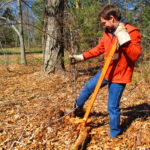
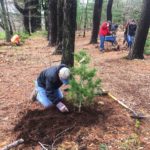
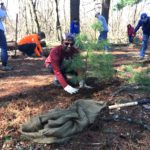
By Radha Iyengar On Saturday, April 27, the Belmont Citizens Forum (BCF), in conjunction with the Judy Record Conservation Fund, held its seventh annual Lone Tree Hill Volunteer Day. The volunteers braved the cold and windy weather, and the rain held off. At the Pine Allee, the efficient volunteers planted 63 white pine saplings, some of which were transplants from Mass Audubon’s Habitat Education Center and Wildlife Sanctuary. The new plants replaced some of the Allee’s missing trees as well as some of the dead saplings from volunteer day plantings over the last two years. At the other end of [READ MORE]
March/April 2019 Belmont Citizens Forum Newsletter & PDF
View or download the March/April 2019 issue as a color PDF here, or read single articles below. Articles in this issue: Selectman Candidates Answer BCF Questions Belmont Annual Town Election to be Held Tuesday, April 2 Compiled by Mary Bradley Each year the Belmont Citizens Forum asks candidates for selectman about issues the town will likely face in the next three years. Below are candidates Jessie Bennett, Roy Epstein, and Timothy Flood’s unedited replies to our questions about traffic, the environment, development, and other topics. Read more. Eight Projects Recommended for Community Preservation Funds By David Kane, Stephen [READ MORE]
Selectman Candidates Answer BCF Questions

Belmont Annual Town Election to be Held Tuesday, April 2 Compiled by Mary Bradley Each year the Belmont Citizens Forum asks candidates for selectman about issues the town will likely face in the next three years. Below are candidates Jessie Bennett, Roy Epstein, and Timothy Flood’s unedited replies to our questions about traffic, the environment, development, and other topics. Each candidate was limited to 800 words total. 1. In response to McLean’s proposal to rezone parts of its former campus for housing, school, and R&D use, what would you recommend? Bennett: McLean’s proposed zoning changes do not meet [READ MORE]
Eight Projects Recommended for Community Preservation Funds

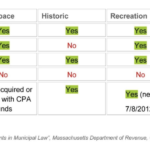
By David Kane, Stephen Pinkerton, and Margaret Velie The Community Preservation Act (CPA) is a state law that helps towns keep their character and quality of life by providing funds to preserve open space and historic sites, create affordable housing, and develop outdoor recreational facilities (see Table 1). Belmont adopted the CPA in 2010. Community preservation money is raised locally through a 1.5 percent surcharge (3 percent is the maximum) on property taxes, which is then partially matched by the state. In the last few years, Belmont has generated about $1.1 million per year locally and has received about $200,000 [READ MORE]
Letter to the Editor
We are always glad to hear readers’ opinions and grateful for corrections or clarifications on any topics we cover. Thanks to one astute reader for this letter regarding the January/February 2019 article, “Frozen Water in Belmont: Stories of Imagination and Unexpected Consequences” by Anne-Marie Lambert. To the Editor, Concerning the box on the bottom of page 17 on the molecular structure of water: The statement, “The coldest and densest water in a pond is still at the bottom, but then floats to the surface as the hexagon ice crystals form” is incorrect. Water has its maximum density at 4°C (just [READ MORE]
Lone Tree Hill Volunteer Day—April 27

Join us in stewarding Lone Tree Hill! The Belmont Citizens Forum, in conjunction with the Judy Record Conservation Fund, is holding its seventh annual cleanup and trail maintenance day on April 27, from 9 AM until noon. Help complete the planting of trees along the Pine Allee, as well as cleaning up and removing invasive species at the Coal Road area. Students can earn community service credits. Bounded by Concord Avenue, Pleasant Street, and Mill Street, Lone Tree Hill spans 119 acres of permanently protected conservation land and is available to everyone. It is stewarded through a public/private partnership by [READ MORE]
Belmont Roots, March/April 2019

Environmental News, Notes, and Events By Meg Muckenhoupt In the winter, the outside world fades to an annoyance if you’re lucky enough to have a warm house and an indoor job. Going from home to car to work to gym to groceries to home only involves the briefest intervals of exposure to the frigid air, the weak, thin light, the silent woods, the frozen ground . . . or so you think. That frigid air is actually trying to get into your house, and it often succeeds. Now is the time to check for air leaks, before the weather warms. [READ MORE]
Frozen Water in Belmont: Stories of Imagination and Unexpected Consequences

By Anne-Marie Lambert Belmont would not be the town we know today without ice. Glaciers a mile high carved local hills and valleys to create a wetlands attractive to migrating wildlife. The unusual behavior of frozen water molecules ensured not just game-hunting but also ice fishing would support a substantial Native American population for thousands of years. Harsh winters necessitated both innovation and cooperation among tribes to ensure survival. By 1820 local ice men descended from European settlers started to innovate in different ways. They shipped ice to warm places as far away as Calcutta, employing local farm hands to [READ MORE]
How Laterals Get Lined

Fixing Water Pollution at the Sewer Source By Sumner Brown Sewer leaks get fixed only by physical work on sewer pipes by people with tools. For years Belmont has been lining leaking sewer pipes in the streets, to keep sewage out of our streams. The down-and-dirty of sewer work has been described in this newsletter (“How do Sewers Get Relined?”, BCF Newsletter July/August 2007), a counterpart to former BCF director Anne-Marie Lambert’s articles on the top-down issues of environmental motivation, legal pressure, schedules, progress, and costs. Many of the leaks in streets have been repaired, according to Glenn Clancy, director [READ MORE]
Belmont Roots, Jan/Feb 2019
By Meg Muckenhoupt Environmental News, Notes, and Events Ah, January and February—regularly voted “months most likely to make me want to move far, far away from Massachusetts.” January’s cold and February’s snow are hostile to human undertakings (continually testing our mettle, as mentioned in the “Frozen Water” article in this issue), but January is also the month when five different species of witch hazel trees bloomed at the Arnold Arboretum in 2017. If there’s more than six inches of snow on the ground, voles, mice, and other rodents get busy digging subnivean tunnels in places like Rock Meadow and Habitat. [READ MORE]
Belmont: Town of Homes and Trees

An overview of the status of town trees, past and present By Lucia Gates In Belmont, we hold our trees in esteem for their beauty, shade, and the value they add to our property. Our magnificent copper beeches grow throughout town. A wonderful example of these trees stands just east of Cushing Square, along Trapelo Road. Moreover, Belmont has all of the standard Eastern urban trees—callery pears, ginkos, Norway maples—as well as the standard Eastern forest trees—maples, oaks, and pines. One of the most notable trees* is the large dawn redwood growing in back of the town library parking lot. [READ MORE]
Tree Stewardship

By Carolyn Bishop Illustrations by Ian Todreas, Updog Gallery When surrounded by beauty, we often take it for granted until we notice its decline. So it may be with our town trees. Many Belmont streets are distinguished by a canopy of large, gracious trees. But are we protecting this valuable asset? What silent threats should we be aware of to preserve this beauty? Compacted soil and chemical leakage from cars parked off the pavement at the edge of the road, failure to water street trees during dry times, road salt, and improper pruning all weaken our trees, making them [READ MORE]
Bike-Share Comes to Belmont: A Conversation with Belmont Town Planner Spencer Gober

Questions by Mary Bradley; responses by Spencer Gober Q: What was the impetus behind bringing LimeBikes to Belmont? As a little background, the program is led by the Metropolitan Area Planning Council (MAPC), who approached Belmont in the fall of 2017 to gauge interest in participating in a regional, dockless bike-share system. There are 14 other municipalities participating: Arlington, Bedford, Chelsea, Everett, Malden, Medford, Melrose, Milton, Needham, Newton, Revere, Waltham, Watertown, and Winthrop. MAPC observed numerous municipalities within the region piloting their own dockless bike-share programs and believed that if dockless bike-share was going to be successful and effective, it [READ MORE]
Where Your Drinking Water Comes From

By Ria Convery All photos, maps, and illustrations courtesy of the Massachusetts Water Resources Authority unless otherwise noted. Have you ever wondered where your water comes from? Well, it’s kind of a long story. The short answer is that Belmont, like most of eastern and central Massachusetts, gets its water from two reservoirs of the Massachusetts Water Resources Authority (MWRA): the Quabbin Reservoir in Belchertown and the Wachusett Reservoir in Clinton. General Plan of the MWRA Water System Our region’s water system is one of the oldest in the country. Its long history started with local wells in the 1700s, [READ MORE]