Environmental Stewards: Emily Norton, CRWA

 Climate Change, Environment, March/April 2026, Newsletter, Stormwater  Comments Off on Environmental Stewards: Emily Norton, CRWA
Feb 202026
 
Environmental Stewards: Emily Norton, CRWA

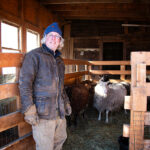
The Charles River Watershed Association (CRWA), founded in 1965, works to protect, restore, and enhance the Charles River and its surrounding communities. Through scientific monitoring, policy advocacy, and on-the-ground restoration, CRWA has helped transform the Charles from one of the nation’s most polluted rivers into a model of urban river recovery and climate resilience. The Belmont Citizens Forum spoke with Emily Norton, executive director of CRWA, about the organization’s watershed-wide initiatives, its community and policy partnerships, and her vision for the future of the Charles River. This interview has been edited for length and clarity: read the complete version at [READ MORE]


Share

Beth Lambert: Restoring Rivers and Wetlands

 Environment, January/February 2026, Water Quality  Comments Off on Beth Lambert: Restoring Rivers and Wetlands
Dec 172025
 
Beth Lambert: Restoring Rivers and Wetlands

By Jeffrey North This article is part of the Belmont Citizens Forum’s series on environmental leadership in Massachusetts. The Massachusetts Division of Ecological Restoration (DER), part of the Department of Fish and Game (DFG), works to restore and protect rivers, wetlands, and watersheds across the commonwealth. From removing aging dams to revitalizing salt marshes and wetlands, DER supports projects that strengthen ecosystems, improve climate resilience, and reconnect communities to nature. The Belmont Citizens Forum spoke with Beth Lambert, director of DER, about the division’s statewide restoration priorities and her vision for the future. Jeffrey North conducted the interview. BCF What [READ MORE]

Share

Why Recycling Stagnates

 Environment, January/February 2026, Recycling  Comments Off on Why Recycling Stagnates
Dec 172025
 
Why Recycling Stagnates

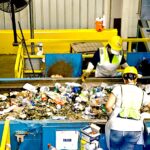
Belmont’s options for dealing with waste woes By Jeffrey North Dr. Jonathan S. Krones, associate professor of engineering at Brandeis University, gave a virtual presentation titled “Garbage 101: How the waste system actually works, and what we can do to achieve a more circular economy” sponsored by the Belmont Public Library last November. The talk offered a rare behind-the-scenes look at how waste and recycling systems actually function in Massachusetts and around the country. It also delivered a clarifying message to communities like Belmont: our recycling system is struggling not because residents are necessarily doing it wrong, but because the [READ MORE]

Share

OPINION: Treat Invasive Plant Removal as a System

 Environment, January/February 2026, Open Space, Plants  Comments Off on OPINION: Treat Invasive Plant Removal as a System
Dec 172025
 
OPINION: Treat Invasive Plant Removal as a System

By Jeffrey North Belmont’s conservation lands—Rock Meadow, Lone Tree Hill, Habitat, and our many wooded edges and wetland buffers—face a quiet but relentless challenge. Aggressive invasive plants threaten the fundamental health and richness of our local native plant communities, and consequently the fauna that rely on them for food and shelter. Invasive species such as glossy buckthorn, bittersweet, knotweed, and tree of heaven do not care about property boundaries or budget cycles. Yet our response to this threat is fragmented: volunteers clear a patch, a contractor mows a section, a grant funds a pilot project. Then, when the effort cannot [READ MORE]

Share

MyRWA Protects and Restores Mystic Watershed

 Climate Change, Environment, November/December 2025, Stormwater, Water Quality  Comments Off on MyRWA Protects and Restores Mystic Watershed
Oct 312025
 
MyRWA Protects and Restores Mystic Watershed

Our Environmental Stewards: Patrick Herron, Mystic River Watershed Association The Mystic River Watershed Association (MyRWA) has been a leader in restoring and protecting one of the most urbanized watersheds in New England. There are 44 lakes and ponds within the watershed, with its headwaters beginning in Reading and flowing to Boston Harbor. From ecological restoration and climate resilience projects to education, community engagement, and policy advocacy, MyRWA has built a reputation for turning data and public participation into lasting change. The Belmont Citizens Forum spoke with Patrick Herron, executive director of MyRWA, about the challenges and opportunities of protecting the [READ MORE]

Share

Miyawaki Forest Planted at Belmont Middle and High School

 Environment, November/December 2025, Open Space, Plants  Comments Off on Miyawaki Forest Planted at Belmont Middle and High School
Oct 312025
 
Miyawaki Forest Planted at Belmont Middle and High School

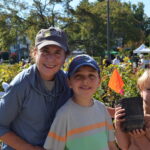
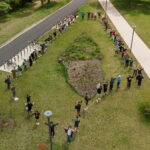
On Saturday, October 4, dozens of volunteers of all ages gathered at Belmont Middle and High School to plant a Miyawaki forest, also known as a mini forest. (See “Belmont’s First Miyawaki Forest Comes to BHS,” BCF Newsletter, July 2025.) They planted 1,400 native tree and shrub seedlings on 3,000 square feet—about the size of a public swimming pool. Photos by Jeffrey North.

Share

Rock Meadow Lacks a Conservation Restriction

 Environment, Lone Tree Hill, November/December 2025, Open Space  Comments Off on Rock Meadow Lacks a Conservation Restriction
Oct 312025
 
Rock Meadow Lacks a Conservation Restriction

By Dan Nolan A pastoral gem in Belmont, Rock Meadow is in full splendor each fall as the leaves turn, providing a backdrop for Instagram posts, family holiday cards, and yearbook photos. It’s a treasure year-round for people, animals, pollinators, and the entire ecosystem it shares with the rest of the Western Greenway. What it doesn’t share is the same level of protection. As the crow flies, the deer trots, and the water flows, the land is all connected. The Belmont Conservation Commission is seeking to strengthen that connection by providing Rock Meadow with the same level of enduring protection [READ MORE]

Share

Plastic Bags are on the Way Out, With or Without Bans

 Environment, Recycling, September/October 2025  Comments Off on Plastic Bags are on the Way Out, With or Without Bans
Aug 262025
 
Plastic Bags are on the Way Out, With or Without Bans

By Janet Domenitz If you’ve ever stood outside a supermarket and watched shoppers head to their cars, bags in hand, you’ll notice something striking these days: fewer and fewer plastic bags. That’s exactly what MASSPIRG Education Fund researchers set out to measure in a recent snapshot survey at grocery stores across Massachusetts—and the results are encouraging. Over the course of two weeks this summer, we observed shoppers exiting stores in 12 communities: half with local plastic bag bans, and half without. What we found was that in towns that restrict or phase out plastic bags, just 1% of shoppers left [READ MORE]

Share

Where Does the Water Go?

 Environment, September/October 2025, Stormwater, Water Quality  Comments Off on Where Does the Water Go?
Aug 262025
 
Where Does the Water Go?

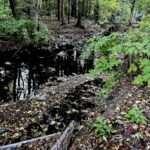
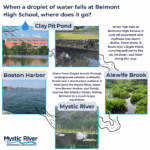
Understanding Clay Pit Pond and Belmont’s Hidden Rivers By Ry Emmert People don’t often think about where a raindrop goes after it hits the ground. It may splash on the pavement, flow toward a storm drain, and then seemingly disappear. However, if that droplet falls outside Belmont High School, it embarks on a complex and unexpected journey. This journey connects Belmont’s sidewalks to kayakers on the Mystic River, fish in the Charles River, and ships in Boston Harbor. The story begins with Clay Pit Pond, a shallow and iconic body of water situated between the high school and Concord Avenue. [READ MORE]

Share

Belmont Boasts Bountiful Owls

 Environment, Newsletter, September/October 2025  Comments Off on Belmont Boasts Bountiful Owls
Aug 262025
 
Belmont Boasts Bountiful Owls

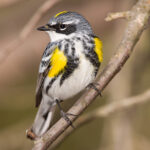
by Fred Bouchard Let’s open with, then qualify, two generalizations about Barred, Snowy, and Saw-Whet Owls. Females run a bit larger than males; one might (erroneously) surmise that their voices are somewhat deeper in pitch. Most owls are strictly nocturnal. That said, our first two are crepuscular and diurnal, respectively. Barred Owl (Strix varia) Ubiquitous and crepuscular (active and vocal from dusk to dawn), Barred Owls rank among our easiest woodland owls to see. They tend to roost in outer branches, exposed. They don’t hug trunks for camouflage like Great Horned Owls or snuggle in holes like Screech Owls. Their [READ MORE]

Share

Lone Tree Hill Restoration Continues

 Environment, Lone Tree Hill, Open Space, Plants, September/October 2025  Comments Off on Lone Tree Hill Restoration Continues
Aug 262025
 
Lone Tree Hill Restoration Continues

By Jeffrey North and Joe Hibbard For over a decade, Lone Tree Hill has been a focal point of community-led ecological restoration in Belmont. The Belmont Citizens Forum, the Judy Record Conservation Fund, and many dedicated volunteers, all under the aegis of the town’s Land Management Committee for Lone Tree Hill, have shared this effort. Since the restoration work began, this conservation land has transformed from a neglected patch of invasive thickets to a thriving habitat increasingly dominated by native species. Last April 26, despite steady rain, more than 50 volunteers gathered at Lone Tree Hill’s Meadow Edge Trail for [READ MORE]

Share

Judy Record Conservation Fund Cares for Land

 Environment, Lone Tree Hill, September/October 2025  Comments Off on Judy Record Conservation Fund Cares for Land
Aug 262025
 
Judy Record Conservation Fund Cares for Land

By Roger Wrubel The Judy Record Conservation Fund (JR Fund) was founded in 2001 in honor and memory of Judy Record by her friends and family. Judy Record worked tirelessly and effectively from 1995 to 2000 as the leader of the McLean Open Space Alliance (MOSA), which began when eight apprehensive Belmont citizens met to discuss the rumored development of over 190 acres of woods and meadows surrounding the McLean Hospital campus. She stepped forward to lead the effort to preserve as much of the undeveloped land as possible. Record grew MOSA into an effective grassroots organization with 800 members. [READ MORE]

Share

Belmont’s First Miyawaki Forest Comes to BHS

 Climate Change, Environment, July/August 2025, Open Space, Plants  Comments Off on Belmont’s First Miyawaki Forest Comes to BHS
Jun 302025
 
Belmont’s First Miyawaki Forest Comes to BHS

By Jean Devine Picture this: It’s 2028, and on the Belmont High School campus, a small forest of native trees and shrubs is shooting toward the sky. The trunks sway gently and the leaves shimmer softly in the summer breeze. As you walk toward this grove, birds flit in and out, you hear a hum of bees, while other pollinators, insects, and worms, mostly invisible to you, thrive in deeper sections of this new habitat. Before you stands Belmont’s  first Miyawaki Forest (aka mini forest). Now, three years after planting, this forest is self-sufficient. And, it’s replicable! Maybe it has [READ MORE]

Share

Belmont Recycling is Alive and Growing

 Environment, July/August 2025, Recycling  Comments Off on Belmont Recycling is Alive and Growing
Jun 302025
 
Belmont Recycling is Alive and Growing

By Terri Goldberg Lately, there has been a slew of dramatic stories about the failures of recycling. They could leave readers with the impression that recycling collection programs, like the one supported by Belmont, are a lie or a waste of time (for example, see “The Story You’ve Been Told About Recycling is a Lie” in the New York Times). Often, when I talk to friends and family about my work with MassRecycle, the state recycling organization, they ask me whether recycling is a scam. No! The truth is that the recyclables in our recycling carts are being largely recycled, [READ MORE]

Share

Follow Belmont Electricity From Source to Socket

 Environment, July/August 2025  Comments Off on Follow Belmont Electricity From Source to Socket
Jun 302025
 
Follow Belmont Electricity From Source to Socket

By Dave Beavers The answer to the question “Where does my electricity come from?” can be elusive. There can be many answers to what appears to be a straightforward question. These answers can be abstract by necessity, requiring physics concepts and a plethora of obscure acronyms for precision. Instead of a textbook approach, the goal of this article is to offer an intuitive understanding of Belmont’s electricity. I will eschew dry facts, physics, and acronyms in favor of less abstract explanations and analogies. Along the way, I will explore key issues such as utility costs, rates, reliability, governance, and climate [READ MORE]

Share

Another Successful Lone Tree Hill Volunteer Day

 BCF Events, Environment, Lone Tree Hill, May/June 2025, Open Space, Plants  Comments Off on Another Successful Lone Tree Hill Volunteer Day
Apr 292025
 
Another Successful Lone Tree Hill Volunteer Day

By Radha Iyengar On Saturday, April 26, a day with steady rain, the Belmont Citizens Forum (BCF), in conjunction with the Judy Record Conservation Fund, held its 11th annual Lone Tree Hill Volunteer Day. The volunteers included Girl Scout Daisy Troop 63278, Cityside Subaru employees, volunteers from Habitat, and citizens from Belmont and the surrounding communities. Many hands made light work. At the Meadow Edge Trail, volunteers removed garlic mustard and planted 50 white pine saplings, 10 eastern red cedar saplings and also replaced five white pine trees that did not survive the planting from last year. Volunteers also transplanted [READ MORE]

Share

Make Your Yard an Avian Oasis

 Environment, May/June 2025  Comments Off on Make Your Yard an Avian Oasis
Apr 292025
 
Make Your Yard an Avian Oasis

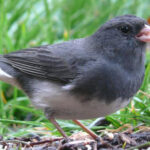
You can bring joy to your backyard flocks without going to the trouble and expense—and to some, imagining the specter of surreptitious nocturnal rodents—of up-keeping bird feeders. Birds are opportunistic feeders—a bug in the beak is worth two in the bush—even if cannier species maintain acorn and seed caches. Nor are they circumspect about having a quick drink: a drop of dew, sip from a puddle, draft from a drainpipe—all afford vital hydration. In times of freeze or drought, refreshed watering oases are lifesavers and bird magnets. If you put out birdbaths, even makeshift ones, a sip of Adam’s ale [READ MORE]

Share

Attune Yourselves to the Voices of Spring, Tra La!

 Environment, May/June 2025  Comments Off on Attune Yourselves to the Voices of Spring, Tra La!
Apr 292025
 
Attune Yourselves to the Voices of Spring, Tra La!

An Informal Cornucopia of Nature’s Natterers By Fred Bouchard Now we’ve shed our muffled-up, gray brumal months and can wake up to the myriad bright voices of spring that surround us. Some are tiny, and too intimate: the house fly zizzes angrily to escape your bedroom; a drone mosquito whines by your ears. Some are shrill and chattery: from a tree fork a gray squirrel scolds in a chitter; a chipmunk goes tuk! tuk! as she scoots underfoot. The Eastern cottontails burrowing under your yard—normally silent—may emit petulant squeals if alarmed or attacked. A red fox, skunk, or raccoon can [READ MORE]

Share

Belmont Reduces Rodenticides on Town Land

 Environment, May/June 2025  Comments Off on Belmont Reduces Rodenticides on Town Land
Apr 292025
 
Belmont Reduces Rodenticides on Town Land

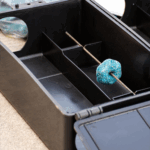
By Jeffrey North Belmont is preparing to vote on a home rule petition at the May Town Meeting to seek local authority to regulate use of second-generation anticoagulant rodenticides (SGARs) on private property. Belmont has largely eliminated SGARs on public property, recognizing their dangers to wildlife, pets, and children. Town departments, including the Health Department, Public Works, Facilities, and Housing Authority, have adopted safer alternatives such as electric traps, carbon dioxide treatments, and snap traps. This initiative reflects Belmont’s commitment to environmentally responsible pest management and aligns with statewide efforts to curb the use of the most toxic rodenticides. Rodenticides, [READ MORE]

Share

OPINION: Understanding America’s Food Systems

 Environment, May/June 2025, Open Space, Plants  Comments Off on OPINION: Understanding America’s Food Systems
Apr 292025
 
OPINION: Understanding America’s Food Systems

By Tom Phillips With ambitious promises being made by the new Secretary of Health and Human Services to challenge “big ag” and reduce the country’s reliance on processed foods, and with significant actions already being taken by the Trump administration that impact agriculture on a national level—including the attempted layoffs of federal workers at USDA and FDA—it is crucial for Belmont citizens to understand the complexities of food systems. Growing up in the suburbs of Boston without any family ties to farming, I find it challenging to grasp the financial struggles, social issues, and environmental impacts inherent in food production. [READ MORE]

Share