
Our Environmental Stewards: Patrick Herron, Mystic River Watershed Association
The Mystic River Watershed Association (MyRWA) has been a leader in restoring and protecting one of the most urbanized watersheds in New England. There are 44 lakes and ponds within the watershed, with its headwaters beginning in Reading and flowing to Boston Harbor. From ecological restoration and climate resilience projects to education, community engagement, and policy advocacy, MyRWA has built a reputation for turning data and public participation into lasting change.
The Belmont Citizens Forum spoke with Patrick Herron, executive director of MyRWA, about the challenges and opportunities of protecting the Mystic River and its 21 communities. Jeffrey North conducted the interview. Bonus material from this interview that was not included in the print newsletter is posted below.
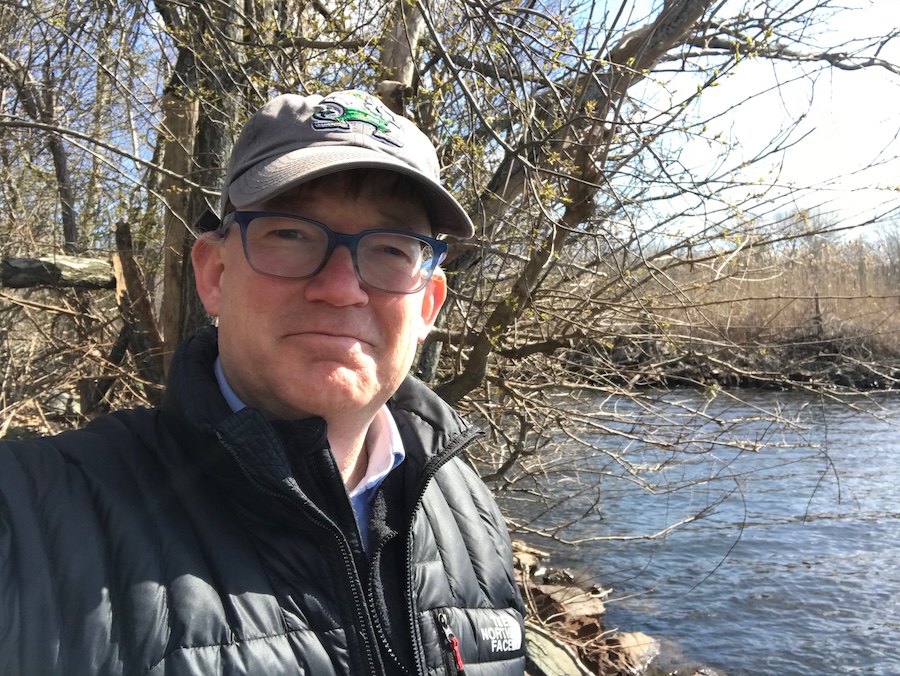
Patrick Herron. Photo courtesy of Patrick Herron
Environmental Initiatives
BCF
How would you describe the most pressing environmental challenges facing the Mystic River watershed today?
Herron
We face a number of significant environmental challenges operating at different scales.
At the municipal level, our biggest issue is underinvestment in the infrastructure maintenance needed to protect our waterways from sewage and bacterial contamination. Our cities contribute to elevated pollution in waterways, negatively impacting downstream communities.
Our car culture also contributes to pollution that affects both the air we breathe and our rivers, as a significant portion of tire residue washes off roads and into local waterways.
Finally, the global issue of climate change is driving flooding, drought, and extreme heat in urban areas. These pose risks and necessitate even greater municipal investments to protect our residents and precious environmental resources.
BCF
How does MyRWA’s work intersect with climate resilience, particularly flood mitigation, heat reduction, and habitat restoration?
Herron
Watershed organizations like ours have historically focused on the hydrologic cycle—the movement of water—which is now profoundly affected by climate change. Our current work concentrates on building regional capacity, including public support, funding, and policy initiatives. These efforts are designed to implement nature-based solutions to environmental problems and foster collaborations that can bring these solutions to scale.
We are very proud of our successful effort to unite 20 municipalities in the Resilient Mystic Collaborative to undertake this work regionally, achieving cost savings, shared learning, and larger, more impactful projects. We are actively implementing stormwater wetlands, planting trees, removing invasives, and restoring wetland habitats. From Reading to Everett, these projects are making our areas more resilient to a changing climate. This wouldn’t be possible without our incredible partners, who share the credit for this vital work.
BCF
Can you share highlights of MyRWA’s ecological restoration projects and how they are improving biodiversity and water quality?
Herron
Our restoration projects are rooted in returning natural processes to places where they have been collectively undermined. In Reading, we recently completed a stormwater wetland that is settling out pollutants, allowing water to infiltrate, and providing great opportunities for passive recreation.
In Woburn, we’re working to restore function to a paved-over wetland and reestablish fish passage for river herring to Horn Pond.
We are also collaborating with Everett to plant thousands of trees at a wetland site along the river and throughout the city streets.
These projects promote a natural hydrologic cycle and provide habitat for native species, a process that requires gentle maintenance to promote natives and deter invasive plants.
BCF
What role do scientific monitoring and data collection play in shaping MyRWA’s environmental priorities?
Herron
Scientific monitoring and data collection identify the sources of pollution and center the residents being impacted by it. For example, we’ve collected a tremendous amount of data on pollution from Belmont, down through the Little River and Alewife Brook, to pinpoint pollution sources. We’ve found significant chronic sources hitting the brook daily alongside acute, massive inputs of pollutants from combined sewer overflow (CSO) events.
Looking downstream, we see an environmental justice community that is severely impacted. In fact, our sampling shows that sites like Alewife Brook, Malden River, and Mill Creek in Chelsea all emerge as locations with high pollutant loads, with vulnerable populations being exposed. This monitoring shines a light on the problem, challenges our assumptions, and forms the basis for how we prioritize our resources.
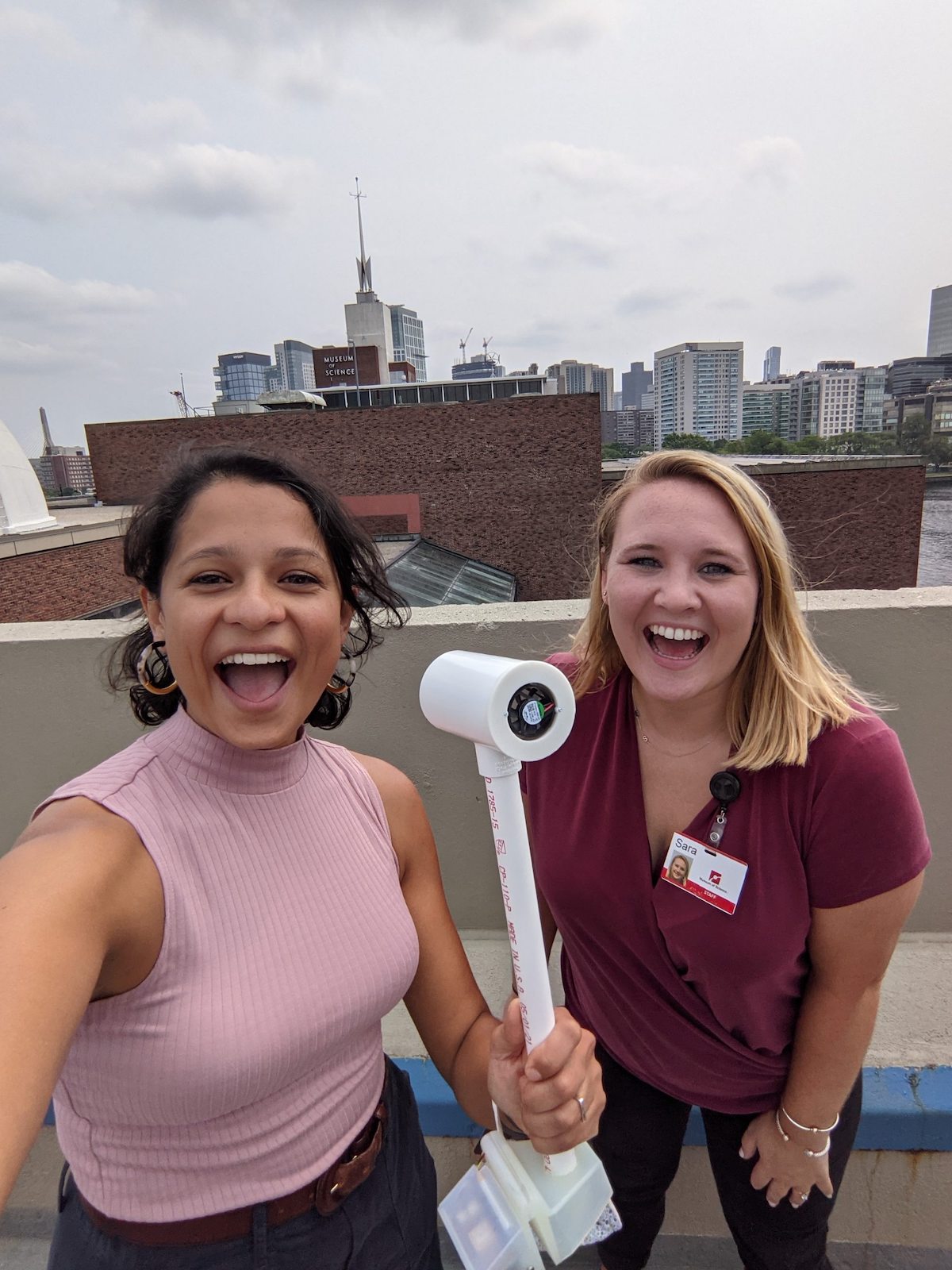
Wicked Hot Mystic monitors Melanie Carte (left) and Sarah Benson (right). Source: Mystic River Watershed Assocation
Educational Initiatives
BCF
MyRWA has an active education program. How do you introduce students and teachers to the watershed, and what impact have you seen on youth engagement?
Herron
Our K–12 education program brings real-world science into classrooms across 19 watershed communities, connecting students to the nature in their backyards and the ecological issues that impact their families. Our educators develop learning experiences that examine hyperlocal problems, such as how water quality affects biodiversity, methods to prevent stormwater runoff using green infrastructure, and ways people can help minimize the impact of climate change.
Similarly, our climate team employs high school youth to help engage and educate residents throughout the watershed about climate impacts and the benefits of trees at tabling events and community workshops. As part of our stewardship program, we also host various youth groups in the field to remove invasive species and pick up trash in urban parks. Over the past few years, as our outreach and education on these issues have grown, we’ve seen more youth support for our work than ever before.
BCF
Could you describe partnerships with schools, universities, or youth programs that have been particularly effective?
Herron
As part of our Stormwater Collaborative initiative, we partner with a dozen communities across the watershed to bring education on stormwater runoff to students in the classroom. We’ve worked with schools in Medford, Somerville, and Everett for the past several years as part of this work, often challenging students to think of ways to protect the waterways near their school from runoff.
Students adopt storm drains near their schoolyard, build models of storm drain systems, and create public service announcements on the problem of runoff. Our educators also collaborate with our water quality team to introduce the numerous on-the-ground projects we lead in partnership with these communities, such as installing stormwater trenches and designing constructed wetlands, through this curriculum.
As we visit these schools year after year, we’re reintroducing the concept of stormwater in a new way by incorporating these engineering concepts into lessons to inspire students to think outside the box.
BCF
The Mystic watershed includes diverse urban communities. How does MyRWA work toward equitable access to the river and its green spaces?
Herron
Physical and social factors determine the accessibility of all open spaces, and the Mystic and its wonderful riverine parks are no exception. Physically, this means advocating for and working with stakeholders to ensure paths and water access points are ADA-compliant; that our water and lands are clean and welcoming for recreational use; and that major roadways adjacent to the river have dedicated crossings for people outside of motor vehicles to ensure safe egress. Socially, we advocate for the creation of inclusive spaces regardless of age, demographic background, or level of exposure to the outdoors. On the ground, this means posting signage in the multiple languages spoken by community members, working with affinity groups to host culturally relevant events, and offering programming for first-time explorers of the Mystic. We recently completed our third year of Canoemobile activities, which bring students from nearby schools, many of whom were on the water for the very first time, onto the river in giant canoes.
BCF
Belmont is part of the Mystic watershed. What role can Belmont residents play in supporting MyRWA’s mission?
Herron
Residents who identify with our mission of creating a healthy watershed can engage with their leadership, such as the Select Board and Town Meeting members, to support investments in municipal infrastructure that will prevent the release of sewage into the Alewife Brook subwatershed. There are no magic bullets beyond a competent town engineer and Department of Public Works, which Belmont has. The most critical need is additional dollars invested in the challenge. Other ways to get involved include participating in MyRWA events and volunteer opportunities and making a financial donation. We’ll put it to good use to create a healthy river and watershed.
Photo courtesy of Patrick Herron
Public Policy and Advocacy
BCF
MyRWA has been active in advocating for stronger environmental protections. What policy victories are you most proud of?
Herron
One of our recent policy victories that resonates today is the work we did with the Massachusetts Rivers Alliance on the CSO notification bill. This bill, which became law in 2021, has required agencies and municipalities to notify area communities and the public about the frequency and volume of sewage discharges. We’ve had years and years of untreated sewage in CSOs being released into our waters. While we had gained some limited attention, once the notifications required by law started going out, we had the television and radio coverage, and many more residents became aware of the problem. It’s shed a light on the issue as we push for the next investment to eliminate CSOs on Alewife Brook and Mystic River.
BCF
What are the major policy priorities for MyRWA today, locally, at the state level, and/or federally?
Herron
Our top focus at the state level is the Mass Ready Act, also known as the Environmental Bond Bill. This is a “must pass” bill that comes around every five or so years, and it sets the limits for how much money the Commonwealth can borrow to invest in improving our environment, open spaces, and climate resilience. The Healey-Driscoll administration submitted a strong bill to the legislature this summer, and we continue to advocate for changes that will strengthen key authorizations for the Mystic, such as $500 million for the MVP climate resilience grant program and LINK about $1.5 billion in total for DCR facilities, parkways, dams, and tree planting. As a “must pass” bill, we are also advocating for the legislature to tack on other important bills that would dedicate revenue to protect nature, eliminate CSO discharges by 2050, climate-proof our building code, streamline permitting for restoration projects, and reduce plastics and rat poison in our environment.
At the federal level, we recently submitted comments standing firmly against attempts by the Trump administration’s EPA to roll back federal authority to regulate greenhouse gases, or what Michael Muir aptly calls “planet-heating air pollution from dirty energy sources.”
BCF
What advice would you give to town leaders or state legislators who want to make better policy for rivers and watersheds?
Herron
Your average voter or constituent expects that we are building our public infrastructure and private developments to be resilient to climate change. It’s only when disaster hits that they will realize we are not, at least not systematically, and they won’t be pleased. So be a champion for climate resilience. Increase investments in climate resilience and open spaces, update your zoning bylaws and infrastructure design standards, and listen to your most vulnerable constituents and the organizations that serve them and act on what you hear.
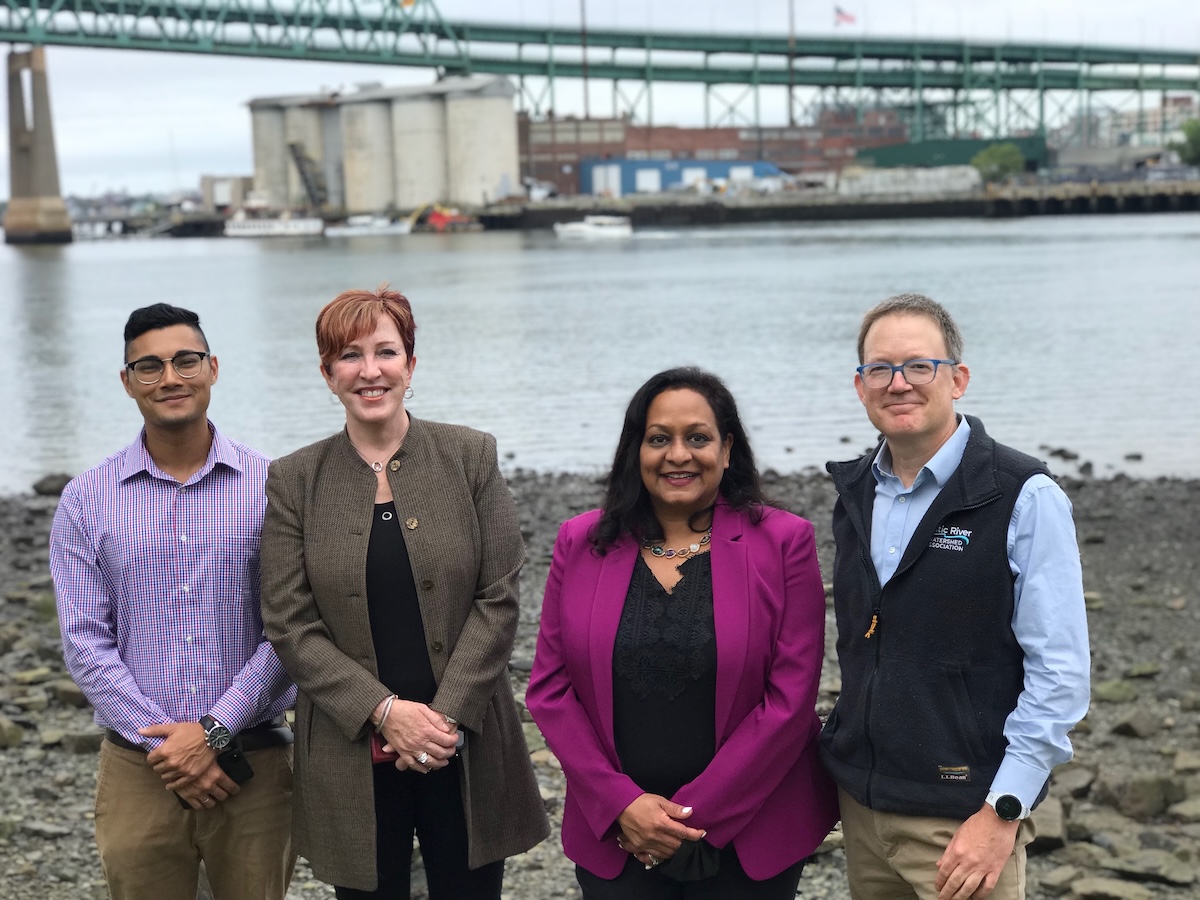
Photo courtesy of Patrick Herron
Looking Ahead
BCF
What challenges do you foresee in securing sustainable funding for watershed restoration and advocacy?
Herron
One major challenge has been the rollback of financial commitments from the federal government that move forward big, impactful projects. Earlier this year, the federal government cancelled a $50M award for restoration and climate resilience in Chelsea and Everett: it was a project that protected $30 for every $1 invested. On a smaller scale, but relevant to the heart and soul of our rivers, we’ve seen funding for our fish passage work cut back dramatically. The second challenge is the competing financial priorities for our watershed communities, from schools, to police, to you name it. Sometimes the environment has been lost in the shuffle and not prioritized. I’ll say that, on a positive note, advocacy has always been funded by monies donated by residents, and as long as we have a functioning economy and people who care about the environment and are aware of our work, we should be able to make progress.
BCF
What innovative approaches—technical, social, or political—are you most excited about for the future of the Mystic River?
Herron
We’re excited to be exploring ways we can help build social resilience in the watershed. As we face multiple crises—climate change, political division, social isolation, health care cuts, and housing affordability—how can MyRWA, through our on-the-ground projects, programming, and partnerships, help build more connected communities and make our health and housing systems more resilient to extreme weather? Imagine climate-resilient community centers and open spaces that draw neighbors in for fun and engaging programming, as well as health and social services for everyday needs, but activate as hubs to provide extra support when extreme weather strikes. Familiar places and familiar faces can ease the burden in unprecedented times.
At the same time, we are exploring how technology can help forecast when extreme heat or flooding is coming our way and get that information out to decision-makers and the public in the languages and communications channels people are already using. We’re working with artists to help cut through the noise and make climate preparedness information more accessible.
BCF
Looking ahead 10 or 20 years, what is your vision for the Mystic watershed if MyRWA’s initiatives succeed?
Herron
A vision for this watershed is a place that is welcoming, resilient, and free of pollution. Imagine a place where residents of all backgrounds could live, feel welcomed, visit well-maintained local parks that were well full of nature, and swim in a river without worrying about whether sewage was dumped in it. That is a future that all of us should fight for.
Bonus material
BCF: Could you describe partnerships with schools, universities, or youth programs that have been particularly effective?
As part of our Stormwater Collaborative initiative, we partner with a dozen communities across the watershed to bring education on stormwater runoff to students in the classroom. We’ve worked with schools in Medford, Somerville, and Everett for the past several years as part of this work, often challenging students to think of ways to protect the waterways near their school from runoff.
Students adopt storm drains near their schoolyard, build models of storm drain systems, and create public service announcements on the problem of runoff. Our educators also collaborate with our water quality team to introduce the numerous on-the-ground projects we lead in partnership with these communities, such as installing stormwater trenches and designing constructed wetlands, through this curriculum.
As we visit these schools year after year, we’re reintroducing the concept of stormwater in a new way by incorporating these engineering concepts into lessons to inspire students to think outside the box.
BCF: How does environmental education support long-term stewardship of the Mystic River and its resources?
We know youth can serve as leaders in their community to address the issues they care about the most. Our programs both help them make new connections to their favorite outdoor spaces and imagine ways they can use their passions to help address the environmental issues that impact them locally. As an example, we’ve worked with students at the Fayerweather School in Cambridge who—for the past few years—have designed educational campaigns on the impact of sewage contamination in Alewife Brook from CSOs. Early on, they created PSAs and presentations on the issue and marched through Cambridge holding signs about water quality and its impact on wildlife and human health. Last year, they led a community meeting that included a music recital with songs about the Mystic, an expert speaker panel on stormwater, and a video PSA calling for donations to MyRWA. The class raised $1,250 for our efforts to clean up Alewife Brook. We believe students have so much power to engage our communities in stewardship and advocacy.
Community Initiatives
BCF: MyRWA is known for mobilizing volunteers. How do you engage local residents in cleanups, advocacy, and restoration work?
Resident volunteers add much-needed capacity, energy, and creativity to our work. We work with volunteers in many ways, through ongoing opportunities like water quality monitoring, our River Rep outreach program, and our new administrative volunteer program; and through one-time events like invasive plant removal days, tree planting, trash cleanups, and sometimes art projects! We try to offer a variety of ways to get involved so everyone can find something that matches their interests and how they are hoping to connect and learn more about their environment and neighborhood. Partnerships with other local groups have been invaluable, too, for creating new opportunities for connection in the outdoors.
BCF: What are some ways that communities along the Mystic can directly experience the river—through recreation, festivals, or public art?
There are myriad recreation opportunities available to connect Belmont residents to experience the river. Most locally, we’d encourage residents to check out the Cambridge Alewife Constructed Wetland; it is just such a fantastic place to walk, view nature, and bird LINK. But more generally, we have close to 25 miles of paths from Alewife Brook to the Mystic River to the Malden River. Folks can come to the Upper Mystic Lake to swim at Shannon Beach, see the fish migration at the dam, and view bald eagles as they fly over the lake. Some of the best festivals near the river include the Herring Run and Paddle in May in Somerville, the CACHE Mystic River Celebration at the Condon Band Shell in Medford in September, and finally Riverfest at Assembly Row (September). Glad you asked about the arts; MyRWA is hosting an Artist in Residence with new art in the works as we speak. Other highlights are a new mural on the Northern Strand and new murals in design at Malden and Medford, and a reading by poet Terry Carter, who has centered a number of his works on the Malden River.
BCF: What are the major policy priorities for MyRWA today,locally, at the state level, and federally?
Our top focus at the state level is the Mass Ready Act, also known as the Environmental Bond Bill. This is a “must pass” bill that comes around every five or so years, and it sets the limits for how much money the Commonwealth can borrow to invest in improving our environment, open spaces, and climate resilience. The Healey-Driscoll administration submitted a strong bill to the legislature this summer, and we continue to advocate for changes that will strengthen key authorizations for the Mystic, such as $500 million for the MVP climate resilience grant program and LINK about $1.5 billion in total for DCR facilities, parkways, dams, and tree planting. As a “must pass” bill, we are also advocating for the legislature to tack on other important bills that would dedicate revenue to protect nature, eliminate CSO discharges by 2050, climate-proof our building code, streamline permitting for restoration projects, and reduce plastics and rat poison in our environment.
At the federal level, we recently submitted comments standing firmly against attempts by the Trump administration’s EPA to roll back federal authority to regulate greenhouse gases, or what Michael Muir aptly calls “planet-heating air pollution from dirty energy sources.”
BCF: How do you balance on-the-ground restoration work with broader advocacy for systemic change?
Our on-the-ground restoration work serves as the platform from which we build our experience, insight, and credibility to drive systemic change. As we plant trees in Somerville, we learn about the challenges of building urban canopies; as we restore wetland areas in Everett and Reading, we come up on limitations set in permitting; and as we implement projects for flood mitigation, we see firsthand the scale of the water we’ll need to handle. We’ve built credibility in our communities by listening to the desires of the residents, raising funding for these projects, promoting regional projects, and developing partnerships linking local to state to federal agencies. We see our community members demanding more of the types of projects we are building.
BCF: What advice would you give to town leaders or state legislators who want to make better policy for rivers and watersheds?
Your average voter or constituent expects that we are building our public infrastructure and private developments to be resilient to climate change. It’s only when disaster hits that they will realize we are not, at least not systematically, and they won’t be pleased. So be a champion for climate resilience. Increase investments in climate resilience and open spaces, update your zoning bylaws and infrastructure design standards, and listen to your most vulnerable constituents and the organizations that serve them and act on what you hear.
BCF: What lessons from your experience at MyRWA would you most want to share with other leaders of environmental organizations in our region?
In my role leading this organization, the lessons present themselves every day! On the positive side, one of our biggest lessons has been on how powerful regional collaboratives like our Resilient Mystic Collaborative can be in sharing expertise, building relationships, and making change. With such small municipalities and a lack of regional governance, these collaboratives promote collective action and better outcomes. If I were to share another lesson from our work, data only take you so far; you’ve got to invest as much in the work to turn that data into action and drive change. We’ve proved a water body is contaminated; now, there is a long way to go toward getting money invested to solve the problem.
BCF: If you could sit down with your peers leading other environmental organizations, what questions would you most want to ask them about advancing shared environmental progress and strengthening our common social and natural wealth?
Two questions come to mind. The first question is how an environmental organization, such as one serving a diverse watershed from Chelsea to Belmont, can effectively build its leadership, fundraising, and programming to serve this broad geography and constituency? Which is that model organization we should emulate? The second question that comes to mind is how to work effectively with our legislative delegates to bring change. We have exceptional elected leaders, and in some cases, we’ve been successful, but I think we’ve got lots to learn from others in and outside of our field.
Patrick Herron is the executive director of the Mystic River Watershed Association.
Jeffrey North is the managing editor of the Belmont Citizens Forum Newsletter.

Sorry, the comment form is closed at this time.