Construction Continues on the Uplands

 March 2016, Newsletter  Comments Off on Construction Continues on the Uplands
Mar 152016
 
Construction Continues on the Uplands

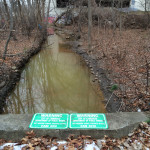
By Anne-Marie Lambert The first red-winged blackbirds now returning to the fields by Little River may not think much of the “wildlife habitat replication area” alongside the newly constructed buildings at the Uplands. This newly seeded replication area sits between the former Little River, now a large drainage ditch next to Frontage Road, and one of the four-story Tyvek-wrapped buildings that comprise The Royal, formerly named The Residences at Acorn Park. In a contested 2014 ruling, the Massachusetts Superior Court determined that this replication area (next to what amounts to a Route 2 drainage ditch running under Acorn Park Drive) [READ MORE]


Share

Drought-Resistant Gardens Are Within Reach

 March 2016, Newsletter, Stormwater  Comments Off on Drought-Resistant Gardens Are Within Reach
Mar 152016
 
Drought-Resistant Gardens Are Within Reach

By Irene Fairley When I moved to Winn Street in the early 1970s, the property was mostly covered in lawn, especially the back yard. This neighborhood has a high water table as the Winn Brook goes underground here and weaves over to Little Pond. I think everyone on the street has at least one sump pump. It was not unusual to have water in basements with heavy rainfall or to see water standing above ground. My goal was to replace a large portion of the lawn with plantings that would absorb more of the rainwater and enhance habitat for birds [READ MORE]

Share

Globe Critique Spurs Town Sewerage Review

 March 2016, Stormwater  Comments Off on Globe Critique Spurs Town Sewerage Review
Mar 142016
 
Globe Critique Spurs Town Sewerage Review

By Anne-Marie Lambert and Frank Frazier Have you seen the sewer today? This past summer, a Boston Globe editorial (“Belmont Needs to Clean Up Its Act,” August 14, 2015) caused the Belmont selectmen to request a presentation on the town’s sewer and storm drain systems. Belmont’s director of community development Glenn Clancy welcomed the opportunity. He took issue with Globe author Alan Wirzbicki’s comparison of Belmont’s $8 million in sewer expenditures dating from a 1998 Notice of Violation from the EPA. He cited the expenditures of Cambridge and Revere, both of which have much more significant pollution issues than Belmont. [READ MORE]

Share

Belmont Driveways Can Soak Up Stormwater

 January 2016, Newsletter, Stormwater  Comments Off on Belmont Driveways Can Soak Up Stormwater
Jan 132016
 
Belmont Driveways Can Soak Up Stormwater

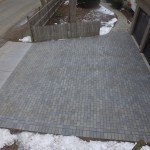
By Anne-Marie Lambert Most Belmont driveways are impervious surfaces, and they make local flooding and water pollution worse—but that doesn’t have to be the case. When a driveway is made of asphalt or concrete, rainfall flows quickly to catch basins, erodes soil along the way, and increases pollution and flooding risks in downstream neighborhoods. Water that soaks into the soil doesn’t have any of these effects. More and more homeowners are taking advantage of today’s porous paver technologies in order to allow the soil to soak up rain before it reaches our catch basins and waterways. Plus, the pavers can [READ MORE]

Share

Cambridge Redirects Runoff from 400 Acres

 January 2016, Newsletter, Stormwater  Comments Off on Cambridge Redirects Runoff from 400 Acres
Jan 122016
 
Cambridge Redirects Runoff from 400 Acres

Cambridge Sewer Separation Makes Alewife Brook Cleaner By Anne-Marie Lambert On December 21, 2015, Cambridge celebrated a major milestone of the Alewife Sewer Separation project, a massive public works that separates sanitary sewers from storm sewers. When these two types of sewers are connected, heavy storms drive raw sewage into local waterways such as the Alewife Brook—as has been happening at the Brook for decades. As of December 21, the city will now provide water quality treatment of stormwater runoff from more than 400 acres of the urbanized Huron Avenue and Fresh Pond neighborhoods by directing it to the 3.4-acre [READ MORE]

Share

Make a Garden in Your Sidewalk “Hell Strip”

 Newsletter, November 2015, Stormwater  Comments Off on Make a Garden in Your Sidewalk “Hell Strip”
Sep 162015
 
Make a Garden in Your Sidewalk "Hell Strip"

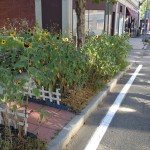
By Kate Bowen Hell strip. There. I wrote it, but I didn’t coin the phrase. That credit is given to Lauren Springer Ogden, a renowned gardener, who came up with the term “hell strip.” You know exactly what I am talking about:  that evil zone between you and the road. It might be paved; it might have some weeds; it might have some tidy grass; or it might be bursting with life—a microcosm of annuals, perennials, and wildlife. Many Belmont streets have paved shoulders. The town does not formally encourage restoring paved hell strips, and  open shoulders are often paved [READ MORE]

Share

Winn’s Brook Gets “F” Grade for Health

 Newsletter, November 2015, Stormwater  Comments Off on Winn’s Brook Gets “F” Grade for Health
Sep 162015
 
Winn's Brook Gets "F" Grade for Health

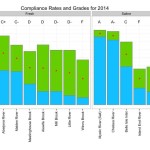
People who visit the Mystic River and its tributaries have a new, more precise way to find out how healthy the water is near them. Last summer, the Mystic River Watershed Association (MyRWA) worked with the Environmental Protection Agence (EPA) to create a new location-based “report card” for the Mystic River. The grades are based on bacteria counts. The state has maximum allowable bacteria counts for swimming and boating. High bacteria counts result from illicit sewer discharges to storm drain systems and urban stormwater runoff. A higher grade indicates that the waterway complies with state standards; a lower grade means [READ MORE]

Share

Homeowners Can Reduce Yard Runoff

 Newsletter, November 2015, Stormwater  Comments Off on Homeowners Can Reduce Yard Runoff
Sep 162015
 
Homeowners Can Reduce Yard Runoff

By Fred and Anne Paulsen We have lived for a long time with a cracked concrete driveway complete with weeds growing through the cracks. To the rear of our house, the driveway widens to include a large impervious parking area. As part of the Stormwater Working Group’s (SWG) efforts to reduce the pollution of runoff from streets and parking lots, all townspeople are urged to allow much of their rainwater and snow melt to infiltrate into the ground. Frank Frazier, a SWG member, wrote a handout for the Belmont Building Department with instructions for porous repaving and relevant web sites. [READ MORE]

Share

Stormwater Forum Details Flooding, Pollution

 Newsletter, November 2015, Stormwater  Comments Off on Stormwater Forum Details Flooding, Pollution
Sep 142015
 
Stormwater Forum Details Flooding, Pollution

By Sumner Brown In 2010, the Environmental Protection Agency released a draft of stormwater regulations which would impose new and difficult requirements on towns. They are stringent enough that I wonder if any town with a development history similar to Belmont’s could meet them On September 10, The Belmont Citizens Forum hosted a stormwater forum titled “Water Trouble” featuring panelists familiar with the proposed regulations. They were Ralph Jones, managing director of Cadmus consultants; Wayne Chouinard, Arlington town engineer, and Matthew Shuman, Watertown town engineer; Julie Dyer Wood, director of projects at the Charles River Watershed Association; Patrick Herron, deputy [READ MORE]

Share

10 Ways You Can Reduce Stormwater Pollution

 Newsletter, November 2015, Stormwater  Comments Off on 10 Ways You Can Reduce Stormwater Pollution
Sep 102015
 
10 Ways You Can Reduce Stormwater Pollution

The Mystic River Watershed Association suggests these 10 simple things that you can do to help reduce water pollution in your municipality: 1. Don’t litter: litter ends up in sewers, or in rivers and streams. 2. Practice organic lawn care: minimize the use of fertilizers and pesticides, especially where run-off may occur. 3. Conserve water: excess water in the sewage system can lead to sewage overflows into our waterways. 4. Always pick up pet waste, especially along riverbanks. Pet waste contains harmful bacteria that contaminate the rivers. 5. Use rain barrels to capture rainfall to use on your lawn or garden. 6. Never dump [READ MORE]

Share

Porous Pavement Can Drain Sloped Sites

 May 2015, Newsletter, Stormwater  Comments Off on Porous Pavement Can Drain Sloped Sites
May 122015
 
Porous Pavement Can Drain Sloped Sites

by Kristopher Houle, P.E. A longer version of this article, including several references, originally appeared on the Ecological Landscape Alliance’s blog. Many green infrastructure alternatives exist for reducing stormwater runoff. Porous asphalt is one that has clear benefits. In New England, porous asphalt has been used successfully in sidewalks, parking lots, subdivision roads, and highways. Research has demonstrated its function for  stormwater attenuation, recharging local waterways, runoff treatment, and chloride source control. As an engineer and practitioner, I commonly see projects that would benefit from its use, but porous asphalt has been excluded from the final design for reasons relating [READ MORE]

Share