
By Fred Bouchard
Fresh snow is still banking up, the Pats showed up and got beat up in Santa Clara, Red Sox pitchers and catchers are catching up in palmy Fort Myers, and juncos—pecking millet and sunflower seed— are crowding up beneath my lilac-row feeder. Oh, uppy day!
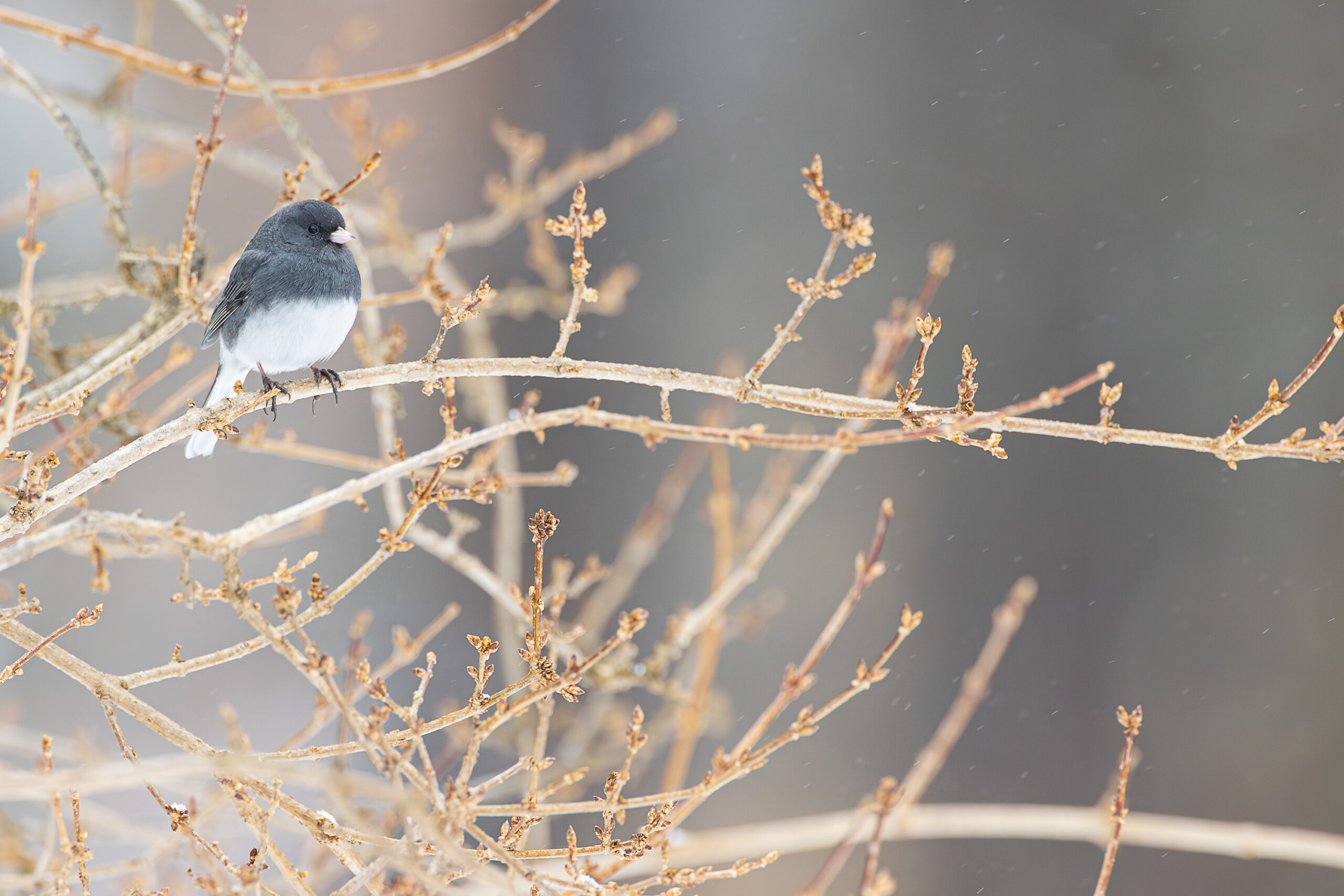
Junco in a tree. © 2026Shawn P. Carey
Braving an unprecedented zero-Fahrenheit stretch, juncos are hot this winter. Favorite winter visitors, juncos gray forms sharp-etched on snow-powder—stand apart from the usual suspects: dun House Sparrows, streaky-brown Song Sparrows, gray titmice. Arriving in dark, brisk flocks in October—their numbers annually fluctuate upwards with severe forecasts—these “little black jobs” cheerfully stand in for southbound breeding sparrows. As they’re nattily attired in formal plumage, my wife Mary Ellen calls them “nuns in habits.” “Priests” might serve better, as the vast majority we see are dapper slate-gray males; females tend toward a lighter gray-brown and prefer to hen-party in balmier climes.
Juncos flit ostentatiously, as they forage from bush and tree for grubs and berries to the earth for mites and seeds. Readily identifiable even to green novices, juncos sport in grassy fields, evergreen copses, or under feeders. Stress the locative: juncos are inveterate ground-dwellers, both for feeding and nesting, say by logs or in crevices. Bird guru Wayne Petersen recalls one inventive pair nesting in ivy on a brick wall.
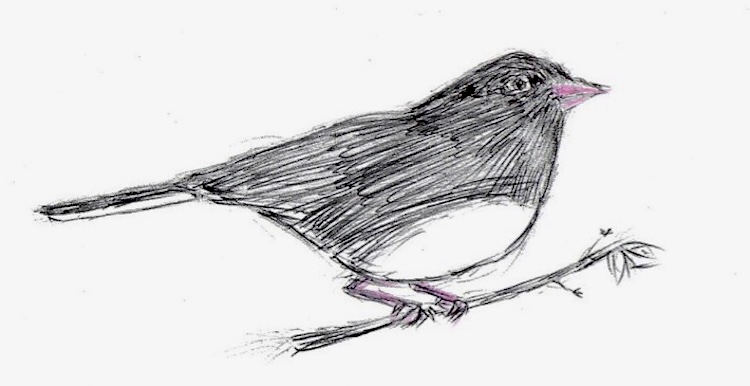
Junco. Graphic: Fred Bouchard
Coming at you, dark bodies contrast with snow-white tummies; going away, dark tails flash with white outer feathers. Most sparrows have pink legs, but juncos also have perky pink bills. And while most sparrow field notes list similar species, after Junco you’ll find “none”! The Massachusetts Breeding Bird Atlas describes their song as a long trill, sweeter than a Chipping Sparrow’s, drier than a Pine Warbler’s; call notes vary with the message: smack! (scold note), tit-tit-tit (location), tchet-tchet or bzzz (alarm).
Their jazzy name is Spanish for the wet-habitat reed family (juncus), even though juncos invariably head for dry terrain, like forest floors and weedy fields. No wonder the name goes with its dashing look. Its unique genus (Junco hyemalis) within the 50-strong Emberizine family—places Dark-eyed Juncos as cousins to Melospiza (Song and Swamp Sparrows), Zonotrichia (White-throated and White-crowned), and Pipilo (towhees).
Dark-eyed Juncos range throughout North America (even into Mexico) in at least six identifiable populations, or races. In New England, we see the Slate-colored, the most widely distributed race. Sharp-eyed Northeast birders may rarely spot a stray from the West: a rusty-backed Oregon or Pink-sided Junco. Rarer races are Gray-headed (Rockies and Southwest US to Mexico), Red-backed (Arizona, New Mexico), and White-winged (breeds in Black Hills, winters in Colorado.) For a deep dive into junco-lore and taxonomy, find Rick Wright’s Peterson’s Reference Guide to Sparrows of North America.
Reverse snowbirds, juncos fade away come April, occasionally in large flocks. Where do they go? Not south, but north, toward Maine, Canada—and to the Berkshires!—to re-up with their returning girls that trickle up our way come the equinox. While a handful breed in Worcester County, hardly any do further East.
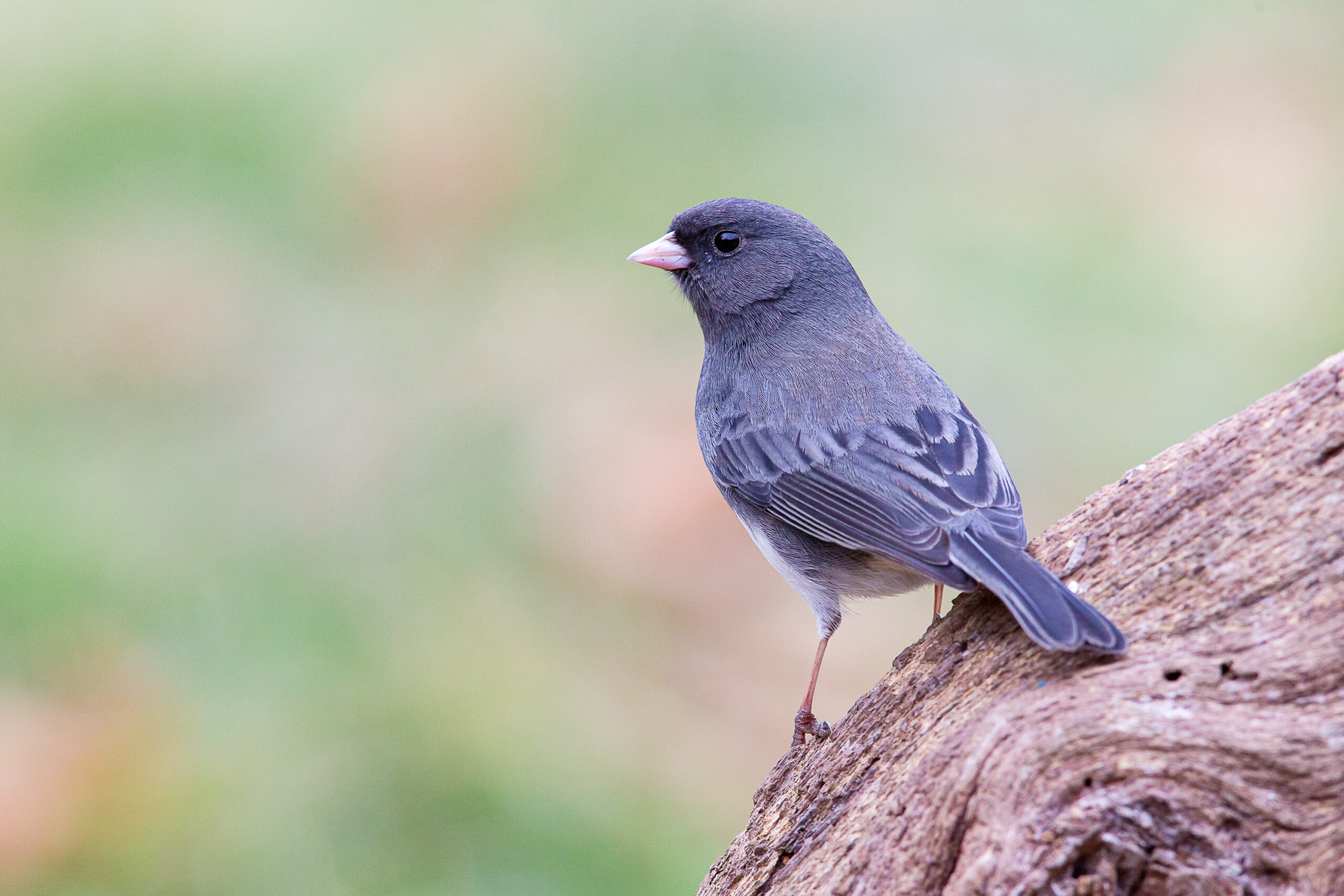
Junco. Photo © 2026 Shawn P. Carey
Fred Bouchard, a member of the BCF Newsletter Committee, is celebrating 50 years as an adult-onset birdwatcher. See more of Shawn Carey’s bird photos at www.migrationproductions.com,

Sorry, the comment form is closed at this time.