
By Elissa Ely
Twenty-three years ago, I sent my child off to Burbank Elementary School. I had moist eyes. She had a yogurt, a few pretzels, a single Oreo, and a bag of carrots, which returned unopened several hours later.
She moved through the grades and the years mostly uncomplainingly. What enchanted her, though, was the Belmont Before and After School Program (BASP). She wanted to be the first dropped off each morning and the last picked up each night. Staff must have worried about her home life.
The head teacher at BASP was square-shouldered, frank-eyed, and pony-tailed; contagiously energetic, yet cheerfully patient. The ponytail is gone now, and the program he founded has enlarged in every direction, but 23 years later, Andrew Mountford—founder and executive director of the Belmont After School Enrichment Collaborative (BASEC)—is just as frank-eyed, energetic, and patient. A dozen profiles should be written about him, and someone needs to patent his personality.
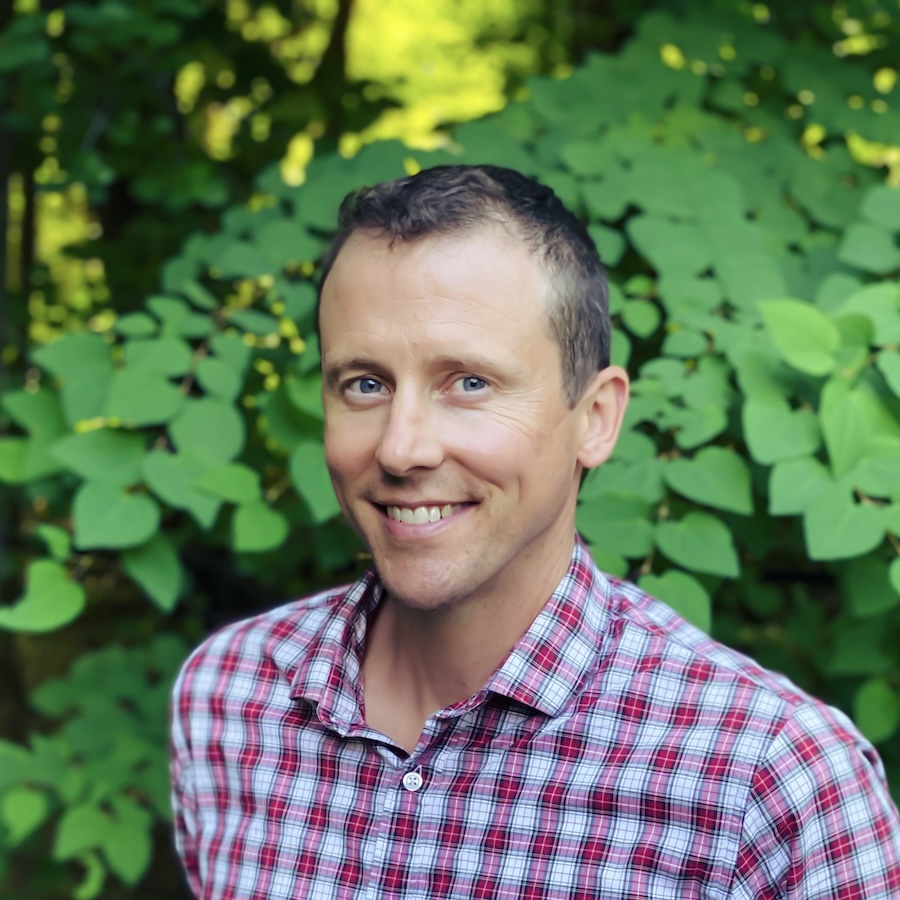
Andrew Mountford. Photo courtesy of Andrew Mountford
BASEC out-of-school programs run in Burbank Elementary (why not all?), Chenery Middle and Belmont High Schools, as well as in two Maynard schools, throughout school, school vacations, and summers. During the academic year, doors open from 7:30 to 8:30 in the morning, and again from 2:30 to 5:30 in the afternoon. Last year, all combined, around 800 kids were enrolled.
Childhood must be tended with care. Over 100 BASEC “curriculum specialists”, educators—including high school students—and staff take their philosophy of development seriously. Along with Andrew, they believe that structured, nurturing interactions with adults and peers affect neurodevelopment in positive ways (trauma theory has sadly proven that the opposite is also true). The deliberate emphasis is on collaboration, conflict resolution, organizational and problem-solving skills, social awareness, and self-awareness.
Traditional activities like sports, theater, martial arts, and creative arts co-exist with less traditional activities: naturalist training, crank-operated theater creation, ukulele lessons, improvisation performance, makerspace studies, calligraphy, and a model UN. Lesson plans are created and executed, so that what used to be a form of babysitting has become a form of multi-level enrichment, led by deeply involved educators. BASEC is on a mission to prepare children in the present for what lies ahead in the future.
We all come from somewhere, and after childhood ends, that place still informs us. Andrew grew up in small-town Maine. There were no before or after school programs, though there was a pricey summer camp nearby that even the wealthiest local families could not afford. Nonetheless, in the rural freedom of nature, he says, “we had the experience of summer camp every day.”
He was a sociable, conscientious kid, eager to avoid a career in the local mills or lumber company. From early on, his plan was escape, maybe through the lucrative path of lawyering. At Brandeis, he majored in politics and spent a semester in Washington studying public policy. Working in a small law firm that specialized in criminal defense, the future lawyer arrived with “visions of bringing justice,” but left realizing that most of the young associates were weighted to the ground by their early thirties. His law school applications went on hold.
Many part-time jobs followed, including working for years as a vendor in Fenway Park (packets of peanuts are sometimes still tossed his way during games, by former colleagues who recognize him). He never envisioned a life in teaching, but a stint as a teaching aide in Burbank Elementary School changed that. It led to a Master’s degree in Education, to BASP. At 26, still working on his graduate degree, he became the BASP Director. “This is my career,” he realized. “It’s meaningful. I like it.”
These days, directing an enormously expanded and altered program, Andrew spends much of his time thinking about children, teachers, and the way each learns from the other. “Kids have to learn the world with peers,” he says. “They have to run into problems and learn the rewards of solving them with other people.” It’s a form of teaching laid down brick by brick, and the roof can’t come before the foundation.
Tiny understandings are necessary before grand ones are possible. Kids need repetition; taking on small behaviors and interactions again and again before they can begin to understand why they (and everyone, for that matter) act as they do. “We don’t understand ourselves,” he says. “We get grabbed by something, easily captured by bad ideas. We’re captured—and manipulated—by the machine that’s the internet and social media. It’s a horribly difficult time for kids with phones. But the great thing is, ideas can be changed. Human beings have solved huge challenges over the years.”
It goes without saying that cell phones are not allowed during BASEC hours. (It also goes without saying that this is more of a challenge with Apple watches.)
BASEC is not the pricey summer camp that still runs in his home town. “We don’t have 150 acres with ponds and an archery range,” he says. “But what we don’t have in space, we have in great educators.” He lobbies hard to protect them with wages and benefits; close to 40 employees are full-time and salaried. “What we do is far different than what anyone else does. Ours is the model for creating a pathway to full-time work at a livable wage. No one can afford to work 20-24 hours a week and still live. You have to value the service appropriately.”
The BASEC Board has understood this. “I’m lucky to be in a community open to a progressive philosophy around employment,” he says. “Board members embrace this. It took no convincing. To me, this is the future.”
The role is now 99% administrative, a blessing for BASEC, but a loss for the personal contact with children that Andrew cherishes. He misses Halloween, when the kids would collaborate on—which is to say, argue, vote, construct, costume, name and transport—a scarecrow for the town-wide contest in the nearby mall. “I loved the creative part of it, saying ‘you tell me how we’re gonna solve this’.” Losing that has been a heartache.
Instead, he’s on-site two days a week; working with students, but also working with teachers. “I’m always thinking with them about how to have a bigger impact on kids. They have to be open to feedback themselves, reflective, making changes. Then they can engage kids more consistently and deeply.”
A few years ago, Andrew’s family moved back to small-town Maine. In their tiny community, there is no BASEC. When the school day is done, his children play outside, read, paint, swim, ski in winter, visit; they create their own version of out-of-school programming. They have no cell phones, and their father plans to hold off on iPads until they turn 14, 16, maybe 18 years old. But one must also be a realist. “18,” he says, “is probably pushing it.”
Elissa Ely is a community psychiatrist.

Sorry, the comment form is closed at this time.