
Massachusetts takes major steps to expand affordable housing—and Belmont responds
By Representative David M. Rogers
While Massachusetts is regularly ranked among the most desirable places to live in the United States, it is also ranked among the most expensive. It is widely agreed that the state is experiencing an affordable housing crisis. Communities from Pittsfield to Provincetown are affected by the housing crisis—and it certainly impacts Belmont as well.
In Belmont, 28% of homeowners and 36% of renters are considered “cost-burdened,” meaning they spend more than a third of their income on housing. According to Belmont’s Housing Production Plan, last revised in 2024, nearly 60% of the Belmont housing stock was built before 1940, and just over 6% since 2000. Building fewer homes over the last 25 years has created the conditions we see now: high home prices and rents, an emphasis on single-family homes, and old housing stock.
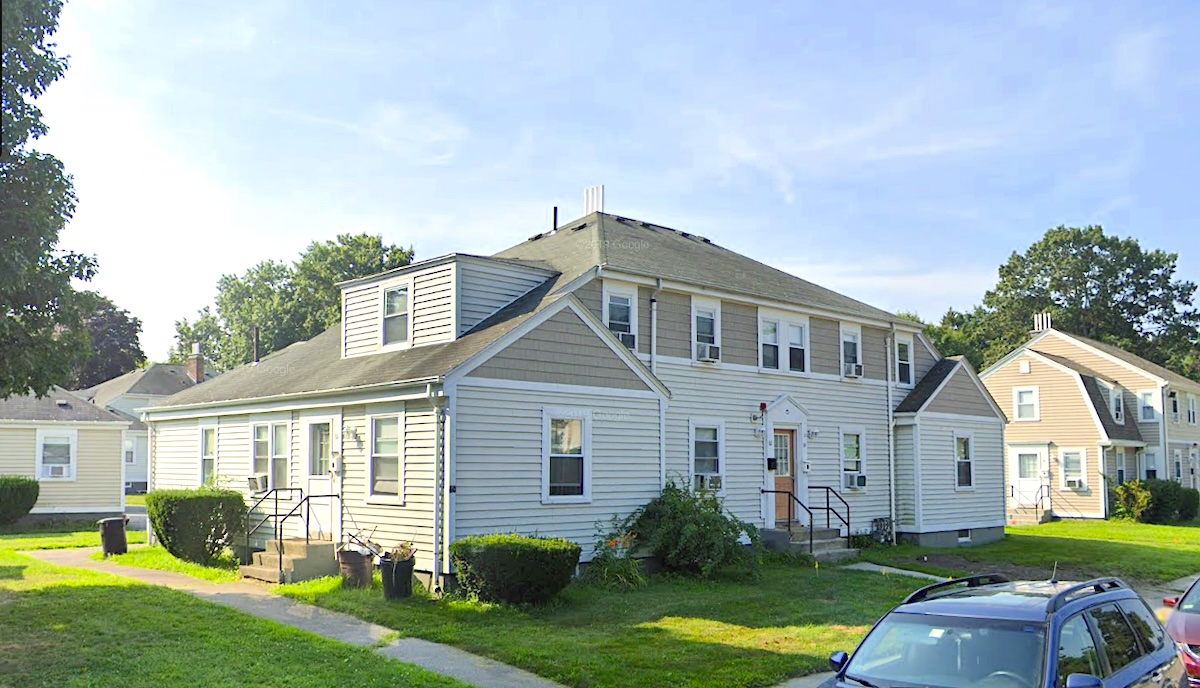
Typical buildings at Belmont Village, site of 100 affordable homes in Belmont across
25 fourplexes. Image courtesy of Gloria Leipzig and Matt Zajac
Statewide, one of the answers to our housing affordability crisis is to ramp up production. Earlier this year, the Healey-Driscoll administration released a report finding that, to keep up with demand and address affordability, Massachusetts will need to produce at least 222,000 housing units over the next decade. To tackle this daunting challenge, the Legislature enacted the Affordable Homes Act (AHA), which was signed into law by Governor Healey on August 6, 2024. The AHA will increase housing production, creating and preserving an estimated 65,000 units in Massachusetts over the next five years.
To achieve its goals, the AHA allocates $5.16 billion to boost production and creates nearly 50 policy initiatives to address high demand and limited supply. The $5.16 billion in funding is assigned to projects and programs such as $2 billion to refurbish and renovate our public housing stock ($150 million of that total supports decarbonization), $800 million for the trust fund that supports affordable housing development, and $275 million for sustainable and green housing initiatives. The AHA also assigns $100 million to support the creation of affordable homeownership units and $100 million to support the creation of mixed-income rental housing, including units that are affordable for households whose incomes are too high for traditional subsidized housing but are priced out by market rents.
To further support people struggling with high rent prices, the AHA creates the Extremely Low-Income Housing Commission (under an amendment I filed). The Commission will make recommendations on how to expand housing options for low-income residents. Other highlights of the AHA include a new tax credit to encourage homeownership for households with incomes up to 120% of the area median income (AMI) and ensuring the continuation of the Community Investment Tax Credit (CITC). The CITC spurs funding for Community Development Corporations that help deliver affordable housing.
Provisions of the AHA continue to be rolled out, with two coming into effect earlier this year. Authorization for building accessory dwelling units (also known as “in-law units”) by-right in a single-family housing zone came into effect in February 2025. Defined as “secondary residential living space located on the same lot as a single-family home,” this provision would allow families to add a new rental property of up to 900 square feet to their property without special permission. Another new policy that took effect on May 5, 2025, opens the door for sealing past eviction records, lowering the barrier for renters to find new accommodations. This provision allows courts to make case-by-case decisions on no-fault eviction cases that might bar renters from future housing opportunities.
The AHA also incorporates legislation I filed establishing the Office of Fair Housing to create a more equitable housing system. In advancing the Office of Fair Housing, I worked with the Citizens’ Housing and Planning Association, led by Belmont’s own Rachel Heller. The new office will coordinate with local fair housing organizations, which are nonprofits that work to end housing discrimination through legal services and education programs promoting renters’ rights. These programs are particularly focused on vulnerable groups, such as disabled people, families with children, survivors of domestic violence, and housing voucher holders.
To fund the Office of Fair Housing, my amendment for $1 million was adopted in the FY 2025 supplemental budget, which Governor Healey signed into law in August 2025. These funds will offset some of the impact of the misguided federal cuts enacted by the Trump administration, which recently sent federal funding termination notices to fair housing organizations across our state. Without these critical state funds to counter the federal cuts, Massachusetts’ fair housing organizations would have been in danger of closing their doors.
Preventing evictions
Another major success for housing justice was the allocation of $2.5 million in the FY 2026 budget to provide tenants with access to counsel. Based on legislation I filed with Representative Michael Day (D-Stoneham), these funds will provide legal assistance and representation to low-income individuals involved in eviction proceedings. In 2023, almost 40,000 households were served eviction papers in Massachusetts. Only 3% of those tenants were represented by a lawyer, while the vast majority of landlords had legal representation. The Pledge of Allegiance concludes with the words “and justice for all,” but for too many, this is an aspirational ideal rather than a reality. This funding will help right the balance on the scales of justice.
In addition to the AHA, the MBTA Communities Act, enacted in 2021, is a landmark law that will generate more housing production. The law mandates the creation of zoning regulations that permit “by right” multi-family housing in each of the 177 cities and towns served by the MBTA. Due to Belmont’s status as a “commuter rail community,” the town is required to zone a minimum of 1,632 multifamily homes over 28 acres, with at least half of the units being within a half mile of public transit stations. As readers likely know, the town proposed two overlay options for modifying Belmont’s zoning map in August 2024, and one was adopted by an overwhelming majority vote at Town Meeting in November. Earlier this year, both Attorney General Andrea Campbell and the Executive Office of Housing and Livable Communities approved the adopted overlay.
The overlay zoning introduces select “mixed zones” for businesses and homes, addressing a broader conversation about expanding the commercial tax base in Belmont, which is considerably smaller than in neighboring towns. The overlay also includes planning authorization for the extensive renovation of some of Belmont’s public housing stock, such as Belmont Housing Authority’s Belmont Village and Waverley Oaks sites. Sherman Gardens, a state-funded senior housing development owned and operated by BHA, will also undergo redevelopment, in part, thanks to the new zoning regulations. The new site will be compliant with the Americans with Disabilities Act and will have over 50% more units for seniors, those with disabilities, and families.
Despite the progress on housing issues in Belmont and across the state, much work remains. I have filed several initiatives related to housing, including a local-option rent stabilization bill (H.2328), which offers cities and towns the option to create rent stabilization rules with just-cause eviction protections. I believe this idea will allow cities and towns to slow the displacement of their residents due to unprecedented rent increases. While some may find it controversial, the bill provides a sensible tool for locally elected officials to make their communities more affordable places to live.
Ultimately, to build thriving communities, we must squarely address the affordable housing crisis. There is no quick fix, but by combining local innovation, state investment, and public resolve, we can move Massachusetts—and Belmont—toward a more affordable and equitable future.
Dave Rogers represents the communities of Arlington, Belmont, and Cambridge in the 24th Middlesex District of the Massachusetts House of Representatives.

Sorry, the comment form is closed at this time.