
By Thomas Phillips
Mass Audubon’s Habitat Education Center and Wildlife Sanctuary is currently renovating its entry circle to enhance visual appeal and incorporate accessibility accommodations for people with disabilities. The first phase of this project began in late April when the walkway was repaved and the entry circle widened. In early fall a new path will be built for people with disabilities with new plantings.
The staff at Habitat are hopeful that, in addition to promoting inclusiveness for individuals with disabilities, the renovation will increase the check-in rates among visitors to the sanctuary. Staff believe that increasing check-in rates at Habitat will enable Mass Audubon to learn more about the number of people visiting Habitat, popular visit times, and how visitors become aware of the sanctuary. Staff wish to increase check-in rates because it may increase foot traffic in Habitat’s art gallery, which is located near the check-in area.
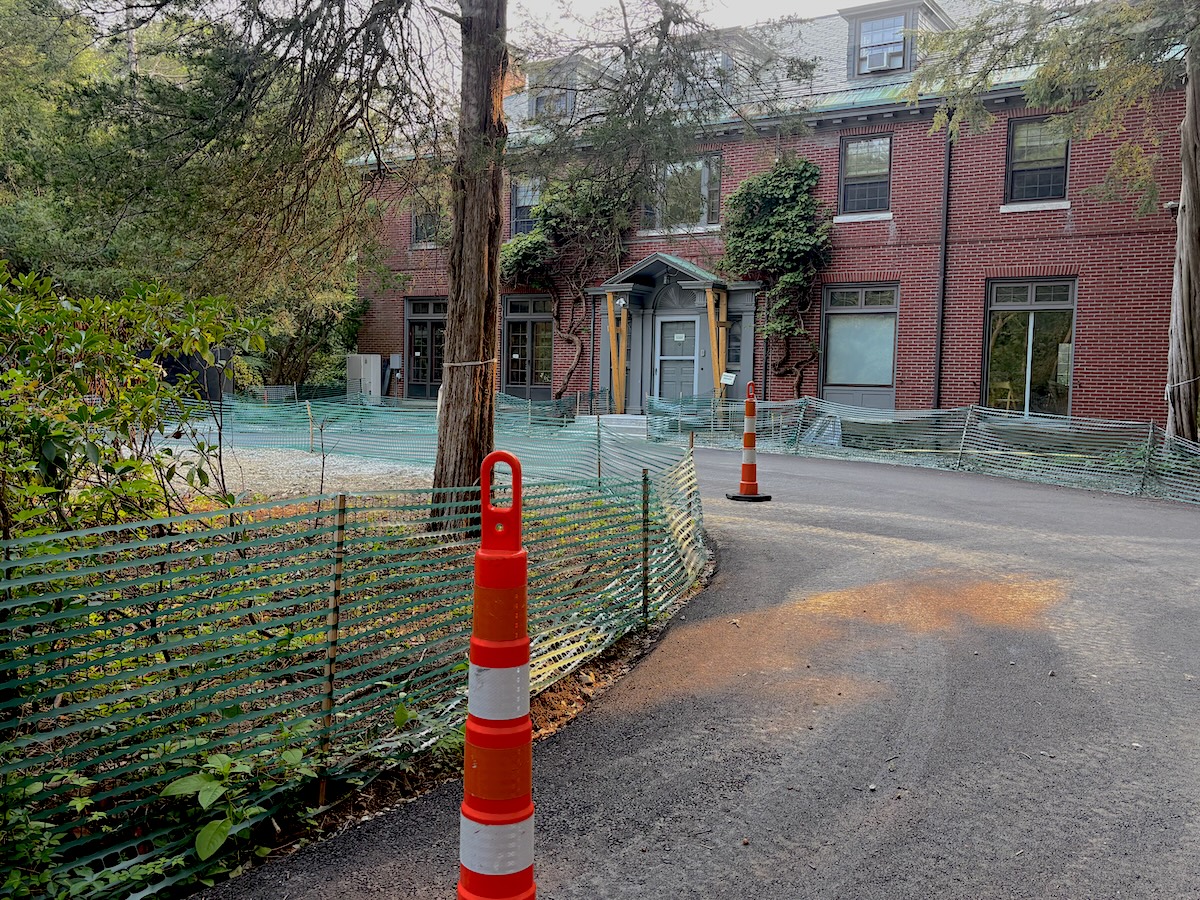
Habitat’s driveway. Photo: Jeffrey North
A long history of education
The property at 10 Juniper Road in Belmont was the home of Ruth Hornblower Atkins, also known as Ruth Atkins Churchill, to whom it was given as a wedding present in 1914. Ruth Atkins Churchill was an early proponent of environmental education, and she left her Georgian Revival-style home and the surrounding estate to be used for environmental education. Over the decades, it evolved into a center for environmental education, eventually becoming Mass Audubon’s Habitat Education Center and Wildlife Sanctuary in 1994. Among Habitat’s varied biomes are grassland, vernal pools, formal garden, and forest, all in closer proximity than they would typically be in nature. Habitat encourages visits from school groups and families interested in learning about New England ecology.
Habitat offers a wide variety of educational programs. Two programs serve preschool-aged children: the preschool naturalist program and the new accredited preschool. Habitat also offers school field trips, school presentations, and programs for homeschooled children. A variety of Mass Audubon educational and volunteer opportunities also exist for older children and adults, including owl prowls, garden group, and goat tending. Events such as the goat gala and the plant sale are another way the sanctuary educates the public about nature.
Thomas Phillips is a Belmont native and an environmental legal assistant at the Sierra Club.

Sorry, the comment form is closed at this time.